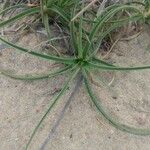
Cyperus capitatus
Capitate Galingale · Sand Sedge
Description
Source: leafsnapCyperus capitatus, commonly known as the umbrella sedge, is a perennial plant belonging to the family Cyperaceae. Native to Africa, it thrives in diverse habitats such as wetlands, marshes, and riverbanks. The plant is easily recognizable by its distinctive umbrella-like inflorescence, comprising numerous small spikelets arranged in a circular pattern at the top of its stem. The stem of Cyperus capitatus can reach a height of up to 1 meter and is accompanied by triangular-shaped leaves that measure between 3-10 mm in width. From June to September, the plant produces small brownish flowers, which are subsequently followed by tiny nutlets. Cyperus capitatus holds significant medicinal value in traditional African medicine, where it is used to treat various ailments such as stomach disorders, fever, headaches, and wounds. Additionally, it has culinary applications, serving as a flavoring agent for food and as an ingredient in tea. Ecologically, the umbrella sedge is crucial as it provides habitat for various aquatic animals, including fish and insects. Its extensive root system helps prevent soil erosion along riverbanks by effectively holding the soil together. Overall, Cyperus capitatus is a remarkable plant with unique characteristics that underscore its ecological importance and cultural significance in Africa.
Care Guide
💧 Water Every 7 days
Capitate galingale thrives in the humid environments typical of tropical regions, needing consistent moisture and a weekly watering schedule. As a herbaceous plant, it adapts well to different types of well-drained, moist soil but is sensitive to both extreme dryness and waterlogging.
What should I do if I give my Capitate galingale plant too much or too little water?
Proper watering is crucial for the health and performance of this beautiful ornamental grass. In the ground, any watering issues can be addressed, but in a container, both too much or too little water can be fatal to Capitate galingale. Insufficient watering can cause the grass to stop growing, resulting in drooping leaves, weak seed head production, and browning. On the other hand, overwatering can lead to yellow leaves with brown tips. If you suspect a watering problem, the first step is to determine whether it is due to excessive or inadequate watering. If the grass is receiving too much water, stop watering it immediately and allow time for the soil to dry out. Once new growth appears, check the soil's moisture level to decide if more water is needed. If the grass is receiving too little water, simply give it a deep drink and observe if it improves. Remember that it is always better to water deeply and less frequently, as this encourages the growth of deep roots, making the grass more resistant to drought and watering-related issues.
How often do I need to water my Capitate galingale plant?
The watering needs of Capitate galingale vary depending on location. Generally, water this grass once a week. In hot climates, watering once or twice a week may be necessary in the summer. In moderate climates, watering every seven days or more may be enough. Grass in containers usually need more frequent watering than those in the ground. However, the location also matters, as shaded grass requires less water than in-ground grass. Only water Capitate galingale when the soil is dry. Some signs of dry soil include pressing your finger into it or weighing the potted grass with a scale. Lack of water may cause folded and thin blades. Despite being drought-tolerant, regular, deep watering will result in beautiful color. Although this grass can handle harsh conditions, it thrives best with consistent water. When first planted, it needs more frequent watering until deep roots are established. Potted Capitate galingale dries out quickly, especially in hot, direct sun. Test the soil every 3 to 4 days and water when it feels dry. In-ground Capitate galingale needs less watering, depending on the soil type. Clay soil holds water longer, so it may feel dry at the surface but retain moisture below. Sandy soils drain quickly and require more frequent watering.
What should I watch out for when I water my Capitate galingale at different times of the year, in different types of weather, or during different stages of growth?
To determine if you are watering enough, observe the rate of growth of your grass. Capitate galingale tends to double in size annually, especially during the hottest months. If the weather is hot, but the grass isn't growing vigorously, it may indicate a need to adjust your watering schedule. During winter, you might be able to water once a month, but you should still check the soil for moisture. In the warmest months, the grass requires more water than usual, while during winter and cooler months, the water requirement decreases significantly. Remember, it's crucial to let the soil dry out completely before adding water to Capitate galingale.
☀️ Light Full sun
Capitate galingale is a perennial herbaceous plant that prefers sunny conditions and originates from open habitats, commonly growing in meadows and grasslands. It favors full sun but can also tolerate partial sun.
What are the sun requirements for Capitate Galingale (Cyperus capitatus)?
Capitate Galingale (Cyperus capitatus) requires specific conditions of sunlight to thrive. It needs full sun, which amounts to more than 6 hours of direct sunlight daily. Alternatively, it can also grow in partial sun, receiving about 3-6 hours of sunlight. It's important to observe the movement of sunlight through your garden to identify spots that offer a good balance of light and shade. This ensures the plants are happy and healthy by providing them with the optimal amount of sunlight they need.
🌡️ Temperature 10–41.1°C
Capitate galingale comes from tropical areas, where the climate is generally warm and humid. As a result, it is adapted to high temperatures and humidity. It does not tolerate sudden temperature shifts and prefers a stable thermal environment, so it is important to avoid temperature fluctuations indoors. It typically cannot withstand cold and requires warmer conditions to grow; if the surrounding temperature falls too low, the plant may stop growing or even die.
What is Capitate galingale?
Capitate galingale, known botanically as Cyperus capitatus, is a species of plant. This entry currently does not provide specific details regarding the essentials, uses, or symptoms associated with Capitate galingale, indicating a need for further information to understand its characteristics and potential applications fully.
💨 Humidity
🪴 Soil 6-6
🌱 Fertilizer
Capitate galingale needs extra nutrients to encourage healthy new growth. In spring, adding compost around the plant’s base will effectively supply the necessary nourishment. Fertilizing supports vigorous growth and helps the plant resist diseases and pests.
🪴 Pot & Repot
✂️ Pruning
Capitate galingale is a perennial plant that looks similar to grass and grows in clumps. To promote healthy growth, improve air circulation, and enhance its appearance, it benefits from being pruned in early spring. This involves cutting the old stems and foliage down to ground level, which also helps in managing its spread and aligns with its natural growth cycle.
🌿 Propagating
🐛 Diseases & pets
☠️ Toxicity
Characteristics
- Plant Type
- Grass
- Life Cycle
- Perennial
- Genus
- Cyperus
- Family
- Cyperaceae
- Hardiness Zone
- 6-13
- Mature Height
- 1.52 m
- Mature Spread
- 49 cm
- Leaf Color
- Green
- Leaf Type
- Semi-evergreen
- Flower Color
- Yellow, Green, Brown
- Flower Size
- 0.51 cm to 1.02 cm
- Bloom Time
- Summer, Early fall, Mid fall
- Planting Time
- Spring, Summer, Autumn
- Harvest Time
- Late summer, Fall, Early winter
- Native Area
- Saudi Arabia, Libya, Egypt, Turkey, Tunisia, Mauritania, Montenegro, Cyprus, Bulgaria, Greece, Croatia, Morocco, Lebanon, Portugal, Syria, Italy, Spain, Albania, Algeria, France