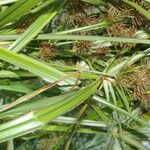
Cyperus digitatus
Digitate cyperus · Finger flat sedge · Finger Flatsedge · Finger flatsegde · Red-root Flatsedge
Description
Source: leafsnapCyperus digitatus, also known as finger flatsedge in the United States, and chang xiao sui suo cao in China, is a sedge of the family Cyperaceae that is native to tropical and subtropical areas of Africa, Asia, the Americas and Australia.
Care Guide
💧 Water
☀️ Light Full sun
Shingle flatsegde is a perennial herbaceous plant that loves sunlight and is native to open environments, commonly flourishing in meadows and grasslands. While it thrives best in full sun, it can also endure conditions with partial sun.
What are the sunlight requirements for Finger flatsedge?
Finger flatsedge, also known by its botanical name Cyperus digitatus, thrives in varying amounts of sunlight. For 'Full sun', it requires more than 6 hours of sunlight daily. For 'Partial sun', about 3-6 hours of sunlight are ideal. It's important to observe the movement of sunlight through your garden to find the perfect spots that provide a balanced environment of light and shade, ensuring your plants' well-being.
🌡️ Temperature 15–37.8°C
Flatsegde shingles have their roots in tropical areas, known for their consistently warm and humid climate. This has conditioned the plant to thrive in high heat and substantial amounts of moisture. They are sensitive to sudden shifts in temperature and are best suited to an environment with stable temperatures. Hence, keeping a consistent indoor temperature is essential. These plants typically struggle in cool conditions and demand higher temperatures to grow effectively. A significant decrease in temperature can inhibit their growth or worst-case scenario, lead to their demise.
What is Finger flatsedge?
Finger flatsedge is known botanically as Cyperus digitatus. It does not have specific information provided about its essentials or symptoms in the provided data.
💨 Humidity
🪴 Soil 6-7
🌱 Fertilizer
Flatsegde Shingle needs extra nutrients for encouraging the growth of new and healthy branches. During spring, applying compost around the plant's root area can supply the essential nourishment it requires. The act of fertilizing enhances robust growth and assists the plant in combating illnesses and pests.
🪴 Pot & Repot
✂️ Pruning
Finger flatsedge has a clumping growth habit and grass-like leaves. It benefits from regular pruning in early spring. By trimming old foliage, you can promote healthy growth and maintain its shape. Removing dead parts also helps prevent pests and improves the plant's appearance. For specific care guidelines, be sure to consult reliable sources.
🌿 Propagating
🐛 Diseases & pets
☠️ Toxicity
Characteristics
- Plant Type
- Grass
- Life Cycle
- Perennial
- Genus
- Cyperus
- Family
- Cyperaceae
- Hardiness Zone
- 8-11
- Mature Height
- 0.61 m to 1.52 m
- Mature Spread
- 20 cm to 40 cm
- Leaf Color
- Green, Blue
- Leaf Type
- Evergreen
- Flower Color
- Yellow, Green
- Flower Size
- 0.51 cm to 1.02 cm
- Bloom Time
- Summer, Early fall, Mid fall
- Planting Time
- Spring
- Harvest Time
- Late summer, Fall, Early winter
- Native Area
- Burkina Faso, Belize, Egypt, India, Malaysia, Angola, Guatemala, Namibia, Madagascar, Nigeria, Uganda, Tanzania, Benin, Uruguay, Mali, Paraguay, Indonesia, Argentina, Liberia, Venezuela, Brazil, Ghana, Ethiopia, Botswana, Congo, Nepal, Central African Republic, Chile, Honduras, Peru, South Africa, Sudan, Philippines, Mauritania, Laos, Bangladesh, Guinea, Trinidad and Tobago, Panama, Chad, China, Colombia, Afghanistan, Bolivia, Vietnam, Myanmar, Togo, El Salvador, Senegal, Eswatini, Papua New Guinea, Nicaragua, Iran, Guyana, Ecuador, Côte d'Ivoire, Costa Rica, Congo (DRC), Thailand