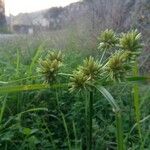
Cyperus eragrostis
Umbrella sedge · Pale galingale · Tall flat sedge · Drain flat sedge · Tall flatsedge
Description
Source: leafsnapCyperus eragrostis, commonly known as Nutgrass or Umbrella Sedge, is a perennial plant belonging to the family Cyperaceae. Native to Africa and Asia, it has been introduced and naturalized in various parts of the world. This plant can grow up to 1 meter tall and features long, slender leaves arranged in a spiral pattern around its triangular stem. At the tip of the stem, small brown flowers can be found. Nutgrass thrives in moist soils such as those found in marshes, swamps, or wetlands, but it can also grow in drier environments like fields and lawns. It propagates through underground rhizomes, which can rapidly form dense mats of vegetation. This plant has been utilized for medicinal purposes by various cultures around the world. It has been used to treat fever, diarrhea, dysentery, and other ailments. Additionally, its durable roots have been traditionally used for basket weaving. However, Nutgrass is considered an invasive weed by many farmers due to its rapid spread through underground rhizomes, making it difficult to control once established. Its presence can reduce crop yields by competing with other plants for nutrients and water. Overall, while Cyperus eragrostis remains an interesting species with beneficial medicinal uses, it can negatively impact agriculture if not properly managed or controlled, especially when it grows outside its native range.
🌳 Tall flatsedge possesses a distinctive yet often overlooked capacity to support bioremediation, the use of living organisms to cleanse polluted environments. This capacity comes from its extensive root system, which can help stabilize soil and take up contaminants. Although not widely celebrated, this characteristic makes tall flatsedge a candidate for environmentally friendly projects aimed at restoring environmental quality in degraded ecosystems.
Care Guide
💧 Water Every 7 days
Tall flatsedge thrives in moist environments and needs consistent moisture, along with weekly watering, to grow well. Although it can tolerate moderate drought, it benefits greatly from rainwater during the growing season. As an herbaceous perennial, it is typically grown outdoors, which suits its natural water requirements.
What should I do if I give my Tall flatsedge plant too much or too little water?
Proper watering is essential for the growth of this ornamental grass. When planted in the ground, watering issues can be resolved. However, in a container, excessive or insufficient water can quickly kill the Tall flatsedge. Insufficient watering can cause it to stop growing, while overwatering can result in yellow leaves with brown tips. Signs of underwatering include drooping leaves, weak seed head production, and browned leaves. If you suspect watering issues, determine if it's from too much or too little water. If it's receiving too much water, immediately stop watering and allow heavy soils to dry out over the course of a few weeks. Check for new growth before deciding if more water is needed. If the grass is receiving too little water, a deep watering can help revive it. It's important to remember that long, deep watering is better than shallow, frequent waterings. This encourages the growth of deep roots, making the grass more resilient to drought and watering-related problems.
How frequently should I water my Tall flatsedge plant?
The watering needs of Tall flatsedge vary depending on its planting location. Typically, watering this grass once a week is sufficient. However, in hot climates, watering two or three times a week during summer may be necessary. In moderate climates, watering once every seven days or more should be enough. It's important to note that grass in containers usually requires more frequent watering compared to those in the ground. Additionally, the location of the grass, whether in full sun or part shade, affects its watering needs. Shaded grasses generally need less watering compared to those in the ground. When watering Tall flatsedge, it should only be done when the soil is dry. To determine if the soil is dry, you can press your finger a couple of inches into the soil or check the weight of a potted grass using a portable scale. Another indication of insufficient water is when the grass blades appear folded along their centers and thinner than usual. Although Tall flatsedge is drought-tolerant, regular, deep waterings will enhance its beautiful color. In its natural habitat of open scrubland, Tall flatsedge endures extreme heat, intense sunlight, and sporadic rainfall. While this grass is drought-resistant, it still requires care and attention. Gardeners agree that it thrives best with consistent watering, despite its hardiness. During the initial planting phase, Tall flatsedge needs more frequent watering until it establishes deep roots. Potted Tall flatsedge is prone to quick soil drying, especially if exposed to hot, direct sunlight for extended periods. Testing the soil every 3 to 4 days and watering only when it feels dry is recommended. On the other hand, Tall flatsedge in the ground generally requires less watering, but the specific soil type plays a role. Heavy clay soil retains moisture below the surface even if the top layer appears dry, while sandy soils that drain quickly should be watered more often.
What do I need to watch out for when I water my Tall flatsedge during different seasons, climates, or stages of growth?
Monitoring the rate of grass growth can help determine if you are watering enough. Tall flatsedge has a tendency to double in size within a year during the hottest months. If the weather is hot but the grass isn't growing vigorously, you may need to adjust your watering schedule. In winter, watering once a month might be sufficient, but checking the soil for moisture is still recommended. It's important to note that during the growth cycle in warm months, the grass requires more water than usual, but the need for water decreases significantly in winter and cooler months. Remember to let the soil dry out completely before watering when dealing with Tall flatsedge.
☀️ Light Full sun
Tall flatsedge prospers in environments that provide plentiful sunlight throughout the day. It can, however, tolerate moderate light conditions. Its native habitat is open and gets a substantial amount of sun. Both excessive and inadequate sunlight can be harmful, reducing its healthy growth and vigor.
What are the sunlight requirements for Tall flatsedge?
Tall flatsedge requires a substantial amount of sunlight throughout the day to flourish, thriving in full sun conditions which involve more than 6 hours of sunlight daily. It can also tolerate partial sun conditions, receiving around 3-6 hours of sunlight. Originating from open habitats, this plant's health and vitality can be compromised by either excessive or not enough sunlight. It's important to observe how sunlight moves through your garden, choosing spots that offer an ideal balance of light and shade for your Tall flatsedge, ensuring its well-being.
How can artificial lighting support Tall flatsedge indoor growth?
Indoor Tall flatsedge plants require adequate lighting for optimal growth, particularly when natural sunlight is insufficient, such as during winter or in less sunny spaces. Artificial lighting can be a vital solution, promoting faster, healthier growth. LED lights are a popular choice, as they can be customized to provide the specific wavelengths of light plants need. Full sun plants require 30-50 watts per square foot, partial sun plants need 20-30 watts per square foot, and full shade plants need 10-20 watts per square foot. Proper placement involves setting the light source 12-36 inches above the plant, mimicking natural sunlight, and ensuring the plant receives 8-12 hours of light per day.
What are the symptoms of inadequate light in Tall flatsedge?
When Tall flatsedge is exposed to inadequate lighting, several symptoms may manifest, indicating light deficiency. These symptoms include smaller new leaves compared to older ones, leggy or sparse growth with extended spaces between leaves or stems, faster drop of older leaves to conserve resources, slower or completely halted growth, lighter-colored or irregular-patterned new leaves indicating a lack of chlorophyll, and conditions like chlorosis, sunscald, leaf curling, wilting, and leaf scorching due to extreme sunlight conditions or inadequate light.
How can I improve light conditions for my Tall flatsedge?
To optimize growth conditions for Tall flatsedge, gradually introducing the plant to more sunlight can be beneficial, aiming for at least 6 hours of direct sunlight daily. For indoor plants, using a south-facing window or artificial lighting such as desk or ceiling lamps for at least 8 hours a day is recommended. For outdoor plants, a gradual move to sunnier spots helps prevent sunburn. Reducing obstructions like pruning trees that block sunlight or transplanting smaller plants to locations with ample sunlight and good drainage are effective strategies. It's important to note that while parts of the plant affected by insufficient sunlight might not recover, new growth will be healthy following these adjustments.
🌡️ Temperature 15–35°C
Tall flatsedge favors temperatures of 59 to 95 ℉ (15 to 35 ℃). It is commonly found in its native habitats where temperatures fluctuate over the year but remain within that range. During the summer months, it may benefit from shade or a light misting to prevent excessive heat stress.
What temperature range is ideal for Tall flatsedge?
Tall flatsedge thrives in temperatures ranging from 59°F to 95°F (15°C to 35°C). This plant is well-suited to environments where temperatures fluctuate within this range throughout the year. During hotter months, it may need shade or misting to prevent heat stress. It has some cold tolerance, not requiring special care above -5°C. However, if temperatures are expected to fall below -5°C, temporary cold protection measures, such as wrapping the plant in plastic film or fabric, should be considered and removed once temperatures rise.
How does Tall flatsedge react to low temperatures?
Tall flatsedge has a moderate tolerance to low temperatures, flourishing best when temperatures are above 15°C and should be kept above -5°C during winter. If temperatures drop below -10°C, the plant's leaves may droop, and in severe cases, wilt and fall off. To protect against frost damage, it's advised to trim off affected parts and, before encountering low temperatures again, wrap the plant in non-woven fabric or cloth and construct a wind barrier for protection.
What should be done if Tall flatsedge experiences high temperatures?
In summer, it's crucial to keep Tall flatsedge below 35°C. Temperatures above 41°C can cause the leaves to lighten in color, dry and wither at the tips, curl, and increase the risk of sunburn. To mitigate this, trim away sunburned and dried-up parts. Relocate the plant to a shaded spot during the midday and afternoon sun or use shade cloth. Ensuring the plant is watered in the morning and evening will keep the soil moist and help the plant stay healthy.
💨 Humidity
🪴 Soil 6-7
🌱 Fertilizer
Tall flatsedge needs extra nutrients to encourage healthy new growth. In spring, adding compost around the base of the plant can effectively supply the nutrition it requires. Fertilizing helps support robust growth and bolsters the plant’s resistance to diseases and pests.
🪴 Pot & Repot 2-3 years
When repotting Tall flatsedge, choose a pot 1-2 inches (2.5–5.1 cm) larger with ample drainage. Use a well-draining potting mix. Repot in spring or fall, ensuring the root ball sits slightly lower than the rim of the pot. Water thoroughly after repotting and place it in a warm spot with indirect sunlight.
✂️ Pruning
In the fall, trim back the dead stems of tall flatsedge to prevent diseases. Be cautious when pruning, as cutting the leaflets can cause brown tips. These brown tips cannot be fixed by additional cutting, so it's best to let them naturally grow out as the plant continues to develop.
🌿 Propagating
🐛 Diseases & pets
☠️ Toxicity
Characteristics
- Plant Type
- Grass
- Life Cycle
- Perennial
- Genus
- Cyperus
- Family
- Cyperaceae
- Hardiness Zone
- 8-10
- Mature Height
- 10 cm to 91 cm
- Mature Spread
- 1.83 m
- Leaf Color
- Green
- Leaf Type
- Evergreen, Semi-evergreen
- Flower Color
- Green
- Flower Size
- 1.02 cm to 4.06 cm
- Bloom Time
- Early summer, Mid summer
- Planting Time
- Spring
- Harvest Time
- Mid summer, Late summer
- Native Area
- Mexico, Bolivia, Peru, Brazil, Jamaica