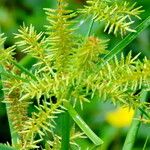
Cyperus erythrorhizos
Red-root flat sedge · Redroot Flatsedge · Red-root Flatsedge · Red-rooted Flatsedge · Red-rooted Cyperus
Description
Source: leafsnapCyperus erythrorhizos is a species of sedge known by the common name redroot flatsedge. It is across much of North America from Maine, Ontario and British Columbia south to Tabasco in southern Mexico. Cyperus erythrorhizos is a plant of wet areas such as rivers and ditches, generally at low elevations. It gets its common and scientific names from the red color of its roots. This sedge grows to a maximum of a meter in height, but is usually quite a bit shorter. It may have a number of long, wispy leaves around the base of the plant. The inflorescence may contain one to several spikes, each spike containing 20 to over 100 spikelets. Each spikelet is light greenish brown to reddish brown and is made up of up to 30 bracted flowers. The fruit is a glossy achene about a millimeter long.
Care Guide
💧 Water
The Red-root flat sedge thrives in moist environments, needing regular moisture and weekly watering. It grows best outdoors where it can benefit from natural rainfall and water sources. This makes it an excellent choice for rain gardens or areas near bodies of water, as it contributes to effective water management within the ecosystem.
☀️ Light Full sun
The red-root flat sedge grows best with ample sunlight, though it can tolerate moderate sun. Native to areas with abundant sunlight, the plant's growth and vigor are improved by substantial sun exposure. However, too much or too little light can hinder its development.
🌡️ Temperature 10–41.1°C
Red-root flat sedge is native to regions where temperatures range from 68 to 105.8 °F (20 to 41 ℃). It prefers warmer environments. To replicate these conditions, keep temperatures warm in spring and summer and moderately warm in autumn and winter.
💨 Humidity
🪴 Soil 6-7
🌱 Fertilizer
🪴 Pot & Repot
✂️ Pruning
Red-root flat sedge, recognized for its red roots and dense growth, thrives with regular pruning from early to late spring. To encourage new growth and enhance air circulation, cut back dead stems at the base and thin out overcrowded areas. These practices not only prevent disease but also improve the plant's overall health and vigor.
🌿 Propagating
🐛 Diseases & pets
☠️ Toxicity
Characteristics
- Plant Type
- Grass
- Life Cycle
- Annual, Perennial
- Genus
- Cyperus
- Family
- Cyperaceae
- Hardiness Zone
- 6-13
- Mature Height
- 0.1 m to 1.07 m
- Mature Spread
- 61 cm
- Leaf Color
- Green, Dark Green
- Leaf Type
- Evergreen
- Flower Color
- Yellow, Green, Brown
- Flower Size
- 0.20 cm to 0.51 cm
- Bloom Time
- Summer
- Planting Time
- Spring, Summer, Autumn
- Harvest Time
- Late summer, Early fall, Mid fall