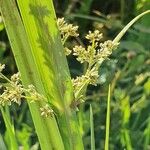
Cyperus exaltatus
Giant sedge · Umbrella sedge
Description
Source: leafsnapCyperus exaltatus is a species of sedge that is native to parts of the Africa, Asia, Argentina and Australia.
Care Guide
💧 Water
Giant sedge, native to wetlands, thrives in moist and humid environments where it prefers consistently damp soil. To maintain its natural habitat, it requires weekly watering. This plant, being aquatic or semi-aquatic, is well-adapted to changing water levels and demonstrates resilience in a variety of hydrological conditions.
☀️ Light Full sun
Giant sedge has its origins in environments abundant in sunlight, like the shallow fringes of ponds and lakes. It primarily favors conditions with full sun, but it can also withstand areas with partial sunlight.
What are the sunlight requirements for Giant Sedge?
Giant sedge, or Cyperus exaltatus, thrives best in full sun conditions, which means it requires more than 6 hours of sunlight daily. It can also tolerate partial sun situations, where it gets about 3-6 hours of sunlight. Observing how sunlight moves through your garden will help you choose spots that ensure the right balance of light and shade, contributing to the plant's health and happiness.
Why is it important to provide adequate lighting for indoor Giant Sedge plants, and how can this be achieved?
For indoor Giant Sedge plants, adequate lighting is essential for optimal growth, especially when natural sunlight is insufficient, such as in winter or less sunny spaces. Artificial lighting, like LED lights, offers a viable solution by providing the necessary wavelengths for healthy plant development. Full sun plants require 30-50W per square foot of artificial light, partial sun plants need 20-30W per square foot, and full shade plants should get 10-20W per square foot. Place the light source 12-36 inches above the plant to mimic natural sunlight and keep it on for 8-12 hours a day to simulate the natural length of daylight hours.
What are the symptoms of light deficiency in Giant Sedge?
Symptoms of light deficiency in Giant Sedge include smaller new leaves, leggy or sparse growth, faster leaf drop, slower or no new growth, lighter-colored new leaves, chlorosis (leaves turning yellow), sunscald (damaged leaves from intense sunlight), leaf curling (a defense mechanism against too much sunlight), wilting (due to increased water loss), and leaf scorching (brown, dry edges on leaves from excessive sunlight). These symptoms indicate that the plant isn't receiving adequate sunlight, which is vital for its development and overall health.
How can you address light deficiency issues in both indoor and outdoor Giant Sedge plants?
To address light deficiency in Giant Sedge plants, gradually increase sunlight exposure. For indoor plants, move them to a sunnier location each week until they receive at least 6 hours of direct sunlight daily, using a south-facing window or artificial light if moving the plant isn't feasible. For outdoor plants, also move them to sunnier spots gradually to avoid sunburn. Additionally, for ground plants, reducing obstructions by pruning trees or transplanting smaller plants during their dormant period can help increase sunlight exposure. Remember, while affected parts may not recover, new growth should be healthy following these adjustments.
🌡️ Temperature 5–25°C
The giant sedge hails from tropical areas, which are generally warm and humid. Consequently, it is well-suited to hot and humid conditions. It's not fond of abrupt shifts in temperature and prefers a consistent thermal environment, hence the need to prevent temperature swings indoors. It generally struggles with low temperatures and needs higher heat levels to thrive. If the ambient temperature falls excessively, the plant might stop growing or even perish.
What is the botanic name of Giant sedge?
The botanic name of Giant sedge is Cyperus exaltatus. This particular species is part of the larger sedge family and is known for its distinctive appearance and growth habits. Unfortunately, there is no additional information provided about its essential attributes or symptoms related to this plant.
💨 Humidity
🪴 Soil
🌱 Fertilizer
🪴 Pot & Repot
✂️ Pruning
Giant sedge requires minimal pruning, which is best done in early spring. To keep the plant healthy, remove any dead or damaged stems, thin out crowded areas, and trim excess foliage to maintain its shape. Regular pruning not only boosts the plant’s vigor but also helps prevent pests, ensuring it remains healthy and attractive throughout the growing season.
🌿 Propagating
🐛 Diseases & pets
☠️ Toxicity
Characteristics
- Plant Type
- Grass
- Life Cycle
- Perennial
- Genus
- Cyperus
- Family
- Cyperaceae
- Hardiness Zone
- 4
- Mature Height
- 0.91 m to 1.52 m
- Mature Spread
- 2.13 m
- Leaf Color
- Dark Green
- Leaf Type
- Semi-evergreen
- Flower Size
- 0.76 cm to 1.02 cm
- Bloom Time
- Summer, Early fall, Mid fall
- Planting Time
- Spring, Summer, Autumn
- Harvest Time
- Late summer, Fall, Early winter
- Native Area
- Sri Lanka, Burkina Faso, Somalia, Egypt, India, Malaysia, Angola, Namibia, Madagascar, Rwanda, Pakistan, Eritrea, Nigeria, Kenya, Uganda, Tanzania, Zimbabwe, Benin, Mali, Indonesia, Cambodia, Cameroon, Burundi, Mozambique, Koppen, Ghana, Ethiopia, South Korea, Botswana, Congo, Malawi, South Africa, Zambia, Sudan, Chad, China, Vietnam, Myanmar, Japan, Togo, Senegal, Eswatini, Singapore, Côte d'Ivoire, Congo (DRC), Thailand