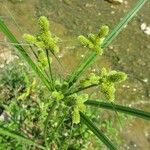
Cyperus glomeratus
Glomerate flatsedge · Glomerate galingale · Round-headed cyperus · Round-headed nutsedge
Description
Source: leafsnapCyperus glomeratus is a species of sedge that is native to parts of Europe, the Middle East and Asia. It grows in rice fields and shores of rivers.
Care Guide
💧 Water
Round-headed cyperus thrives in environments with high humidity and consistent moisture, much like tropical rainforests. To promote lush growth, it's important to water the plant twice a week and keep the soil consistently moist. This plant is ideally suited for indoor settings where humidity levels can be effectively managed, particularly during its growing season.
☀️ Light Full sun
Round-headed cyperus comes from bright, open habitats and does best in full sun. It will tolerate some partial shade but favors direct sunlight for the best growth. This plant, which can be annual or biennial, is recognized for its sun-loving habit.
What are the sunlight requirements for Round-headed cyperus (Cyperus glomeratus)?
Round-headed cyperus (Cyperus glomeratus) requires specific sunlight conditions to thrive. It needs full sun, which is above 6 hours of direct sunlight daily, or partial sun, about 3-6 hours of sunlight a day. It's important to observe the movement of sunlight through your garden to find spots that offer the ideal mix of light and shade, ensuring the plants' well-being. This careful selection helps in meeting the plant's needs for sunlight, promoting healthy growth and development.
🌡️ Temperature 15–37.8°C
Round-headed cyperus is fairly adaptable to temperature, able to withstand higher heat and considerable temperature fluctuations. In hot weather, care should be taken with watering and providing appropriate shade to prevent sunburn. Conversely, round-headed cyperus is not very tolerant of low temperatures; while it can handle some cold, very cold conditions may cause frost damage.
What is the common name of Cyperus glomeratus?
The common name of Cyperus glomeratus is Round-headed cyperus.
What symptoms does Cyperus glomeratus display?
There are no symptoms specified for Round-headed cyperus (Cyperus glomeratus).
What are the essential care tips for Round-headed cyperus?
There are no specific essential care tips provided for Round-headed cyperus (Cyperus glomeratus).
💨 Humidity
🪴 Soil 5-6
🌱 Fertilizer
Round-headed cyperus does well with regular, weak fertilizer applications to encourage healthy leaf growth. Apply fertilizer roughly once a month during the summer. Nitrogen is important for the foliage, and providing nitrogen-rich fertilizers helps Round-headed cyperus thrive.
🪴 Pot & Repot
✂️ Pruning
Round-headed cyperus is characterized by its rounded, clustered flower heads and benefits greatly from regular pruning, particularly from early spring to late spring. Pruning encourages healthy growth, enhances air circulation, and helps control the plant's spread. Be sure to use sharp, clean tools to make accurate cuts and minimize the risk of infections.
🌿 Propagating
🐛 Diseases & pets
☠️ Toxicity
Characteristics
- Plant Type
- Herb
- Life Cycle
- Annual
- Genus
- Cyperus
- Family
- Cyperaceae
- Hardiness Zone
- 8-11
- Mature Height
- 30 cm to 91 cm
- Mature Spread
- 20 cm to 40 cm
- Leaf Color
- Green, Dark Green
- Leaf Type
- Semi-evergreen
- Flower Color
- Yellow, Green, Brown
- Flower Size
- 0.20 cm to 0.51 cm
- Bloom Time
- Summer, Early fall, Mid fall
- Planting Time
- Spring, Summer
- Harvest Time
- Late summer, Fall, Early winter
- Native Area
- Turkey, Austria, Slovakia, Romania, Montenegro, Bulgaria, Greece, Croatia, Slovenia, Ukraine, Serbia, Uzbekistan, Russia, China, Hungary, Italy, Kazakhstan, Spain, Switzerland, Japan, Koppen, Albania, Azerbaijan, South Korea, France