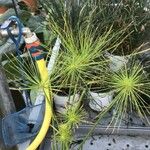
Cyperus haspan
Dwarf papyrus sedge · Haspan flat sedge · Haspan Flatsedge
Description
Source: leafsnapCyperus haspan, commonly known as the dwarf papyrus, is a perennial aquatic plant belonging to the Cyperaceae family. Native to Africa, it thrives in wetlands, marshes, and along riverbanks. The plant is characterized by its thin stems, which can grow up to 60 cm in height, topped with umbrella-like clusters of small brown flowers. The leaves of Cyperus haspan are long and thin, with a triangular shape, reaching up to 30 cm in length. The plant's roots grow underwater, making it an excellent choice for water gardens or aquariums. Caring for Cyperus haspan is simple. It requires full sun exposure or partial shade, along with regular watering. The plant can also tolerate occasional droughts, which makes it ideal for low-maintenance gardens. Beyond its aesthetic appeal, the dwarf papyrus serves several ecological functions. It provides shelter for aquatic animals such as fish and frogs and helps purify water by absorbing excess nutrients from the surrounding environment. In traditional medicine, Cyperus haspan was used by ancient Egyptians to treat various ailments, including fever, dysentery, and diarrhea, thanks to its anti-inflammatory properties. Overall, this unique aquatic plant enhances both beauty and ecological function, making it a valuable addition to any garden or aquarium setting.
Care Guide
💧 Water Every 7 days
The dwarf papyrus sedge flourishes in humid, wet environments and needs to be watered weekly for optimal growth. It thrives in high humidity and can be grown outdoors year-round in temperate climates with consistent rainfall, due to its evergreen nature.
What should I do if I give my Dwarf papyrus sedge too much or too little water?
For this beautiful ornamental grass to thrive, it needs to be watered correctly. When planted in the ground, watering issues can be resolved, but in a container, too much or too little water can quickly kill Dwarf papyrus sedge. If it doesn't receive the right amount of water, the grass may stop growing. Overwatering can cause yellow leaves with brown tips, while underwatering can lead to drooping leaves, weak seed head production, and browned leaves. If you suspect that your Dwarf papyrus sedge has been improperly watered, the first step is to determine if it's getting too much or too little water. If it's receiving too much water, stop watering immediately. It may take a few weeks for heavy soils to dry out, so patience is key. Once you see new growth, test the soil for moisture and decide if it needs more water. If the grass is getting too little water, simply give it a deep drink and observe if it perks up. Remember that a long, deep watering is better than frequent, shallow waterings. This helps the grass develop deep roots, making it more resistant to drought and less susceptible to watering-related problems.
How frequently should I water my Dwarf papyrus sedge plant?
The watering needs of Dwarf papyrus sedge depend on its planting location. In general, watering once a week is recommended. In hot climates, watering once or twice a week during summer may be necessary. In moderate climates, watering once every seven days or more should be sufficient. Grass in containers generally requires more frequent watering than grass planted in the ground. However, the location of the grass also affects its watering needs. Grasses in shaded areas require less frequent watering compared to grasses planted in the ground. Only water Dwarf papyrus sedge when the soil is dry. You can check the soil moisture level by pressing your finger a few inches into the soil. For potted grass, you can weigh the container or feel its weight to determine if it needs watering. If the grass lacks sufficient water, the blades may fold along their centers and appear thinner than usual. Despite its drought tolerance, regular and deep waterings will result in beautiful color. Although Dwarf papyrus sedge is adapted to harsh conditions in the wild, it still requires care and attention, including consistent watering. Newly planted Dwarf papyrus sedge needs more frequent watering until it establishes deep roots. Potted grasses dry out quickly, especially when exposed to direct sun for extended periods. Test the soil every 3 to 4 days and water only when it feels dry. Dwarf papyrus sedge planted in the ground generally requires less watering, but the type of soil it grows in determines its watering needs. Clay soil holds water for longer periods, so it may feel dry at the surface while retaining moisture below ground. Sandy soils drain quickly and may need more frequent watering.
What do I need to be cautious about when I water my Dwarf papyrus sedge in different seasons, climates, or during different growing periods?
To determine if you are watering your grass enough, observe its growth rate. Dwarf papyrus sedge, for example, can double in size within a year in the hottest months. If the weather is hot but the grass is not growing well, adjust your watering schedule. During winter, you may need to water once a month, but check the soil for moisture before doing so. In the warmest months, the grass will require more water due to its growth cycle, but during colder months, the water requirement will decrease. Remember that the soil for Dwarf papyrus sedge should always be allowed to completely dry out before watering again.
☀️ Light Full sun
Dwarf papyrus sedge does best in locations that receive strong sunlight for most of the day. Places where sunlight comes through only intermittently also support its growth. Too much sun can stress the plant and cause scorching, while too little light can prevent it from developing well. Its native wetlands provide similar sunlight conditions.
What type of sun exposure do plants need?
Plants require varying degrees of sun exposure based on their specific needs. 'Full sun' means the plant should receive above 6 hours of sunlight daily, while 'Partial sun' refers to about 3-6 hours of sunlight. It's important to observe the movement of sunlight through your garden to choose spots that provide an appropriate balance of light and shade, ensuring your plants thrive.
How does sun exposure affect the Dwarf papyrus sedge?
Dwarf papyrus sedge thrives in environments with substantial sun exposure throughout the day, as well as in areas where sunlight is sporadically filtered. Both too much and too little sun can have adverse effects on the plant; excessive sunlight can lead to scorching, while insufficient sunlight can prevent healthy development. Mimicking the solar conditions of the plant's native wetlands is key to its growth. When natural sunlight is not enough, especially during winter or in less sunny spaces, artificial lighting can be a vital solution. Indoor plants benefit from artificial lights, such as LEDs, which should be chosen based on the specific wavelength needs of the plant. The intensity and duration of artificial light should mimic natural sunlight as closely as possible.
What are the symptoms of inappropriate sunlight exposure in Dwarf papyrus sedge?
Inadequate lighting can lead to several symptoms in Dwarf papyrus sedge, including smaller new leaves, leggy or sparse growth, early leaf drop to conserve resources, delayed or stopped growth, and pale or irregularly colored new leaves due to lack of chlorophyll. Excessive sunlight exposure can cause chlorosis (leaves turning yellow), sunscald, leaf curling as a defense mechanism, wilting due to water loss, and leaf scorching. Identifying these symptoms early can help adjust care to prevent further damage.
How can you address light conditions for indoor, outdoor, and ground-planted Dwarf papyrus sedge?
To optimize growth for indoor Dwarf papyrus sedge, gradually increase sun exposure to at least 6 hours daily or use artificial lighting if the plant is large or not easily movable. For outdoor plants, avoid sudden changes in light intensity by gradually moving the plant to sunnier spots each week. When dealing with obstruction of sunlight for ground-planted specimens, reducing shade from trees by pruning or transplanting the plant to a sunnier location with good drainage during its dormant period can improve light exposure. Note that parts of the plant affected by inadequate sunlight may not recover, but new growth should be healthy following these adjustments.
🌡️ Temperature 10–41.1°C
Dwarf papyrus sedge is normally adapted to a temperature range of 50 to 105.8 °F (10 to 41 ℃), reflecting its natural habitat. In different seasons, try to recreate these conditions to keep the plant healthiest.
What are the ideal temperature conditions for Dwarf papyrus sedge?
Dwarf papyrus sedge thrives in a temperature range of 50 to 105.8 °F (10 to 41 °C), which reflects its natural habitat. It's crucial to try to replicate these conditions across different seasons to maintain the plant's health. Dwarf papyrus sedge is quite resistant to cold and does not usually require special frost protection measures in winter. However, if temperatures are expected to fall below -25°C, it's important to protect the plant from the cold by covering it with soil or straw. Additionally, watering the plant abundantly before the first freeze in autumn, ensuring the soil remains moist as it enters a frozen state, helps prevent drought and water scarcity during the winter and early spring.
How does Dwarf papyrus sedge react to low temperatures?
Dwarf papyrus sedge is cold-tolerant and performs best when temperatures are above 10°C. It should be kept above -15°C during winter. If the temperature drops below -25°C, the plant may not show immediate damage during the winter, but there may be a noticeable decrease in sprouting, or in some cases, the plant may not sprout at all in the spring. It is recommended to remove any parts that have failed to sprout in the spring as a solution.
What should be done if Dwarf papyrus sedge experiences high temperatures?
During the summer, it is essential to keep Dwarf papyrus sedge's temperature below 41°C. If the temperature surpasses 45°C, the plant's leaves can become lighter in color, curl, become susceptible to sunburn, and in severe cases, the entire plant can wilt and dry out. To mitigate these issues, trim away the sunburned and dried parts of the plant. You should also move the plant to a location with shade during the midday and afternoon sun or use a shade cloth to provide shade. Ensuring the soil remains moist by watering the plant in the morning and evening is also beneficial.
💨 Humidity
🪴 Soil
🌱 Fertilizer
To promote vigorous growth and strong root support for dwarf papyrus sedge, apply a layer of organic mulch or compost around the base of the plant once a month during its active growing season. Make sure the layer is 1 to 2 inches thick and keep it away from the stems. During cooler seasons, reduce applications to every two months and switch to using slow-release fertilizers. Avoid synthetic fertilizers to protect the ecosystem surrounding the dwarf papyrus sedge.
🪴 Pot & Repot 2-3 years
Repot your dwarf papyrus sedge every 2-3 years in late spring. Use a wider, shallow pot to mimic its natural wet habitat. After repotting, keep the plant moist and place it in partial sunlight to encourage the healthy growth of its grass-like clusters.
✂️ Pruning
To promote healthy growth in your dwarf papyrus sedge, prune it in early spring by removing any dead stems. Trim the plant at its base and thin it periodically to improve air circulation and maintain its shape. These techniques, recommended by gardening guides, are essential for ensuring the plant's optimal health and appearance.
🌿 Propagating
🐛 Diseases & pets
☠️ Toxicity
Characteristics
- Plant Type
- Grass
- Life Cycle
- Perennial
- Genus
- Cyperus
- Family
- Cyperaceae
- Hardiness Zone
- 6-13
- Mature Height
- 76 cm
- Mature Spread
- 61 cm
- Leaf Color
- Green, Blue
- Leaf Type
- Evergreen
- Flower Color
- Brown, Green
- Flower Size
- 0.20 cm to 0.25 cm
- Bloom Time
- Summer, Early fall, Mid fall
- Planting Time
- Spring, Summer, Autumn
- Harvest Time
- Mid summer, Late summer, Fall
- Native Area
- Sri Lanka, Burkina Faso, Belize, India, Mexico, Guatemala, Madagascar, Pakistan, Nigeria, Guinea-Bissau, Uganda, Tanzania, Benin, Sierra Leone, Indonesia, Cameroon, Mozambique, Ethiopia, Central African Republic, Malawi, Honduras, Peru, Philippines, Laos, Panama, Chad, China, Colombia, Japan, Togo, El Salvador, Senegal, Iran, Côte d'Ivoire, Ecuador, Costa Rica, Gambia, Congo (DRC), Somalia, Angola, Malaysia, Kenya, Niger, Jamaica, Zimbabwe, Mali, Cuba, Cambodia, Equatorial Guinea, Liberia, Burundi, Venezuela, Brazil, Ghana, South Korea, Congo, Nepal, Zambia, Sudan, Guinea, Bolivia, Vietnam, Myanmar, Guyana, Bhutan, Nicaragua, Thailand, Gabon