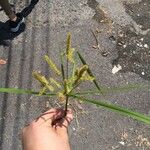
Cyperus iria
Umbrella sedge · Grasshopper's cyperus · Rice flat sedge · Ricefield Flatsedge · Rice flatsedge
Description
Source: leafsnapCyperus iria (also known as rice flat sedge and rice flatsedge) is a smooth, tufted sedge found worldwide. The roots are yellowish-red and fibrous. The plant often grows in rice paddies, where it is considered to be a weed.
Care Guide
💧 Water
Ricefield flatsedge, native to moist environments, thrives in conditions of consistent moisture and high humidity. For optimal growth, water it weekly, ideally using rainwater, which provides natural irrigation and nutrients. This species is well-suited for wetland areas and is typically found in outdoor settings with damp soil.
What should I do if I give my Ricefield flatsedge plant too much or too little water?
To ensure optimum performance, it is crucial to water this beautiful ornamental grass appropriately. When planted in the ground, any watering issues can be resolved. However, when grown in a container, both overwatering and underwatering can quickly lead to the demise of Ricefield flatsedge. Insufficient watering can cause the grass to cease growing, resulting in drooping leaves, weak seed head production, and browning. On the other hand, overwatering can manifest in yellow leaves with brown tips. If you suspect that the grass has been watered incorrectly, your first step is to determine whether it is receiving too much or too little water. In the case of overwatering, immediately cease watering and patiently wait for heavy soils to dry out over the course of several weeks. Once new growth emerges, assess the soil for moisture levels and decide whether additional watering is required. Conversely, if the grass is receiving too little water, simply give it a deep, rejuvenating drink and observe if it perks up. It is essential to bear in mind that a long, deep watering session is always preferable to frequent, shallow waterings. This method fosters the development of deep roots in grasses, enhancing their resistance to drought and reducing the susceptibility to watering-related problems.
How frequently should I water my Ricefield flatsedge?
The watering needs of Ricefield flatsedge depend on the location and climate. Generally, watering this grass once a week is recommended. In hot climates, watering once or twice a week in the summer may be necessary. In moderate climates, watering once every seven days or more may be sufficient. Keep in mind that grass in containers usually needs more frequent watering than grasses in the ground. Additionally, the location plays a role, as shaded grasses require less frequent watering than those in full sun. It's important to water Ricefield flatsedge only when the soil is dry. To check, press your finger a couple of inches into the soil or weigh the grass in a pot with a portable scale. If the soil feels dry or the pot is light, it's time to water. Lack of sufficient water may cause the blades to appear folded and thinner than usual. Despite being drought-tolerant, regular and deep waterings will enhance the grass's color. Although Ricefield flatsedge is naturally found in harsh conditions with intermittent rain, it still needs care and attention. Consistent watering is beneficial for this hardy grass. After planting, it requires more frequent watering until its roots become established. When potted, the soil may dry out quickly, especially in hot and direct sunlight. Test the soil every 3 to 4 days and only water when it feels dry. In-ground Ricefield flatsedge generally needs less watering, but it depends on the soil type. Clay soil retains moisture below the surface, so it may feel dry on top even if there's still plenty of water. Sandy soils that drain quickly will require more frequent watering.
What should I watch out for when watering my Ricefield flatsedge in different seasons, climates, or during different stages of growth?
The rate of growth of your grasses can often indicate if you are watering enough. Ricefield flatsedge, for example, tends to double in size within a year during the hottest months. If the weather is hot but the grass is not growing vigorously, it may be time to adjust your watering schedule. In winter, you can water once a month, but make sure to check the moisture levels in the soil. During the warmest months, the grass will require more water than usual, but during winter and cooler months, the need for water will significantly decrease. Remember to let the soil dry out completely before watering Ricefield flatsedge.
☀️ Light Full sun
Ricefield flatsedge does best with continuous sunlight. This illumination is important at every stage of growth, reflecting its native, brightly sunlit savannah habitat. It can persist in lower light, but inadequate illumination weakens it and causes stunted growth. Conversely, excessively strong sun can scorch the leaves if it is not managed.
How many hours of sunlight does Ricefield flatsedge need each day to grow well?
To successfully care for these plants, ensure they receive a minimum of 6 to 8 hours of sunlight each day. It is preferable to provide them with more morning light, particularly during the summer. The Ricefield flatsedge thrives in full sun and benefits from as much sunlight as possible. The more light these species receive, the better they can produce food, showcase dazzling blossoms, and thrive.
What kind of sunlight does Ricefield flatsedge require?
The Ricefield flatsedge thrives in full sunlight. To ensure even sun exposure, it's important not to overcrowd them. The leaves should not be deprived of sunlight. If planting them in pots, try placing them in windows where they can receive direct sun throughout the year. Avoid placing them in areas with partial or filtered light, as this can result in weak stems and unhealthy flowers. It's ideal to keep the Ricefield flatsedge constantly exposed to the sun.
Does sunlight harm plants? How can Ricefield flatsedge be protected from sun and heat damage?
The Ricefield flatsedge is sensitive to extreme temperatures above 90℉(32℃), especially when exposed to prolonged sunlight. It's best to provide some shade in the afternoon during summer. It's important to remember that summer sunlight is stronger and lasts 50% longer than in winter. If the Ricefield flatsedge is stressed from sunlight, ensuring they are well-hydrated is recommended. Water them when the top of the soil is about 2 inches dry, and consider moving them indoors if it's too hot outside, particularly if they are in containers. While wilting leaves during the day is normal and they typically recover at night, persistent drooping indicates rapid water loss and the need for watering.
Do I need to protect Ricefield flatsedge from the sun?
The Ricefield flatsedge thrives in sunlight and does not need protection from the sun. Some species of this plant are even heliotropic, meaning they are attracted to sunlight. If you want to grow them in your garden, it is recommended to plant them in south-facing areas where they can receive sun exposure from morning to afternoon. However, it's important to be mindful that the intense sun can potentially cause sunburn on some plants, so offering protection from the afternoon and midday sun, such as through the shade of a tree or a wall, may be necessary. It is not possible to successfully grow the Ricefield flatsedge in shady areas because the larger flowers require significant energy to grow and produce. Therefore, to achieve optimal growth and results, always ensure the plants have access to full sun and provide the appropriate lighting conditions.
What happens if Ricefield flatsedge doesn't get enough sunlight?
The Ricefield flatsedge requires adequate sunlight for optimal growth. If they are not placed in full sun locations, the photosynthetic process will slow down. This lack of sunlight causes the stems to become more leggy, thin, and long as they try to seek more sunlight. In addition, they will not bloom or produce seeds in shady conditions. Inadequate sunlight can also lead to the death of older leaves, lighter color of new leaves compared to older foliage, and smaller new growth. The Ricefield flatsedge thrives in the sun but can wilt when exposed to excessive heat and ultraviolet light during extreme summer months. To protect them, consider covering them with a green shade net in the summer to prevent scorching of leaves and flowers. When kept indoors, use a fan to help reduce heat.
🌡️ Temperature 20–41.1°C
Ricefield flatsedge originates from temperate regions and performs best at temperatures of 68 to 106°F (20 to 41℃). Because it favors warmer conditions, seasonal adjustments to temperature may be required to sustain its growth.
What temperature is best for Ricefield flatsedge?
To help your tropical plants thrive, it's best to maintain a temperature range of 75℉ to 90℉ (25-32℃). While different species can tolerate temperatures outside this range, sticking within a few degrees of these limits will ensure optimal growth. However, there are extreme temperature limits to be aware of. Anything below 50℉ (10℃) or above 95℉ (35℃) can hinder growth and cause issues with the leaves and stems. Low temperatures are particularly damaging, as even a light frost can lead to the death of your tropical plants. In fact, cellular death can occur rapidly, with some species dying within 12 to 24 hours.
Does Ricefield flatsedge need different temperatures for different stages of growth?
Ricefield flatsedge is not sensitive to temperature changes when transitioning between growing phases. However, it is important to maintain consistency in temperature. Even minor fluctuations can slow down its growth, regardless of its current phase. It is best to keep this plant in a controlled environment to optimize growth. The recommended temperature range is between 75℉ and 90℉ (25-32℃), with it being vital to stay above the lower limit. Although surpassing 90℉ (32℃) is not ideal, being a tropical plant, it can tolerate it reasonably well. Conversely, temperatures below 50℉ (10℃), especially 40℉/5℃, will start to cause direct damage to this plant species that thrives in heat.
Does Ricefield flatsedge require varying temperatures in different seasons?
Ricefield flatsedge is a type of plant that doesn't require different temperatures for different seasons. Keeping the environment at the optimal temperature is the most crucial aspect of caring for it seasonally. That's why it's advisable to keep this plant indoors, as it allows for temperature control regardless of the outdoor climate. In terms of light, tropical species like ricefield flatsedge prefer partial side sun exposure. This means the light they receive should be dappled or filtered, with bright but indirect light being the best choice when growing them indoors. Excessive direct sunlight can harm the plant's leaves and hinder its growth.
What temperatures do you need to keep your Ricefield flatsedge healthy?
Here are three tips to help you take care of your plants: 1. Keep your plants away from windows during colder months: Cold air can leak into your home through cracks in the windows, and any plants placed near them will be affected. Move tropical plants to an area with bright but indirect light, while avoiding potential drafts. 2. Watch out for dry patches, which may indicate too much sunlight or heat: If you notice white or scorched leaves, your plant may be getting too much heat or sunlight. This can lead to dehydration and hinder growth. Dry spots can spread and eventually cause your plants to die if left unaddressed. 3. Be cautious of frost: Colder temperatures and frost can damage plants by disrupting their water circulation. This can lead to a lack of moisture in the stems and leaves. Look out for signs of hydrosis (a water-soaked appearance) and if the issue persists, the plant may shrivel and turn dark brown or black, eventually leading to death.
How can I make sure the temperature is right for my Ricefield flatsedge?
To maintain the right temperature for Ricefield flatsedge, it is important to monitor both the climate and humidity levels. For indoor cultivation, keep the species in a room with climate control to mimic its natural environment. Monitoring humidity is also essential, as it affects temperature. To increase humidity artificially, use a humidifier or mist the leaves lightly. Growing this species outdoors may make it challenging to maintain the right temperature and humidity. If temperatures drop or the air becomes too dry, it is best to bring the plant inside and control the climate in an indoor space for optimal growth.
💨 Humidity
🪴 Soil 6-7
🌱 Fertilizer
🪴 Pot & Repot
✂️ Pruning
In the fall, prune the dead stems of ricefield flatsedge to prevent diseases. Be careful not to cut the leaflets, as this can lead to brown tips caused by the plant's defense mechanism. Instead of trimming, allow the brown tips to naturally outgrow as the plant continues to develop.
🌿 Propagating
🐛 Diseases & pets
☠️ Toxicity
Characteristics
- Plant Type
- Grass
- Life Cycle
- Annual, Perennial
- Genus
- Cyperus
- Family
- Cyperaceae
- Hardiness Zone
- 9-13
- Mature Height
- 61 cm
- Mature Spread
- 0.3 m to 1.22 m
- Leaf Color
- Green
- Leaf Type
- Semi-evergreen
- Flower Color
- Yellow, Green, Red, Brown
- Flower Size
- 0.15 cm to 0.20 cm
- Bloom Time
- Summer, Early fall, Mid fall
- Planting Time
- Spring, Summer, Autumn
- Harvest Time
- Mid summer, Late summer, Fall
- Native Area
- Sri Lanka, Burkina Faso, Somalia, India, Malaysia, Namibia, Madagascar, Eritrea, Pakistan, Nigeria, Kenya, Uganda, Tanzania, Zimbabwe, Uzbekistan, Russia, Niger, Mali, Iraq, Benin, Indonesia, Cambodia, Mozambique, Koppen, Ghana, Ethiopia, South Korea, Botswana, Nepal, Malawi, Tajikistan, South Africa, Zambia, Sudan, Philippines, Laos, Bangladesh, Chad, China, Afghanistan, Vietnam, Myanmar, Japan, Bhutan, Senegal, Eswatini, Singapore, Iran, Ecuador, Côte d'Ivoire, Gambia, Congo (DRC), Thailand, Gabon