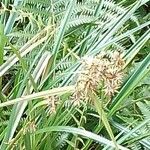
Cyperus javanicus
Javanese Flat Sedge · Javanese flatsedge · Marsh cyperus · Bunch sedge
Description
Source: leafsnapCyperus javanicus, also known as the Javanese flatsedge, is a sedge of the family Cyperaceae that is native to Indonesia and Australia.
Care Guide
💧 Water
Native to humid environments, Javanese flatsedge thrives in consistent moisture and high humidity. It is intolerant of drought and requires weekly watering to maintain its lush growth. As an evergreen plant suited for outdoor settings, Javanese flatsedge benefits from natural rainfall, which supports its vigorous growth cycle.
☀️ Light Full sun
Javanese flatsedge is a sun-loving herbaceous perennial that comes from open habitats, commonly found in meadows and grasslands. It prefers full sun but can also tolerate partial sun.
What are the sunlight requirements for Javanese flatsedge?
Javanese flatsedge, known botanically as Cyperus javanicus, thrives best in full sun conditions, requiring more than 6 hours of sunlight daily. However, it can also tolerate partial sun conditions, which entail about 3-6 hours of sunlight. It's important to observe how sunlight moves through your garden to find the perfect spots that provide a balance of light and shade, ensuring the plants' optimal growth and health.
What are the essentials for growing Javanese flatsedge?
Javanese flatsedge is a perennial herbaceous plant that loves the sun and is often found in open habitats such as meadows and grasslands. For indoor plants, adequate lighting is essential for optimal growth. In conditions where natural sunlight is insufficient, artificial lighting can be a vital solution. LED lights are recommended because they can be customized to provide specific wavelengths needed by plants. Full sun plants require 30-50W/sq ft, partial sun plants need 20-30W/sq ft, and full shade plants need 10-20W/sq ft of artificial light. The light source should be placed 12-36 inches above the plant, and the duration should mimic natural daylight hours, typically 8-12 hours per day.
What symptoms indicate inadequate lighting for Javanese flatsedge?
Javanese flatsedge shows several symptoms when it doesn't receive enough light, including smaller new leaves, leggy or sparse growth, faster leaf drop, slower or halted growth, and lighter-colored new leaves. Conditions like chlorosis, sunscald, leaf curling, wilting, and leaf scorching can occur due to either insufficient or excessive sunlight. These symptoms help in identifying whether the plant is suffering from too little or too much light and need immediate attention to address the issue.
How can I address the sunlight needs of Javanese flatsedge growing indoors, outdoors, and on the ground?
For indoor Javanese flatsedge, gradually increase sunlight exposure by moving the plant closer to a sunnier spot each week or using artificial light sources to ensure at least 6 hours of direct sunlight daily. For outdoor plants, similarly adjust their location gradually to avoid sunburn. If obstructions like trees are blocking sunlight, consider pruning to improve sun exposure. For ground plants, reducing obstructions and transplanting during the plant's dormant period can ensure better sunlight access. In all cases, adapting your plants to their sunlight conditions gradually is key to preventing damage and promoting healthy growth.
🌡️ Temperature 15–37.8°C
Javanese flatsedge comes from tropical areas, where the climate is usually warm and humid. Consequently, it is well suited to high temperatures and moisture. It dislikes abrupt temperature changes and favors a steady temperature, so avoiding indoor temperature swings is important. It typically cannot tolerate cold and needs warmer conditions to grow. If the surrounding temperature falls too low, the plant may stop growing or even die.
What is Javanese flatsedge?
Javanese flatsedge is a plant known by its botanic name, Cyperus javanicus. There is currently no provided information on its essentials or symptoms related to its growth or care.
💨 Humidity
🪴 Soil 6-7
🌱 Fertilizer
Javanese flatsedge needs extra nutrients to encourage healthy new growth. In spring, putting compost around the plant’s base will effectively supply the nutrients it requires. Fertilizing supports vigorous growth and improves the plant’s resistance to diseases and pests.
🪴 Pot & Repot
✂️ Pruning
Javanese flatsedge thrives in wet environments and is characterized by clusters of whorled leaves. For optimal growth, prune the plant in early spring to encourage new growth, improve air circulation, and control its spread. Removing dead leaves further enhances the plant's vitality, ensuring it maintains a neat and healthy appearance.
🌿 Propagating
🐛 Diseases & pets
☠️ Toxicity
Characteristics
- Plant Type
- Grass
- Life Cycle
- Perennial
- Genus
- Cyperus
- Family
- Cyperaceae
- Hardiness Zone
- 8-11
- Mature Height
- 0.61 m to 1.22 m
- Mature Spread
- 61 cm
- Leaf Color
- Green, Dark Green
- Leaf Type
- Semi-evergreen
- Flower Color
- Brown
- Flower Size
- 0.76 cm to 1.27 cm
- Bloom Time
- Summer, Early fall, Mid fall
- Planting Time
- Summer, Autumn
- Harvest Time
- Late summer, Fall, Early winter
- Native Area
- Sri Lanka, India, Malaysia, Indonesia, Cambodia, Japan, Philippines, Singapore, Madagascar, Fiji, Thailand, China