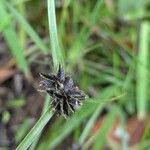
Cyperus melanostachyus
Description
Source: wikipedia (CC BY-SA)Cyperus niger is a species of sedge known by the common name black flatsedge. This plant is native to the Americas, where it can be found in wet areas from South and Central America to the southwestern United States, from California and Oklahoma south to Argentina.
Care Guide
💧 Water
☀️ Light Partial sun
Black flatsedge is native to locales with filtered sunlight, like underbrush in forests or stony terrains with inherent shading. It flourishes in partly sunny settings but is also capable of adjusting to areas with unobstructed sunlight.
🌡️ Temperature 15–37.8°C
The Black flatsedge plant is capable of adjusting to different temperature conditions, though its spread may still be restricted by varying water and heat circumstances. It usually prospers in hot climates during summer, provided there is sufficient rainfall or irrigation. Extended durations of overcast and wet weather, as well as prolonged extreme temperatures, have the potential to heighten the possibility of Black flatsedge perishing. During the winter, giving suitable protection from the cold can enhance the survival ability of the plant.
💨 Humidity
🪴 Soil 6-7
🌱 Fertilizer
🪴 Pot & Repot
✂️ Pruning
🌿 Propagating
🐛 Diseases & pets
☠️ Toxicity
Characteristics
- Plant Type
- Grass
- Life Cycle
- Annual, Perennial
- Hardiness Zone
- 8-11
- Mature Height
- 30 cm to 61 cm
- Mature Spread
- 20 cm to 40 cm
- Leaf Color
- Dark Green
- Leaf Type
- Deciduous
- Flower Color
- Brown
- Flower Size
- 0.20 cm to 0.25 cm
- Bloom Time
- Summer, Early fall, Mid fall
- Planting Time
- Spring, Autumn
- Harvest Time
- Late summer, Fall, Early winter
- Native Area
- Colombia, Honduras, Mexico, Guatemala, Bolivia, Venezuela, Peru, Brazil, Nicaragua, Ecuador, Costa Rica, Panama