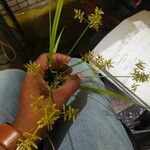
Cyperus microiria
Asian flatsedge · Awned rice flatsedge
Description
Source: leafsnapCyperus microiria, commonly known as the Asian flatsedge, is a species of sedge from Asia, occurring between the Himalayas in the west to Japan in the east.The species was first formally described by the botanist Ernst Gottlieb von Steudel in 1854.
Care Guide
💧 Water
Lesser rice-field flatsedge flourishes in moist soils and thrives in humid environments. To mimic its natural habitat and promote lush foliage during its active growth period, it needs to be watered weekly. This herbaceous plant is generally found outdoors and depends on a balance between moisture retention and adequate drainage.
What should I do if I give my Lesser rice-field flatsedge too much or too little water?
To ensure optimal growth, it is crucial to water this beautiful ornamental grass properly. When planted in the ground, any watering issues can be resolved. However, if it is in a container, too much or too little water can quickly harm Lesser rice-field flatsedge. When the grass does not receive the right amount of water, it may cease to grow. Overwatering may cause yellow leaves with brown tips, while underwatering can result in drooping leaves, weak seed head production, and browning leaves. If you suspect improper watering, the first step is to determine if it is an issue of excessive or insufficient water. If the grass is overwatered, stop watering it immediately. It may take some time for heavy soils to dry out, so patience is necessary. Once new growth appears, test the soil's moisture level and decide if more water is needed. On the other hand, if the grass is receiving too little water, simply giving it a deep drink may help revitalize it. Remember that a long, deep watering is always preferable to shallow, frequent waterings. This practice encourages the growth of deep roots, making the grass more resistant to drought and less prone to watering-related problems.
How frequently should I water my Lesser rice-field flatsedge?
The watering needs of Lesser rice-field flatsedge vary depending on its planting location. As a general rule, this grass should be watered every week. In hot climates, watering once or twice a week during the summer might be necessary. In moderate climates, watering once every seven days or more may suffice. Grass in containers typically need more frequent watering than those planted in the ground. However, the location of the grass also plays a role. Shaded grasses require less frequent watering compared to those planted in the ground and exposed to full sun. Lesser rice-field flatsedge should only be watered when the soil is dry. You can check the soil by pressing your finger a couple of inches into it. For potted grass, you can weigh the grass with a portable scale or simply feel the pot to know if it is light due to lack of water. Insufficient water can cause the blades of the grass to fold and appear thinner than usual. Despite its ability to tolerate drought, regular and deep waterings will result in a beautiful color. In the wild, Lesser rice-field flatsedge grows in open scrubland, subject to extreme heat, bright sun, and intermittent rain. While this grass is drought resistant, it still requires care and attention. Gardeners agree that consistent watering is best for its overall health. Newly planted flatsedge requires more frequent watering until deep roots are established. Flatsedge in pots dries out quickly, especially if exposed to hot, direct sunlight. Therefore, it is essential to test the soil every 3 to 4 days and water when it feels dry. Flatsedge planted in the ground generally needs less watering, but this depends on the type of soil. Clay soil retains moisture below the surface, so it may feel dry at the top even when still moist underneath. Sandy soils, on the other hand, drain quickly and require more frequent watering.
What things should I watch out for when I water my Lesser rice-field flatsedge in different seasons, climates, or during different stages of growth?
To determine if you are watering enough, observe the rate of growth of your grasses. Lesser rice-field flatsedge tends to grow rapidly, sometimes doubling in size within a year during the hottest months. If it's hot outside but your grass isn't growing vigorously, you should consider adjusting your watering schedule. In winter, you might be able to water only once a month, but it's still important to check the soil for moisture. During the growth cycle in the warmest months, the grass will require more water than usual. In contrast, the need for water will greatly decrease during winter and cooler months. A key point to remember when dealing with Lesser rice-field flatsedge is that the soil should always be allowed to completely dry out before adding water.
☀️ Light Full sun
Lesser rice-field flatsedge does best in open areas that receive abundant sunlight. This preference stems from its native habitat, where light is plentiful. It can also tolerate lower-light conditions. However, too little or too much sun can impede its healthy growth.
What are the sunlight requirements for Lesser rice-field flatsedge?
Lesser rice-field flatsedge requires full sun, which means it should receive above 6 hours of sunlight daily, though it can also thrive in partial sun, with about 3-6 hours of sunlight. It's essential to observe your garden's sunlight exposure throughout the day to find the ideal spot for your plant that offers the right balance of light and shade, ensuring your plant's happiness and healthy growth. In its natural habitat, Lesser rice-field flatsedge is accustomed to abundant sunlight but can adapt to lesser luminous environments. However, both limited and excessive sun exposure can hinder its growth, emphasizing the importance of finding the right sunlight conditions.
How can artificial lighting be used for Lesser rice-field flatsedge when natural sunlight is insufficient?
When natural sunlight is not enough, especially during winter or in less sunny spaces, artificial lighting can play a crucial role in the growth of Lesser rice-field flatsedge. Adequate lighting, such as LED lights, which can be customized to provide specific wavelengths needed for plant growth, is vital. For optimal growth, full sun plants need between 30-50W per square foot of artificial light, partial sun plants require 20-30W per square foot, and full shade plants should have 10-20W per square foot. The artificial light source should be placed 12-36 inches above the plant to simulate natural sunlight conditions, and most plants will need between 8-12 hours of light per day to mimic the natural daylight hours for your specific plant species.
What are the symptoms of inadequate light for Lesser rice-field flatsedge?
When Lesser rice-field flatsedge is grown indoors or under inadequate light conditions, it may show several symptoms indicating light deficiency. These include small leaves, where new leaves might grow smaller than mature ones; leggy or sparse growth, with increased spaces between leaves or stems leading to a stretched-out appearance; faster leaf drop, as the plant conserves resources by shedding older leaves; sluggish or halted new growth; paler new leaves indicating a lack of chlorophyll; chlorosis, or the loss of green color in leaves; sunscald, which damages plant tissues with intense light exposure; leaf curling as a defense mechanism against excessive sunlight; wilting from increased water loss; and leaf scorching, characterized by brown, dry edges on leaves due to excessive sunlight.
What solutions are available for managing light conditions for Lesser rice-field flatsedge?
To ensure optimal growth for Lesser rice-field flatsedge, gradually acclimatize it to the ideal light conditions. For indoor plants, you can move them to a sunnier location incrementally until they receive at least 6 hours of direct sunlight daily, using a south-facing window and keeping curtains open during the day. If the plant is large or hard to move, consider supplementing with artificial light, keeping a lamp on for a minimum of 8 hours daily or investing in professional plant grow lights. For outdoor plants, acclimate them cautiously to prevent sunburn. You may also need to remove obstructions or transplant smaller plants to brighter locations, ensuring ample sunlight and good drainage. Keep in mind that parts of the plant already affected by poor light may not recover, but new growth will be healthy after adjusting the light exposure.
🌡️ Temperature 15–37.8°C
Lesser rice-field flatsedge comes from tropical areas, where the climate is generally warm and humid. Consequently, it is well suited to high heat and moisture. It does not tolerate sudden temperature shifts and prefers a consistent temperature, so it is important to prevent temperature fluctuations indoors. It usually cannot withstand cold and needs warmer conditions to grow. If the environmental temperature falls too low, the plant may stop growing or even die.
What is the common name for Cyperus microiria?
The common name for Cyperus microiria is Lesser rice-field flatsedge. This nomenclature is used to distinguish this species from other members of the Cyperus genus, which is known for its diverse and widespread species.
💨 Humidity
🪴 Soil 6-7
🌱 Fertilizer
🪴 Pot & Repot
✂️ Pruning
The Lesser rice-field flatsedge is a tufted annual sedge with dense foliage. To keep it healthy and looking its best, prune it from early to late spring. Remove dead foliage at the base and thin out dense clusters. This improves growth, air circulation, and appearance. Regular care helps maintain vigor and reduces the risk of disease.
🌿 Propagating
🐛 Diseases & pets
☠️ Toxicity
Characteristics
- Plant Type
- Grass
- Life Cycle
- Annual
- Genus
- Cyperus
- Family
- Cyperaceae
- Hardiness Zone
- 8-11
- Mature Height
- 20 cm to 49 cm
- Mature Spread
- 20 cm to 30 cm
- Leaf Color
- Green
- Leaf Type
- Semi-evergreen
- Flower Size
- 0.20 cm to 0.25 cm
- Bloom Time
- Summer, Early fall
- Planting Time
- Spring, Summer
- Harvest Time
- Late summer, Fall
- Native Area
- India, Japan, Koppen, South Korea, China