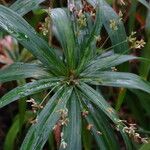
Cyperus mindorensis
White-Head Spike Sedge · Whitehead spikesedge · White Kyllinga · White Water Sedge · White-Flowered Kyllinga
Description
Source: wikipedia (CC BY-SA)Cyperus mindorensis, commonly known as the white water sedge, is a species of perennial sedge in the family Cyperaceae. It is a grass-like plant in the large genus Cyperus and is distributed across the Old World Tropics, Australia, and the Pacific Islands. This species typically grows in wet habitats and is often considered a weed rather than a cultivated plant.
Care Guide
💧 Water
The Whitehead spikesedge thrives in conditions similar to its tropical origins, requiring consistent moisture and high humidity. While it has moderate drought tolerance, it should be watered weekly. Regular watering and maintaining adequate soil moisture are essential for retaining its foliage throughout the year.
☀️ Light Full sun
Whitehead spikesedge thrives with abundant sunlight, enabling it to utilize the full range of light for growth. It can also tolerate lighter shade. Native to sunny habitats, its growth may be hindered by insufficient light, while excessive exposure can be harmful.
What are the sunlight requirements for Whitehead spikesedge?
Whitehead spikesedge requires full sun exposure, defined as above 6 hours of sunlight per day, to thrive optimally. It can also grow under partial sun, which is about 3-6 hours of sunlight per day. Observing how sunlight moves through your garden will help you find the best spots that provide the right balance of light and shade, ensuring your plants' well-being.
What should I know about the Whitehead spikesedge's sun requirements and growth?
The Whitehead spikesedge flourishes with ample exposure to the sun, taking full advantage of the light spectrum for its growth. This plant is resilient enough to survive in lighter shade as well, originating from sun-rich habitats. However, its growth may be stunted under insufficient light, and overexposure can be detrimental. When natural sunlight is lacking, especially in winter or less sunny spaces, artificial lighting such as LED lights can provide the necessary light. These lights should be 30-50W/sq ft for full sun plants, 20-30W/sq ft for partial sun plants, and 10-20W/sq ft for full shade plants, positioned 12-36 inches above the plant for 8-12 hours a day to mimic natural sunlight conditions.
What are the symptoms of inadequate lighting in Whitehead spikesedge?
When Whitehead spikesedge is not receiving enough light, it may exhibit several symptoms. These include smaller new leaves, leggy or sparse growth, faster leaf drop, slower or halted new growth, and lighter-colored new leaves due to insufficient chlorophyll. Excessive sunlight can result in chlorosis, where leaves lose their green color, sunscald with pale or necrotic areas on plant tissue, leaf curling as a defense mechanism, wilting from loss of turgor pressure, and leaf scorching which appears as brown, dry edges on leaves.
How can I address Whitehead spikesedge's lighting issues?
To optimize Whitehead spikesedge growth, gradually increase its sun exposure until it receives at least 6 hours of direct sunlight daily. If the plant is large or not easily movable, consider artificial lighting, keeping a lamp on for at least 8 hours daily, or using professional grow lights. Outdoors, gradually moving plants to sunnier spots helps avoid sunburn. If sunlight is blocked by trees or buildings, consider pruning or relocating plants to sunnier areas with good drainage. Note, plants affected by insufficient light may not recover, but new growth will be healthy once light exposure is improved.
🌡️ Temperature 20–37.8°C
Whitehead spikesedge is native to tropical areas, where the weather is generally warm and humid. Consequently, it is adapted to high heat and moisture. The plant is sensitive to abrupt temperature shifts and prefers steady temperatures, so avoiding indoor temperature swings is important. It typically cannot tolerate cold conditions and needs warmer temperatures to grow; if the ambient temperature falls too low, growth may stop or the plant could die.
What is the botanical name of Whitehead spikesedge?
The botanical name of Whitehead spikesedge is Cyperus mindorensis.
💨 Humidity
🪴 Soil 6-7
🌱 Fertilizer
Whitehead spikesedge needs extra nutrients to encourage healthy new growth. In spring, applying compost around the plant’s base will effectively supply the nutrition it requires. Fertilizing helps support vigorous growth and improves the plant’s resistance to diseases and pests.
🪴 Pot & Repot
✂️ Pruning
Whitehead spikesedge features a tufted growth habit and white seedheads, and it requires minimal pruning. The best time to remove dead stems and untidy foliage is in early spring, as this promotes healthier growth. Regular pruning helps manage the plant's size and shape. It's important to use clean tools when pruning to prevent disease, thereby enhancing both the plant's aesthetics and health.
🌿 Propagating
🐛 Diseases & pets
☠️ Toxicity
Characteristics
- Plant Type
- Grass
- Life Cycle
- Perennial
- Genus
- Cyperus
- Family
- Cyperaceae
- Hardiness Zone
- 9-11
- Mature Height
- 61 cm
- Mature Spread
- 30 cm to 61 cm
- Leaf Color
- Green
- Leaf Type
- Deciduous
- Flower Color
- White
- Flower Size
- 0.51 cm to 1.02 cm
- Bloom Time
- Summer, Early fall, Mid fall
- Planting Time
- Spring, Summer, Autumn
- Harvest Time
- Late summer, Fall, Early winter
- Native Area
- Sri Lanka, India, Malaysia, Madagascar, Pakistan, Nigeria, Kenya, Uganda, Tanzania, Fiji, Benin, Indonesia, Cambodia, Cameroon, Liberia, Mozambique, Ghana, Congo, Nepal, Malawi, South Africa, Philippines, Laos, Guinea, China, Vietnam, Myanmar, Japan, Togo, Bhutan, Côte d'Ivoire, Thailand