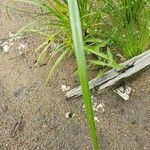
Cyperus odoratus
Calingale · Rusty flat sedge · Fragrant flat sedge · Fragrant Flatsedge · Rusty Flatsedge
Description
Source: leafsnapCyperus odoratus is a species of sedge known by the common names fragrant flatsedge and rusty flatsedge. This plant can be found in much of the tropical and warm temperate world, including South, Central, and North America, Southeast Asia, some Pacific Islands, Australia, New Guinea, Madagascar, and central Africa. It is a plant of wet, muddy areas, including disturbed and altered sites. This species is quite variable and may in fact be more than one species included under one name. In general this is an annual plant approaching half a meter in height on average but known to grow much taller. It usually has some long, thin leaves around the base. The inflorescence is made up of one to several cylindrical spikes attached at a common point. Each of the spikes bears a large number of flat, oval-shaped spikelets. Each spikelet is usually light brown to reddish-brown and has a few to over 20 flowers. Each flower is covered by a tough, flat bract with a visible midvein. The fruit is a flat achene less than two millimeters long.
Care Guide
💧 Water
Fragrant flatsedge is a plant that thrives in moist, high-humidity environments, typically found in tropical rainforests. It can tolerate periods of brief waterlogging and needs to be watered weekly to stay healthy. As an evergreen plant, it retains its foliage throughout the year, requiring consistent moisture even during its dormant periods.
What should I do if I give my Fragrant flatsedge too much water or too little water?
Proper watering is crucial for the health and performance of this beautiful ornamental grass. When planted in the ground, watering problems can be resolved, but in a container, too much or too little water can quickly prove fatal for Fragrant flatsedge. Insufficient watering can cause it to stop growing, while overwatering can result in yellow leaves with brown tips. Underwatering can lead to drooping leaves, weak seed head production, and browned leaves. If you suspect your Fragrant flatsedge has been watered improperly, the first step is to determine whether it is receiving too much or too little water. In the case of excessive watering, cease watering it immediately. It may take some time for heavy soils to dry out, so patience is necessary. Once new growth is observed, check the soil moisture and decide if more water is required. The solution for insufficient watering is simpler: give the grasses a deep drink and observe if they perk up. Remember, a long and deep watering session is always better than frequent shallow waterings. This approach encourages the growth of deep roots, making the grasses more resistant to drought and less susceptible to watering-related issues.
How frequently should I water my Fragrant flatsedge plant?
The watering needs of Fragrant flatsedge depend on its location. In general, it should be watered once a week. In hot climates, watering once or twice a week in the summer may be necessary. In moderate climates, watering once every seven days or more may be enough. Grass in containers usually needs more frequent watering than grasses in the ground. However, the location of Fragrant flatsedge, which can thrive in full sun or part shade, also plays a role. Shaded grasses need less frequent watering than grasses in the ground. Fragrant flatsedge should only be watered when the soil is dry. To check if the soil is dry, press your finger a couple of inches into the soil. For potted grass, you can also weigh the grass or check how light the pot feels. Insufficient water may cause the blades to appear folded along their centers and thinner than usual. Despite its drought tolerance, regular, deep waterings will enhance its beautiful color. In the wild, Fragrant flatsedge grows in open scrubland exposed to extreme heat, bright sun, and intermittent rain. Although it is drought resistant, it still needs care and attention. Even in harsh, dry conditions, consistent watering is recommended for the best results. When recently planted, Fragrant flatsedge needs more frequent watering until it has established deep roots. Potted Fragrant flatsedge dries out quickly, especially in hot, direct sun. Test the soil every 3 to 4 days and water only when it feels dry. In-ground Fragrant flatsedge generally needs less watering, which depends on the type of soil it is grown in. Clay soils hold water for longer periods, so they may feel dry at the surface while retaining moisture below. Sandy soils that drain quickly will require more frequent watering.
What do I need to consider when watering my Fragrant flatsedge during different seasons, climates, or stages of growth?
To determine if you are providing enough water for your grass, look at how fast it is growing. Fragrant flatsedge, for example, can double in size in a year during the hottest months. If the weather is hot but the grass is not growing well, you may need to adjust your watering schedule. In winter, you might get away with watering once a month, but check the soil to ensure it has enough moisture. During the warmest months when the grass is growing, it will need more water. However, in winter and cooler months, it won't need as much. Remember to let the soil dry out completely before watering again for Fragrant flatsedge.
☀️ Light Full sun
Fragrant flatsedge does best in areas that receive steady light throughout the day. Proximity to direct sunlight is necessary for healthy growth. Although it can survive in partly shaded conditions, that can impede its growth cycle. Both excessive light and insufficient light can negatively affect the plant’s health and development.
What are the sunlight requirements for Fragrant flatsedge?
Fragrant flatsedge requires full sun exposure, defined as above 6 hours of direct sunlight daily, for optimal growth. It can also grow in partial sun, which means about 3-6 hours of sunlight. However, it thrives best when exposed to consistent illumination throughout the day. It's essential to watch how sunlight moves through your garden to find the perfect balance for your plants, ensuring their happiness and health.
How does artificial lighting support Fragrant flatsedge indoors?
When natural sunlight is insufficient, especially during winter or in less sunny spaces, artificial lighting becomes crucial for the growth of indoor plants like Fragrant flatsedge. Optimal growth is promoted by selecting the right type of artificial light, such as LED, which can be customized to provide specific wavelengths needed by the plant. Full sun plants require 30-50W/sq ft, partial sun plants need 20-30W/sq ft, and full shade plants need 10-20W/sq ft of artificial light. The light source should be placed 12-36 inches above the plant, mimicking natural sunlight's duration with 8-12 hours of light per day.
What are the symptoms of inadequate light exposure in Fragrant flatsedge?
Fragrant flatsedge shows various symptoms when exposed to inadequate light, including small and lighter-colored new leaves, leggy or sparse growth, faster leaf drop, and slower or halted growth, which are signs of light deficiency. Excessive sunlight can lead to chlorosis, wherein leaves lose their green color and turn yellow, sunscald, leaf curling, wilting, and leaf scorching. These symptoms indicate stress from improper lighting conditions, affecting the plant's ability to photosynthesize and maintain health.
What solutions can improve Fragrant flatsedge's light exposure?
To optimize Fragrant flatsedge's growth, gradually move plants to sunnier locations to ensure they receive at least 6 hours of direct sunlight daily. Indoors, utilize a south-facing window or artificial light to provide sufficient light, keeping lamps on for about 8 hours a day. Outdoors, adapt plants to brighter spots while avoiding sudden changes to prevent sunburn. Prune obstructions like tree branches to improve sunlight access, and consider transplanting smaller plants during their dormant period to locations with better sunlight and drainage.
🌡️ Temperature 20–37.8°C
Fragrant flatsedge is native to and adapted for environments with temperatures between 68 and 100 °F (20 to 38 °C). Keeping these temperature conditions across seasons is necessary for optimal growth.
What are the optimal temperature conditions for growing Fragrant flatsedge?
Fragrant flatsedge thrives in temperatures ranging from 68 to 100 °F (20 to 38 °C). It is crucial to maintain these temperature conditions throughout the different seasons to ensure optimal growth. This plant loves heat and is sensitive to cold. During autumn, if you have Fragrant flatsedge grown outdoors, it's recommended to bring it inside and place it near a bright window, but away from direct heat sources like heaters. Keeping the temperature above 20°C during winter aids in its growth, while temperatures nearing 0°C can be harmful to the plant.
How does low temperature affect Fragrant flatsedge and what should be done?
Fragrant flatsedge is not tolerant of low temperatures, preferring conditions above 20°C and requiring temperatures to stay above 0°C during winter. Exposure to temperatures below -5°C may cause the leaves to lighten in color. Following frost damage, the leaves may turn brown or black, and the plant may show symptoms of wilting and drooping. To remedy this, trim off the frost-damaged parts and move the plant to a warmer indoor environment. Placing the plant near a south-facing window ensures it receives enough sunlight, but it should be kept away from heaters or air conditioners to avoid air that is too dry.
What measures should be taken when Fragrant flatsedge is exposed to high temperatures?
During the summer, it's important to ensure that the temperature around Fragrant flatsedge does not exceed 38°C. Temperatures above 43°C can cause the leaves to lighten and make the plant more prone to sunburn. To manage this, trim away sunburned or dried parts of the plant. Relocate the plant to an area where it can be shaded from the intense midday and afternoon sun. Watering the plant in the morning and evening helps to keep the soil moist, avoiding the additional stress of drought on the plant.
💨 Humidity
🪴 Soil 5-7
🌱 Fertilizer
🪴 Pot & Repot
✂️ Pruning
In the fall, trim back the dead stems of fragrant flatsedge to help prevent diseases. When pruning, be careful not to cut the leaflets, as this can cause brown tips, which is the plant's natural defense mechanism. It's best to let these brown tips grow out naturally as the plant develops, rather than trimming them off.
🌿 Propagating
🐛 Diseases & pets
☠️ Toxicity
Characteristics
- Plant Type
- Grass
- Life Cycle
- Annual, Perennial
- Genus
- Cyperus
- Family
- Cyperaceae
- Hardiness Zone
- 9-12
- Mature Height
- 10 cm to 52 cm
- Mature Spread
- 30 cm
- Leaf Color
- Green, Blue
- Leaf Type
- Evergreen
- Flower Color
- Brown, Green
- Flower Size
- 12.70 cm
- Bloom Time
- Summer
- Planting Time
- Spring, Summer, Autumn
- Harvest Time
- Mid summer, Late summer, Early fall