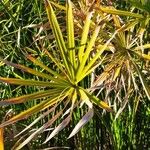
Cyperus papyrus
نخل مرداب · Papyrus · Egyptian paperplant · Paper reed · Papyrus Sedge
Description
Source: leafsnapCyperus papyrus, commonly known as papyrus or paper reed, is a tall aquatic plant belonging to the Cyperaceae family. Native to Africa, it thrives in shallow waters or marshy areas. The plant features a distinctive appearance, with long, slender stems that can grow up to four meters tall, capped with umbrella-like clusters of thread-like leaves. Papyrus has been used for thousands of years by ancient Egyptians to make paper, baskets, mats, and even boats. The stems are harvested by cutting them near the base and then splitting them lengthwise into thin strips, which are subsequently woven together. Beyond its historical significance as a writing material in ancient Egypt, papyrus also possesses medicinal properties. It contains essential oils with antiseptic qualities, which can be used to treat wounds. In modern times, Cyperus papyrus is often cultivated as an ornamental plant in water gardens or indoor pots due to its unique appearance. It requires full sun exposure and plenty of water but can tolerate some drought conditions once established. Overall, Cyperus papyrus is an intriguing plant with historical importance and aesthetic appeal, making it a popular choice among gardeners worldwide.
🌳 Papyrus sedge's usefulness goes beyond its famous role in producing papyrus. Historically, it has had multiple uses: its fibers were made into ropes and baskets, its roots served as fuel, and its stems were used to build vessels and furniture. In modern contexts, papyrus sedge shows promise as a biofilter for treating wastewater, illustrating its capacity for environmental remediation. Its dense mats of roots also create habitats for wetland wildlife, supporting ecosystem diversity. The plant's modest versatility suggests untapped potential for eco-friendly construction materials and alternatives to paper.
🎭 Security
Care Guide
💧 Water Every 7 days
Papyrus sedge thrives in high humidity and moist conditions, similar to tropical wetlands. To meet its moisture needs, it should be watered twice a week. Being an evergreen, papyrus sedge retains water in its leaves, making it well-suited for indoor spaces with controlled humidity.
What do I do if I give my Papyrus sedge plant too much water or too little water?
Proper watering is essential for the health and performance of this beautiful ornamental grass. When planted in the ground, watering issues can be resolved, but in a container, too much or too little water can quickly lead to the demise of Papyrus sedge. Insufficient water can cause the grass to stop growing, while excessive water results in yellow leaves with brown tips. Underwatering can cause drooping leaves, weak seed head production, and browning. If you suspect improper watering, the first step is to determine if there is too much or too little water. Cease watering immediately if there is excess water. Heavy soils may take weeks to dry out, so patience is key. Test the soil for moisture at the first signs of new growth to determine if more water is needed. If the problem is too little water, simply give the grass a deep drink and observe if it perks up. In all cases, remember that deep watering is better than frequent shallow waterings, as it encourages the growth of deep roots, making the grass more resistant to drought and watering-related issues.
How often do I need to water my Papyrus sedge?
Depending on where it is planted, the watering needs of Papyrus sedge will vary. In general, watering this grass once a week is sufficient. However, in hot climates, watering once or twice a week during the summer may be necessary. In moderate climates, watering once every seven days or more may be enough. Keep in mind that grass in containers usually requires more frequent watering than grass planted in the ground. Additionally, the location of the grass matters, as shaded grasses require less frequent watering compared to grasses planted in the ground. To determine when to water Papyrus sedge, check if the soil is dry by pressing your finger a couple of inches into the soil. For potted grass, you can weigh the grass with a portable scale or simply feel the pot to see if it is light, indicating a lack of water. Signs that the grass lacks sufficient water include folded blades along their centers and a thinner appearance. Despite its drought tolerance, regular and deep waterings will enhance the color of the grass. In its natural habitat, Papyrus sedge grows in open scrubland, enduring extreme heat, bright sun, and intermittent rain. While this grass is drought resistant, it still requires care and attention. Gardeners agree that consistent watering is beneficial, although it may seem unnecessary due to its hardiness. When initially planted, Papyrus sedge needs more frequent watering until it develops deep roots. For potted grass, the soil tends to dry out quickly, especially if the pot is exposed to hot, direct sun for most of the day. To maintain the appropriate moisture level, test the soil every 3 to 4 days and only water when it feels dry. Papyrus sedge planted in the ground generally requires less watering, but this depends on the type of soil it is grown in. Heavy clay soil retains moisture below the surface even if it feels dry on top. On the other hand, sandy soils that drain quickly will need to be watered more frequently.
What do I need to be careful about when watering my Papyrus sedge in different seasons, climates, or during different growth periods?
To determine if you are watering adequately, observe the rate of growth of your grasses. Papyrus sedge, for example, tends to double in size during the hottest months. If the weather is hot but the grass isn't growing vigorously, consider adjusting your watering schedule. In winter, watering once a month might suffice, but check the soil for moisture. During the warmest months, grass requires more water than usual, while the need for water decreases significantly during winter and cooler months. Crucially, always allow the soil planted with Papyrus sedge to dry out completely before adding water.
☀️ Light Full sun
Papyrus sedge prefers plenty of sunlight each day but can tolerate moderate light. That preference stems from its evolutionary origins, where its natural habitat received ample sun. Yet too much sun can cause the leaves to yellow, indicating sunburn, while too little light can stunt healthy growth.
What are the sunlight requirements for Papyrus sedge?
Papyrus sedge requires plenty of daily sun exposure to thrive, ideally benefiting from full sun conditions of above 6 hours of sunlight a day. However, it can also grow under partial sun conditions, receiving about 3 to 6 hours of sunlight. It's important to watch the sun's movements through your garden to find spots that provide the right balance of light and shade. Too much sun can cause the leaves to yellow and possibly sunburn, while too little light can inhibit growth. The plant's evolutionary background has equipped it to handle various light conditions, but achieving the right balance is key to its healthy development.
How can artificial lighting help in growing Papyrus sedge indoors?
When natural sunlight is insufficient, especially during winter or in areas that receive less sunlight, artificial lighting becomes crucial for the growth of indoor plants like Papyrus sedge. Adequate lighting promotes healthier and faster growth. LED lights are recommended for indoor plant lighting because they can be customized to provide specific wavelengths needed by the plants. Full sun plants need 30-50W per square foot, partial sun plants need 20-30W per square foot, and full shade plants require 10-20W per square foot. The light source should be placed 12-36 inches above the plant, mimicking natural sunlight, and the duration should match the natural daylight hours required by the plant species, which is usually between 8-12 hours per day.
What are the signs of inadequate light exposure in Papyrus sedge?
When Papyrus sedge is not receiving enough light, it may exhibit several symptoms indicative of light deficiency. These include smaller new leaves, leggy or sparse growth, faster leaf drop, and slowed or halted new growth. Inadequate sunlight can also lead to lighter-colored new leaves, which indicates a lack of chlorophyll and essential nutrients. Conversely, symptoms of excessive sunlight exposure include chlorosis, where leaves lose their green color; sunscald, characterized by damaged areas on leaves or stems; leaf curling as a defense against water loss; wilting due to excessive transpiration; and leaf scorching, where edges or patches on the leaves turn brown, dry, and crispy.
What solutions can address Papyrus sedge's light-related issues?
For indoor Papyrus sedge plants struggling with light exposure, a gradual relocation to a sunnier location, such as near a south-facing window, can be beneficial. Keeping curtains open during the day maximizes sunlight exposure. If moving the plant isn't feasible, consider using artificial lights like desk lamps or professional grow lights for at least 8 hours a day. For outdoor plants, gradually acclimate them to sunnier spots to prevent sunburn. Pruning or removing obstructions that block sunlight and transplanting smaller plants during their dormant period to sunnier locations with good drainage can also help improve light exposure. It's important to note that parts of the plant affected by prior insufficient light may not recover, but new growth should be healthy with improved light conditions.
🌡️ Temperature 15–37.8°C
Papyrus sedge is a plant that adapts well to different cultural conditions and does best in temperatures of 68 to 100 °F (20 to 38 ℃) in its native range. This temperature band is optimal for growth; temperatures above or below it can result in poor health. It is recommended to adjust temperatures seasonally to replicate natural conditions.
What is the ideal temperature range for Papyrus sedge to thrive?
Papyrus sedge thrives in temperatures ranging from 68 to 100 °F (20 to 38 °C). Maintaining temperatures within this range is crucial for the plant's health, mimicking its natural conditions as closely as possible. Adjusting the growing environment seasonally to stay within this temperature range helps ensure the plant remains healthy.
How can I protect Papyrus sedge from cold temperatures?
Papyrus sedge has some degree of cold tolerance and does not usually require protection when temperatures are above 0°C. However, if temperatures are expected to drop below 0°C, it's essential to take temporary protective measures. Wrapping the plant in plastic film, fabric, or other suitable materials can offer cold protection. It's important to remove these coverings once the temperature rises to prevent any potential damage to the plant.
What should I do if the temperature falls below -10°C?
If the temperature drops below -10°C, Papyrus sedge's leaves may begin to droop, and in severe cases, wilt and fall off. To help the plant recover from frost damage, trim off the affected parts. Before the cold weather returns, protect the plant by wrapping it in non-woven fabric or cloth, and consider setting up a wind barrier to shield it from cold winds, enhancing its survival chances against low temperatures.
How does high temperature affect Papyrus sedge and what are the solutions?
Papyrus sedge should be kept below 38°C during summer to prevent stress from high temperatures. Exceeding 43°C can cause the leaves to lighten in color, tips to dry and wither, leaves to curl, and increase susceptibility to sunburn. To mitigate these effects, trim away sunburned and dried parts of the plant. Relocate the plant to a shaded area or use a shade cloth to protect it from intense midday and afternoon sun. Ensure the soil remains moist by watering in the morning and evening.
💨 Humidity high (>60%)
This plant needs special care because it loves high humidity levels of 60-80% or more. The best way to achieve this is by placing a humidifier near the plant. Daily misting is also essential! Make sure the room has good ventilation.
🪴 Soil 6-7
🌱 Fertilizer
Papyrus sedge needs extra nutrients to encourage healthy new growth. In spring, applying compost around the plant’s base will effectively supply the nutrition it requires. Fertilizing helps promote vigorous growth and improves the plant’s resistance to diseases and pests.
Why should I put fertilizer on my Papyrus sedge?
Fertilizing Papyrus sedge is essential for a few reasons. First, it provides your plant with the necessary nutrients for healthy new growth. Second, it helps maintain the health of existing growth. Lastly, it boosts your plant's ability to resist diseases and pests.
When should I fertilize my Papyrus sedge plant?
To ensure the survival of Papyrus sedge in your garden, it is important to understand when to fertilize. This plant doesn't need a lot of nutrients and doesn't require additional fertilization when it is dying back. While you can use diluted fertilizer at the beginning of the growing season, it is not advisable. Instead, it is recommended to apply mulch or compost around the base of the plant.
When is it not a good time to fertilize my Papyrus sedge plant?
If you're not using packaged fertilizers, you don't need to stress about when to stop feeding Papyrus sedge. Simply applying a layer of compost or mulch in the spring will adequately nourish and maintain its happiness all year long. During the plant's dormant winter period, there's no need to be concerned with mulching or composting.
What kind of fertilizer should I use for my Papyrus sedge?
Instead of rushing out to buy fertilizer, you can supply papyrus sedge with necessary nutrients by putting down a layer of compost in the spring. Mulching your garden yearly with bark will also keep the plant well-fed.
How can I give my Papyrus sedge plant the right food to help it grow?
Regardless of whether you choose mulch or compost, the process for Papyrus sedge remains the same. Simply apply a layer of the chosen material, ensuring that it fully covers the base of the plant. If you opt to use both mediums, remember to decrease the amount of compost used. Applying a layer of mulch has dual advantages: it helps retain moisture in the soil and provides nutrients for your plant.
🪴 Pot & Repot 2-3 years
When repotting Papyrus sedge, choose a pot 1-2 inches (2.5–5.1 cm) larger with ample drainage. Use a well-draining potting mix. Repot in spring or fall, ensuring the root ball is slightly lower than the rim of the flower pot. Water thoroughly after repotting and place the plant in a warm spot with indirect sunlight.
✂️ Pruning
In the fall, trim back the dead stems of papyrus sedge to prevent disease. Be cautious when pruning, as cutting the leaflets can lead to unsightly brown tips, which is the plant's natural defense mechanism. It's best to avoid cutting off these brown tips, as they will eventually grow out as the plant continues to develop.
🌿 Propagating
🐛 Diseases & pets
☠️ Toxicity
Papyrus plants have no reported toxic effects. This grass-like plant is considered safe and pet-friendly. The rhizomes and culms are even considered edible, whether cooked or raw, in some regions.
Characteristics
- Plant Type
- Grass
- Life Cycle
- Perennial, Annual
- Genus
- Cyperus
- Family
- Cyperaceae
- Hardiness Zone
- 8-12
- Mature Height
- 3.96 m to 4.88 m
- Mature Spread
- 0.61 m to 1.52 m
- Leaf Color
- Green
- Leaf Type
- Evergreen
- Flower Color
- Brown, Green, White, Red
- Flower Size
- 0.51 cm to 1.02 cm
- Bloom Time
- Early summer, Mid summer
- Planting Time
- Spring, Summer
- Harvest Time
- Mid summer, Late summer
- Native Area
- Malawi, Angola, Namibia, South Africa, Madagascar, Rwanda, Zambia, Sudan, Nigeria, Guinea, Gabon, Kenya, Uganda, Tanzania, Zimbabwe, Benin, Central African Republic, Chad, Cameroon, Liberia, Mozambique, Burundi, Senegal, Côte d'Ivoire, Ethiopia, Congo (DRC), Botswana, Congo