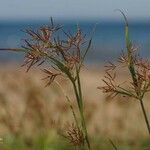
Cyperus rotundus
اویارسلام ارغوانی · Nutgrass · Coco-grass · Ground-almond · Purple nut sedge
Description
Source: leafsnapCyperus rotundus, commonly known as nutgrass or purple nutsedge, is a perennial plant belonging to the family Cyperaceae. Native to Africa, Asia, and Australia, it has now spread worldwide. The plant features a fibrous root system and produces numerous underground tubers that can grow up to 10 cm in length. The stems of Cyperus rotundus are triangular in shape and can reach up to 60 cm in height. The leaves are long, narrow, and pointed, growing as long as 30 cm. The plant's flowers are small and inconspicuous, typically brown or reddish-brown spikelets. Cyperus rotundus is considered an invasive weed due to its ability to spread rapidly through its underground tubers, which can survive for several years in the soil even after the above-ground parts of the plant are removed. It thrives in moist soils such as those found in wetlands, marshes, or along riverbanks, but it can also tolerate dry conditions. For centuries, nutgrass has been used for medicinal purposes due to its anti-inflammatory properties, which help relieve pain caused by arthritis or other inflammatory conditions. It also contains antioxidants that help protect against oxidative stress caused by free radicals. Additionally, Cyperus rotundus has been used as a culinary herb in some cultures, added to soups or stews for flavoring. While the plant does have beneficial uses, such as medicinal properties and culinary applications, its invasive nature makes it an unwanted weed across many regions of the world, where eradication efforts are ongoing.
🌳 Nut grass, despite being widely regarded as an annoying weed, also produces essential oils used in perfumery and may have bioherbicidal properties. Research into these oils has uncovered a complex array of compounds with multiple uses, particularly in aromatherapy. Furthermore, the plant’s bioactive constituents are being investigated for herbicidal effects, presenting a potentially eco-friendly alternative to synthetic agrochemicals and indicating a new frontier in agricultural sustainability.
Care Guide
💧 Water Every 7 days
Nut grass, native to semi-arid regions, has a moderate tolerance for drought and thrives in conditions that alternate between wet and dry. To promote optimal growth, water nut grass once a week, making adjustments according to seasonal changes. It's important to ensure consistent moisture during its active growing season.
What do I need to do if I give my Nut grass too much water or not enough water?
Proper watering is essential for the health and performance of this beautiful ornamental grass. Watering issues in the ground can be solved, but in a container, too much or too little water can quickly kill Nut grass. When Nut grass doesn't receive the right amount of water, it may stop growing. Overwatering can cause yellow leaves with brown tips, while underwatering can lead to drooping leaves, weak seed head production, and browned leaves. To address improper watering, first determine if the problem is too much or too little water. If it's receiving too much water, immediately stop watering and allow time for the soil to dry out. Once new growth appears, test the soil for moisture and adjust watering accordingly. If the Nut grass is receiving too little water, simply give it a deep drink and observe if it perks up. It's important to remember that a long, deep watering is better than frequent, shallow waterings. This encourages the growth of deep roots, making the grass more resistant to drought and less prone to watering-related issues.
How frequently do I need to water my Nut grass?
The watering needs of Nut grass vary depending on its location. Generally, watering once a week is sufficient. In hot climates, watering once or twice a week during the summer may be necessary. In moderate climates, watering once every seven days or more may be enough. Grass in containers usually require more frequent watering than grasses in the ground. However, the location of the grass also matters, as shaded grasses need to be watered less frequently than grasses in open spaces. Nut grass should only be watered when the soil is dry. To determine if the soil is dry, you can press your finger a couple of inches into the soil or check the weight of a potted grass. When the blades of the grass appear folded along their centers and thinner than usual, it is a sign that the roots lack sufficient water. Despite its drought tolerance, regular and deep waterings will result in a beautiful color. Although Nut grass is drought resistant, it still requires care and attention. Consistent watering is recommended for optimal growth. When first planted, Nut grass needs more frequent watering until it establishes deep roots. Nut grass in pots tends to dry out quickly, especially when exposed to hot and direct sunlight. It is advisable to test the soil every 3 to 4 days and water only when it feels dry. Nut grass in the ground generally requires less watering, but this depends on the type of soil. Heavy clay soil can retain moisture below the surface even if it feels dry on top. Sandy soils that drain quickly will need more frequent watering.
What should I pay attention to when I water my Nut grass in different seasons, climates, or during different stages of growth?
To determine if you are watering enough, observe the rate of growth of your grass. Nut grass tends to double in size during the hottest months. If the weather is hot but the grass is not growing vigorously, adjust your watering schedule. In winter, you may be able to water just once a month, but check the soil for moisture. During the warmest months, the grass requires more water, while in winter and cooler months, the water needs decrease. Remember to let the soil dry out completely before adding water to Nut grass.
☀️ Light Full sun
Nut grass flourishes in conditions with abundant sunlight, but it's versatile enough to survive in places with only partial sun exposure. Being native to environments with ample sun, nut grass thrives when provided with ample light during its growth phase. However, either too much or too little sunlight can hinder its healthy growth.
What are the sunlight requirements for nut grass?
Nut grass, or Cyperus rotundus, thrives in environments that receive ample sunlight, benefiting from generous light throughout its growth period. It requires full sun, defined as above 6 hours of sunlight daily, but can also manage in partial sun, which is about 3-6 hours of sunlight daily. When planning your garden, it is crucial to observe the movement of sunlight through the area to ensure that your plants receive the appropriate balance of light and shade, enhancing their growth and health.
How does artificial lighting support nut grass growth indoors?
Indoor nut grass plants require adequate artificial lighting to compensate for the lack of natural sunlight, especially in winter or less sunny locations. Optimal growth is achieved by selecting the appropriate type of artificial light, such as LEDs, which can be customized to provide specific wavelengths needed by the plants. For full sun plants, 30-50W per square foot is recommended, partial sun plants need 20-30W per square foot, and full shade plants 10-20W per square foot. Additionally, positioning the light source 12-36 inches above the plant and ensuring it receives 8-12 hours of light per day mimics natural sunlight conditions, promoting healthier growth.
What are the symptoms of incorrect lighting for nut grass?
Nut grass shows various symptoms when exposed to inadequate lighting conditions. These include producing smaller new leaves, leggy or sparse growth, faster leaf drop, slower or halted new growth, lighter-colored or yellowing leaves due to chlorosis, and physical damage such as sunscald, leaf curling, wilting, leaf scorching. These symptoms indicate either too much or too little light, affecting the plant's overall health and ability to photosynthesize effectively.
What are the solutions for improving light conditions for nut grass?
To improve light conditions for nut grass, consider various strategies depending on its location. Indoors, gradually move the plant to a sunnier spot or use artificial lighting to ensure it receives at least 6 hours of direct sunlight daily. For outdoor plants, move them to a sunnier location gradually to avoid sunburn. Reducing obstructions such as pruning nearby trees can also increase sunlight exposure. If necessary, transplanting to a better-lit location with ample sunlight and good drainage can benefit the plant's growth. Note that parts of the plant damaged by poor light conditions may not recover, but new growth should be healthy with improved lighting.
🌡️ Temperature 15–35°C
Nut grass inherently thrives in environments with warm to hot climatic conditions, where temperatures vary between 15 to 35 ℃ (59 to 95 ℉). This vegetation is fond of warmth and is adaptable to the changing temperatures across different seasons, however, it is crucial to maintain its preferred thermal range.
What is the preferred growing environment for Nut grass?
Nut grass, or Cyperus rotundus, thrives in warm to hot climates, with ideal temperatures ranging between 15°C (59°F) to 35°C (95°F). It can adjust to varying temperatures across different seasons but maintaining it within this preferred temperature range is crucial for its growth. Nut grass exhibits strong cold resistance, meaning special frost protection measures aren't typically required. However, if temperatures are anticipated to fall below -15°C, protective measures like covering the plant with soil or straw should be considered. Additionally, watering the plant abundantly before the first freeze of autumn to keep the soil moist can help prevent drought and water scarcity during winter and early spring.
How does Nut grass respond to low temperatures?
Nut grass is cold-tolerant, performing best when temperatures are kept above 15°C. During the winter months, it is advisable to ensure the temperature does not fall below -10°C. If exposed to temperatures below -15°C, while there may not be immediate visible damage, the plant might exhibit reduced sprouting or fail to sprout at all come spring. The recommended solution for plants that have not sprouted in spring due to cold damage is to remove any parts that have failed to sprout.
How should Nut grass be cared for in high temperatures?
During the summer months, it is crucial to ensure that the temperature surrounding Nut grass does not exceed 35°C. Exposure to temperatures above 41°C can cause the leaves to lighten in color, curl, become prone to sunburn, and in severe cases, lead to the entire plant wilting and drying out. To mitigate these issues, sunburned and dried parts should be trimmed away. Moving the plant to a shaded location or using a shade cloth to protect it from the midday and afternoon sun is advisable. Additionally, watering the plant during the morning and evening hours to maintain soil moisture can help alleviate stress due to high temperatures.
💨 Humidity high (>60%)
This plant needs special care because it loves high humidity levels of 60-80% or more. The best way to achieve this is by placing a humidifier near the plant. Daily misting is also essential! Make sure the room has good ventilation.
🪴 Soil 5-7
🌱 Fertilizer
For healthy new growth, nut grass needs extra nutrients. By adding compost around the plant's base in the spring, the required nutrition can be efficiently supplied. Fertilization contributes to robust growth and enhances the plant's ability to ward off diseases and pests.
🪴 Pot & Repot
✂️ Pruning
In the fall, trim the dead stems of nut grass to prevent diseases. Be careful not to cut the leaflets, as this can cause the tips to turn brown—a natural protective response of the plant. Cutting the brown tips won't benefit the plant; instead, allow them to remain as the plant matures for healthier growth.
🌿 Propagating
🐛 Diseases & pets
☠️ Toxicity
Characteristics
- Plant Type
- Grass
- Life Cycle
- Perennial
- Genus
- Cyperus
- Family
- Cyperaceae
- Hardiness Zone
- 7-10
- Mature Height
- 1.37 m
- Mature Spread
- 91 cm
- Leaf Color
- Green, Yellow, Gold, Brown, Blue, Bronze
- Leaf Type
- Deciduous
- Flower Color
- Brown, Red, Green, Purple
- Flower Size
- 1.27 cm to 5.08 cm
- Bloom Time
- Early summer, Mid summer
- Planting Time
- Spring
- Harvest Time
- Mid summer, Late summer
- Native Area
- Nepal, Malawi, Libya, Somalia, Djibouti, Cyprus, Rwanda, Eritrea, Bangladesh, Turkmenistan, Guinea-Bissau, Lebanon, Uzbekistan, Benin, Kyrgyzstan, Kazakhstan, Equatorial Guinea, Burundi, Togo, Koppen, Oman, Bhutan, Algeria, South Korea, Gambia, Congo (DRC), Botswana, Central African Republic