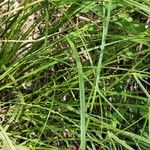
Cyperus serotinus
Tidal marsh flat sedge · Flat sedge · Tidalmarsh flatsedge · Tidal-marsh flatsedge · Mountain nutsedge
Description
Source: leafsnapCyperus serotinus is a species of sedge that is native to parts of Europe and Asia.The species was first formally described by the botanist Christen Friis Rottbøll in 1773.
Care Guide
💧 Water
Tidal-marsh flatsedge is well-suited to moist environments and needs consistent hydration, ideally with weekly watering. It can tolerate short dry periods, but it thrives best outdoors when the soil is well-drained to prevent waterlogging, while still keeping the conditions damp for optimal health.
☀️ Light Full sun
Tidal-marsh flatsedge does best when it gets plenty of sunlight during the day. It can tolerate moderate sun exposure, showing its versatility. Native to environments with abundant sunshine, it is adapted to a range of light conditions. Too much shade may cause stunted growth, while excessive light can lead to scorching.
What are the sunlight requirements for Tidal-marsh flatsedge?
Tidal-marsh flatsedge requires a plentiful amount of sunlight throughout the day for optimal growth, although it can also endure moderate sun exposure. It is best suited for environments that provide full sun, defined as above 6 hours of sunlight daily, or partial sun, about 3-6 hours of sunlight daily. Paying careful attention to how sunlight moves through your garden will help in choosing the best spots that ensure the right balance of light and shade, contributing to the plant's health and happiness.
How does artificial lighting benefit indoor plants?
Artificial lighting is crucial for indoor plants, especially when natural sunlight is insufficient, such as in winter or less sunny spaces. It promotes faster and healthier growth by compensating for the lack of sunlight. LED lights are a popular choice because they can be tailored to provide specific wavelengths needed by plants. Full sun plants require 30-50W/sq ft of artificial light, partial sun plants need 20-30W/sq ft, and full shade plants require 10-20W/sq ft. The light source should be placed 12-36 inches above the plant and turned on for 8-12 hours per day to mimic natural sunlight as closely as possible.
What are the symptoms of inadequate light in Tidal-marsh flatsedge?
Tidal-marsh flatsedge displays several symptoms when it doesn't receive enough light, including smaller new leaves, leggy or sparse growth, faster leaf drop, slower or no new growth, lighter-colored new leaves, and symptoms related to excessive sunlight such as chlorosis, sunscald, leaf curling, wilting, and leaf scorching. These signs indicate that the plant is not getting the optimal light conditions it needs to thrive, leading to reduced health and growth.
How can I improve light conditions for Tidal-marsh flatsedge?
To improve light conditions for Tidal-marsh flatsedge, gradually move plants to sunnier locations where they can receive at least 6 hours of direct sunlight daily, particularly using a south-facing window for indoor plants. For large or immovable plants, consider providing additional light with artificial sources. Outdoors, select the best spot for sunlight and avoid sudden changes in light intensity to prevent sunburn. Eliminate obstructions like overhanging branches and consider transplanting smaller plants to sunnier areas. While damaged parts of the plant might not recover, new growth should be healthy with increased light exposure.
🌡️ Temperature 15–37.8°C
Tidal-marsh flatsedge can adapt to a wide range of temperatures, but its distribution can still be constrained by different combinations of water and heat conditions. It performs best in warm summer climates with sufficient rainfall or watering. Extended periods of cloudy, rainy weather or prolonged high temperatures can raise the risk of Tidal-marsh flatsedge dying. In winter, shielding the plant from cold can increase its chances of survival.
What is the name and botanic name of the Tidal-marsh flatsedge?
The Tidal-marsh flatsedge is known by its common name as 'Tidal-marsh flatsedge', and its botanic name is Cyperus serotinus. This information pertains to the basic identification of the plant, highlighting its common and scientific categorizations.
💨 Humidity
🪴 Soil
🌱 Fertilizer
🪴 Pot & Repot
✂️ Pruning
Tidal-marsh flatsedge flourishes in tidal marshes and greatly benefits from pruning in early spring. This practice not only encourages growth and enhances the health of its foliage but also involves trimming away dead or damaged stems. Removing these stems improves air circulation and helps prevent diseases. Additionally, regular pruning helps to control its spread, promoting denser growth and enhancing the aesthetics of your garden.
🌿 Propagating
🐛 Diseases & pets
☠️ Toxicity
Characteristics
- Plant Type
- Grass
- Life Cycle
- Perennial
- Genus
- Cyperus
- Family
- Cyperaceae
- Hardiness Zone
- 7-11
- Mature Height
- 34 cm to 91 cm
- Mature Spread
- 30 cm to 61 cm
- Leaf Color
- Green
- Leaf Type
- Evergreen
- Flower Color
- Yellow, Green, Brown
- Flower Size
- 2.03 cm to 11.43 cm
- Bloom Time
- Mid summer, Late summer, Early fall
- Planting Time
- Spring, Summer, Autumn
- Harvest Time
- Early fall, Mid fall
- Native Area
- Turkey, India, Austria, Montenegro, Pakistan, Slovenia, Croatia, Uzbekistan, Russia, Cambodia, Koppen, South Korea, Romania, Portugal, France, Tajikistan, Bulgaria, Greece, Ukraine, Serbia, China, Afghanistan, Kyrgyzstan, Kazakhstan, Italy, Spain, Switzerland, Vietnam, Myanmar, Japan, Iran, Albania