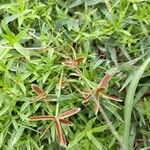
Cyperus squarrosus
Bearded flat sedge · Awned Flat Sedge · Bearded flatsedge · Awned Flatsedge · Awned Cyperus
Description
Source: leafsnapCyperus squarrosus is a species of sedge known by several common names, including bearded flatsedge and awned flatsedge. It is found in wet environments in North and South America, Africa, Australia, southern Asia (China, India, Saudi Arabia, Indochina, etc.) and Italy.
Care Guide
💧 Water
Aromatic sedge thrives in consistently moist soil and high humidity, which reflects its marshy origins. Although it has a moderate tolerance to drought, it still requires weekly watering. However, be careful not to overwater. Usually grown outdoors, its growth is naturally aligned with precipitation cycles.
☀️ Light Full sun
Aromatic sedge comes from bright, open habitats and does best in full sun. It can tolerate partial shade but prefers direct sunlight for optimal growth. This plant, which can be annual or biennial, is known for its sun-loving nature.
What are the sunlight requirements for Aromatic sedge (Cyperus squarrosus)?
Aromatic sedge (Cyperus squarrosus) requires varying amounts of sunlight depending on the desired growth condition. For full sun exposure, it needs above 6 hours of sunlight daily. In cases where partial sun is adequate, about 3-6 hours of sunlight per day is necessary. It's important to observe the way sunlight moves through your garden to find spots that offer a good mix of light and shade, which ensures the plants thrive optimally.
🌡️ Temperature 15–37.8°C
Aromatic sedge comes from tropical areas, where the climate is usually warm and humid. Because of this, it is adapted to high temperatures and humidity. It does not tolerate sudden temperature shifts and prefers a steady temperature, so it's important to avoid temperature fluctuations indoors. It generally cannot withstand cold and needs warmer conditions to grow; if the temperature drops too low, the plant may stop growing or even die.
What is the botanical name of Aromatic Sedge?
The botanical name of Aromatic Sedge is Cyperus squarrosus. This particular grass-like plant is known for its unique characteristics and belongs to the Cyperaceae family.
💨 Humidity
🪴 Soil 5-7
🌱 Fertilizer
🪴 Pot & Repot
✂️ Pruning
Aromatic sedge features fine, aromatic leaves and a tufted growth pattern. To keep it healthy and well-shaped, prune the plant from early to late spring. This practice helps remove dead leaves, improve air circulation, reduce the risk of disease, and encourage denser foliage. For the best results, use clean, sharp tools while pruning.
🌿 Propagating
🐛 Diseases & pets
☠️ Toxicity
Characteristics
- Plant Type
- Grass
- Life Cycle
- Annual
- Genus
- Cyperus
- Family
- Cyperaceae
- Hardiness Zone
- 8-11
- Mature Height
- 5 cm to 15 cm
- Mature Spread
- 10 cm to 20 cm
- Leaf Color
- Green
- Leaf Type
- Semi-evergreen
- Flower Color
- Yellow, Green, Brown
- Flower Size
- 0.51 cm to 0.76 cm
- Bloom Time
- Summer, Early fall, Mid fall
- Planting Time
- Spring, Summer, Autumn
- Harvest Time
- Mid summer, Late summer, Fall
- Native Area
- Sri Lanka, Burkina Faso, India, Malaysia, Angola, Mexico, Guatemala, Namibia, Madagascar, Eritrea, Pakistan, Nigeria, Kenya, Niger, Tanzania, Zimbabwe, Benin, Mali, Cuba, Indonesia, Cambodia, Cameroon, Mozambique, Venezuela, Brazil, Oman, Ghana, Ethiopia, Botswana, Nepal, Saudi Arabia, Malawi, Peru, South Africa, Zambia, Sudan, Philippines, Mauritania, Laos, Guinea, Chad, China, Colombia, Bahamas, Afghanistan, Bolivia, Vietnam, Myanmar, Togo, Bhutan, Senegal, Singapore, Côte d'Ivoire, Ecuador, Gambia, Thailand, Gabon