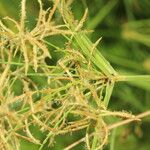
Cyperus tuberosus
Nut Grass · Purple Nut Sedge
Care Guide
💧 Water
☀️ Light Full sun
Nut grass flourishes in conditions with abundant sunlight, but it's versatile enough to survive in places with only partial sun exposure. Being native to environments with ample sun, nut grass thrives when provided with ample light during its growth phase. However, either too much or too little sunlight can hinder its healthy growth.
🌡️ Temperature 15–35°C
Nut grass inherently thrives in environments with warm to hot climatic conditions, where temperatures vary between 15 to 35 ℃ (59 to 95 ℉). This vegetation is fond of warmth and is adaptable to the changing temperatures across different seasons, however, it is crucial to maintain its preferred thermal range.
💨 Humidity
🪴 Soil 5-7
🌱 Fertilizer
For healthy new growth, nut grass needs extra nutrients. By adding compost around the plant's base in the spring, the required nutrition can be efficiently supplied. Fertilization contributes to robust growth and enhances the plant's ability to ward off diseases and pests.
🪴 Pot & Repot
✂️ Pruning
🌿 Propagating
🐛 Diseases & pets
☠️ Toxicity
Characteristics
- Plant Type
- Grass
- Life Cycle
- Perennial
- Genus
- Cyperus
- Family
- Cyperaceae
- Hardiness Zone
- 7-10
- Mature Height
- 1.37 m
- Mature Spread
- 91 cm
- Leaf Color
- Green, Yellow, Gold, Brown, Blue, Bronze
- Leaf Type
- Deciduous
- Flower Color
- Brown, Red, Green, Purple
- Flower Size
- 1.27 cm to 5.08 cm
- Bloom Time
- Early summer, Mid summer
- Planting Time
- Spring
- Harvest Time
- Mid summer, Late summer
- Native Area
- Nepal, Malawi, Libya, Somalia, Djibouti, Cyprus, Rwanda, Eritrea, Bangladesh, Turkmenistan, Guinea-Bissau, Lebanon, Uzbekistan, Benin, Kyrgyzstan, Kazakhstan, Equatorial Guinea, Burundi, Togo, Koppen, Oman, Bhutan, Algeria, South Korea, Gambia, Congo (DRC), Botswana, Central African Republic