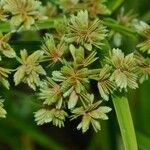
Cyperus virens
Green Flat Sedge · Green flatsedge · Green sedge
Description
Source: leafsnapCyperus virens is a species of sedge that is native to southern parts of North America, Central America and South America.
Care Guide
💧 Water
Green flatsedge flourishes in wet environments and commonly grows in standing water. To keep it healthy, ensure consistent moisture, especially in drip trays. However, when temperatures are low, it's important to reduce watering to avoid root rot. For optimal growth, leave a small gap in the water level.
☀️ Light Partial sun
Green flatsedge is native to habitats like forest understories and rocky areas, where it occurs in natural shade. Its preferred light condition is partial sun, but it can adapt to full sun or full shade, showing that it is versatile and hardy.
What are the sunlight requirements for Green flatsedge?
Green flatsedge (Cyperus virens) requires locations in the garden that meet specific sunlight conditions. For full sun exposure, it needs above 6 hours of direct sunlight daily. If you are aiming for partial sun, it should receive about 3-6 hours of sunlight. It's important to observe how sunlight moves through your garden throughout the day. Choosing the right spots that offer the perfect balance between light and shade will ensure the wellbeing of your Green flatsedge.
Are there any particular warnings about sunlight for Green flatsedge?
Yes, when cultivating Green flatsedge (Cyperus virens), it's crucial to consider how sunlight interacts with your garden space. The warning emphasizes the importance of watching how sunlight gracefully moves through your garden. Identifying spaces that provide an ideal balance of light and shade is key to ensuring the happiness and health of your plants, including Green flatsedge.
🌡️ Temperature 15–37.8°C
Green flatsedge comes from tropical areas, where the climate is generally warm and humid. Therefore it is adapted to high heat and humidity. It does not tolerate sudden temperature shifts and prefers a steady thermal environment, so keeping indoor temperatures stable is important. It typically cannot withstand cold conditions and needs relatively high temperatures to grow. If the temperature drops too low, the plant may stop growing or even die.
💨 Humidity
🪴 Soil 5-7
🌱 Fertilizer
Green flatsedge needs extra nutrients to encourage healthy new growth. In spring, spreading some compost around the plant’s base will effectively supply the nutrition it requires. Fertilizing helps promote vigorous growth and aids the plant in resisting diseases and pests.
🪴 Pot & Repot
✂️ Pruning
Green flatsedge thrives in moist environments and is characterized by its tufted green blades. To promote growth and improve air circulation, prune the plant in early spring by cutting it back to half its height. Remove any dead foliage to maintain a neat appearance. Use sharp tools to make clean cuts, which helps prevent disease and ensures the plant's overall health.
🌿 Propagating
🐛 Diseases & pets
☠️ Toxicity
Characteristics
- Plant Type
- Grass
- Life Cycle
- Perennial
- Genus
- Cyperus
- Family
- Cyperaceae
- Hardiness Zone
- 8-11
- Mature Height
- 0.61 m to 1.22 m
- Mature Spread
- 30 cm to 61 cm
- Leaf Color
- Green, Dark Green
- Leaf Type
- Evergreen
- Flower Color
- Green
- Flower Size
- 0.20 cm to 0.25 cm
- Bloom Time
- Summer, Early fall, Mid fall
- Planting Time
- Spring, Summer, Autumn
- Harvest Time
- Late summer, Fall, Early winter
- Native Area
- Colombia, Cuba, Honduras, Mexico, Guatemala, Bolivia, Venezuela, Brazil, El Salvador, Nicaragua, Ecuador, Costa Rica, Panama, Jamaica