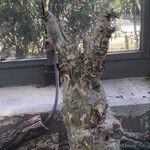
Cyphostemma juttae
Bastard Cobas · Basterkobas · Namibian grape · Tree grape
Description
Source: leafsnapCyphostemma juttae is a succulent plant that belongs to the Vitaceae family. It is native to the arid regions of southern Africa, particularly Namibia and South Africa. This plant features a thick, woody stem that can grow up to 2 meters in height and 30 centimeters in diameter. Its leaves are large, fleshy, and green with slightly wavy margins. During the summer months, Cyphostemma juttae produces small greenish-white flowers. These flowers are followed by small, round fruits containing seeds, which can be used for propagation. This succulent is well-adapted to arid conditions and can survive long periods of drought by storing water in its thick stem. It thrives in well-draining soil with low fertility levels and requires full sun exposure. Cyphostemma juttae has traditionally been used for medicinal purposes, such as treating stomach ailments, fever, headaches, and snake bites. However, it is important to note that its use should be under medical supervision, as it may have toxic properties if not properly prepared or administered. Overall, Cyphostemma juttae is an intriguing succulent species with unique characteristics that make it an attractive addition to any garden or plant collection, especially for enthusiasts who appreciate rare plants from around the world.
Care Guide
💧 Water Every 7 days
The wild grape, native to arid regions, is highly drought-tolerant and can store water for extended dry periods. It needs watering only once every three weeks. Perfect for xeriscaping, this plant thrives in harsh conditions with well-draining soil, reflecting its natural habitat.
What should I do if I give too much or too little water to my Wild grape?
Wild grapes and other succulents are resilient and can withstand long periods without water. However, if you forget to water your wild grape plant for a month or more, it may show signs of thirst or damage. Underwatered wild grapes appear lackluster, wrinkled, and may have dried up or turned brown and crispy. The soil will be completely dried out. To remedy this, give the plant plenty of water by submerging the pot in water for 5-10 minutes until you feel moisture on the soil's surface. Overwatering is dangerous for wild grapes and can lead to root rot, which hinders nutrient and water absorption. Root rot occurs when fungi and bacteria thrive in wet soil and attack the roots. Symptoms of overwatering include yellow, swollen, and translucent organs, which may burst from being overfilled with water. If left untreated, the plant may turn brown or black and shed easily. To address overwatering, improve air ventilation and adjust water frequency. Saving an overwatered plant is possible if caught early. Check the roots and soil by removing the plant from its pot and gently rinsing the roots in room-temperature water. If the roots are dark brown or black, soft, mushy, or slimy, it indicates root rot. If most of the roots are affected, it may be impossible to save the plant. In this case, remove healthy stems for propagation. However, if only some roots are affected, remove unhealthy roots using sterilized tools, dip healthy roots in fungicide, and repot the plant in fresh, well-draining soil. While not always successful, the plant has a chance to recover and grow new stems in the next growing season.
How frequently do I need to water my Wild grape?
When it comes to watering Wild grape, there is no set rule for frequency. The best way to know when to water is by checking the soil's moisture level. You can do this by sticking your finger in the pot or using a moisture meter to check below the surface. If the soil feels completely dry, it's time to water. For deep pots, you can use a stick or chopstick to check for moisture. If it still feels slightly damp, wait a few days and check again. In general, most people will need to water Wild grape every two weeks during summer and once a month in winter. However, there are factors that can affect the frequency. Considerations such as pot size, weather conditions, and the plant's specific needs should be taken into account in determining how often to water.
What do I need to think about when watering my Wild grape plant?
To properly water your Wild grape, there are several environmental conditions to consider, such as container size, soil type, temperature, and humidity. The container and soil you choose will determine how often and how much water to use. Use a container with good drainage so excess water can escape. Smaller containers hold less moisture, so they need to be watered more frequently. Larger pots retain water longer and require less frequent watering, but avoid using an oversized pot as it can lead to overwatering. When repotting, move up to a slightly larger container. Shallow containers are better since Wild grape has shallow root systems. During winter, Wild grape needs less frequent watering because growth slows down and less water evaporates. The soil remains wet for longer in cooler temperatures. The climate in your area also influences watering needs. In humid and rainy regions, you will need to water less frequently compared to arid areas. Keep in mind that even within the same geographical location, conditions can change with seasons and use of heating and air conditioning indoors. If you plant Wild grape in the ground, once the root system is established, it usually doesn't need extra water beyond what it receives naturally. However, during long dry periods, occasional watering may be necessary. If you grow Wild grape in a container, you can move it outside in suitable spring and summer temperatures and bring it indoors when temperatures drop. Keep in mind that potted Wild grape outdoors may require more water due to increased sun exposure, even if it's on a shaded porch.
How do you water Wild grape?
To water your Wild grape effectively, soak it thoroughly and allow it to dry out before watering again. This plant can tolerate some drought, so you can let it get quite dry before watering. It's best to give this plant too little water rather than too much. When watering, ensure the soil gets thoroughly soaked throughout the whole pot. Avoid pouring the water in just one spot; instead, try to go around the whole rim of the planter to ensure all sides of the plant get wet. The amount of water needed depends on your container size and the soil's absorption capacity. Water your Wild grape until it drains out from the drainage holes, ideally leaving the drained water in the saucer for 20-30 minutes to be absorbed into dry pockets of soil. Dispose of any excess water in the saucer to prevent waterlogging the soil. Bottom-watering is also a great method for watering Wild grape. It ensures thorough moisture distribution in the soil. Simply place the pot into a saucer of water and let the soil absorb moisture through the drainage holes. You'll know the soil has absorbed enough water when the top layer feels moist. This method may take longer than top-watering, but it guarantees even water distribution in the pot. In its natural habitat, Wild grape experiences relatively dry conditions with sporadic rain that thoroughly moistens the soil. You can mimic this by bottom-watering your plant when the soil is completely dry. Deep soil bathing, rather than frequent light watering, is better for Wild grape.
☀️ Light Full sun
Wild grape does well in places bathed in ample sunlight and can also tolerate areas where light is scarce. When planted in spots that receive abundant sun, the plant thrives because sunlight supports its growth. Excessive light can scorch the leaves, while too little light can impede growth and development.
What are the sunlight requirements for wild grape plants?
Wild grape plants thrive in environments that receive ample sunlight. They require full sun, which is above 6 hours of direct sunlight per day, or partial sun, about 3-6 hours of sunlight per day. It's crucial to observe the movement of sunlight through your garden to select the ideal spots that offer a harmonious balance of light and shade, ensuring the plants' well-being.
What are the essentials for growing wild grapes successfully?
Growing wild grapes successfully hinges on providing an environment with generous sunlight exposure. These plants are adaptable, flourishing in conditions with abundant sunshine and partially tolerating less sunny areas. However, too much or too little sunlight can pose challenges. Excess light may cause leaf scorching, while insufficient light can impede growth and development. For indoor plants lacking in natural light, artificial lighting, such as LED lights, serves as a vital alternative. Adjusting the type of light, its distance from the plant, and the duration of exposure can mimic natural conditions, promoting healthier growth.
What are the common symptoms of inadequate lighting in wild grape plants?
Wild grape plants exhibit several symptoms when exposed to suboptimal lighting conditions, including small-sized new leaves, leggy or sparse growth, early leaf drop, halted or non-existent new growth, irregular or paler leaf coloration suggesting a chlorophyll deficiency, and conditions like chlorosis, sunscald, leaf curling, wilting, and leaf scorching. These symptoms indicate either an excess or lack of sunlight, impacting the plant's ability to perform photosynthesis effectively.
How can I address lighting issues for my wild grape plant?
To address lighting issues for wild grape plants, gradually increase sunlight exposure to ensure they receive at least 6 hours of direct sunlight daily, using a south-facing window for indoor plants. For those unable to move or too large, augmenting with artificial lighting for at least 8 hours a day can be beneficial. Outdoors, adapt your plants to brighter conditions by moving them progressively each week, avoiding sudden exposure changes to prevent sunburn. Reducing obstructions, like pruning tree branches, or transplanting smaller plants during their dormant period can also improve sunlight access. Note that while parts of the plant already affected by lighting issues may not recover, new growth will be healthy with corrected light exposure.
🌡️ Temperature 20–37.8°C
Wild grape naturally grows in climates with temperatures between 68 and 100.4 °F (20 and 38 °C). Seasonal adjustments may be needed to keep the temperature within its preferred range.
What is the preferred climate for Wild grape to thrive?
Wild grape, or Cyphostemma juttae, naturally thrives in climates where temperatures range from 68 to 100.4 °F (20 to 38 °C). It is a heat-loving plant that gradually stops growing and enters a dormant state during the winter. To maintain the preferred temperature range, seasonal adjustments might be necessary, including moving the plant indoors when outdoor temperatures drop below 0°C, especially to a location near a south-facing window for maximum sunlight exposure. Supplemental lighting can be used if natural light is insufficient. During colder temperatures below 20°C, it's crucial to reduce or stop watering to prevent root rot, and outdoors, watering should be completely halted. Additionally, setting up a temporary greenhouse or using insulation materials can be beneficial.
How does low temperature affect Wild grape and what are the solutions?
Wild grape is not tolerant of low temperatures and thrives best in temperatures above 20°C. It requires being kept above 0°C during winter. Exposure to temperatures below -5°C can weaken the plant, leading to wilting and a higher risk of root rot. Mild frost damage might not show immediate symptoms, but the plant may gradually wither a week after the damage. To counteract frost damage, it's recommended to trim off the frostbitten areas and check for root rot. If roots have rotted, they should be removed, and the plant can be propagated through cuttings. Moving the plant to a warm environment indoors and ensuring it receives ample sunlight from a south-facing window, or using supplemental lighting if needed, are crucial steps for recovery.
What should be done if Wild grape experiences high temperature?
During the summer, it's essential to keep the Wild grape below 38°C to prevent stress from high temperatures. Exposure to temperatures over 43°C halts the plant’s growth and can cause water loss, wilting, and an increased risk of sunburn. To address sunburn damage or root rot induced by excessive heat, it's advised to remove sunburned and rotten parts of the plant. The plant should be protected from the harsh afternoon sunlight until it shows signs of recovery and resumes growth. In cases of root rot, watering should be stopped until new roots begin to form, aiding in the plant's recovery process.
💨 Humidity
🪴 Soil 6-7
🌱 Fertilizer Every 30 days
For Wild grape, light applications of fertilizer once or twice a year during the growing season are adequate. Avoid fertilizing in winter and in summer when the plant is dormant. Reduce fertilizer for repotted plants and wait a couple of months after repotting before applying fertilizer. Fertilizing supports healthy growth and encourages blooms.
Why should I add plant food to my Wild grape plant?
Fertilizing Wild grape is beneficial for the growing medium by adding nutrients. To support healthy growth, it is recommended to apply plant food during the growing season, despite the fact that it already stores water and nutrients. Additionally, fertilizing can stimulate mature specimens to produce blooms in the growing season.
When should I fertilize my Wild grape?
Wild grape plants require a small amount of fertilizer during the growing season, typically 1-2 times a year. It is recommended to fertilize them in the spring and autumn, avoiding the dormant periods of winter and summer. When repotting, be cautious with the amount of fertilizer used and wait a few months before applying any.
When is the best time to not put fertilizer on my Wild grape plant?
Wild grape, like most plants, goes through a dormancy period. During this time, it is best to avoid applying fertilizer. The plant stops growing in both the summer and winter seasons, making it important to withhold fertilizer during these times. Additionally, after repotting in the spring, it is wise to refrain from fertilizing for the first couple of months.
What kind of plant food does my Wild grape plant need?
To properly fertilize Wild grape, start by using a liquid plant food specifically made for succulents and cacti. Dilute the fertilizer by mixing it with water at half-strength. It's important not to let the fertilizer accumulate in the soil. Apply the diluted fertilizer to the base of the plant, making sure to water it thoroughly. Be mindful of any excess moisture, making sure it drains from the container or is absorbed into the ground.
How can I feed my Wild grape plant?
When fertilizing Wild grape, it is easier to use liquid plant food, but you can also use granules. Remember to dilute liquid fertilizers to half-strength following the packaging instructions. Whether you choose granules or liquid, always apply the plant food to the soil. Cover granules with a thin layer of soil and water the area, regardless of the type of plant food you are using.
🪴 Pot & Repot Every 2 years
The wild grape is a resilient succulent characterized by its thick trunk. To ensure its continued growth, it should be repotted every two years in the spring. Use a wide container to provide stability. After repotting, water the plant sparingly and place it in bright, indirect light to aid its growth and recovery.
✂️ Pruning
🌿 Propagating
🐛 Diseases & pets
☠️ Toxicity
Characteristics
- Plant Type
- Succulent
- Life Cycle
- Perennial
- Genus
- Cyphostemma
- Family
- Vitaceae
- Hardiness Zone
- 9-11
- Mature Height
- 1.22 m to 1.83 m
- Mature Spread
- 0.61 m to 1.22 m
- Leaf Color
- Green
- Leaf Type
- Deciduous
- Flower Color
- Yellow
- Flower Size
- 2.54 cm
- Bloom Time
- Early summer, Mid summer
- Planting Time
- Spring, Summer, Autumn
- Harvest Time
- Late summer, Early fall
- Native Area
- Namibia