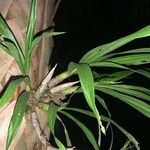
Cyrtopodium punctatum
Cowhorn orchid
Care Guide
💧 Water
The Cowhorn orchid thrives in tropical rainforests, which means it requires high humidity and regular moisture. To keep it healthy, water the plant weekly and mist it during the growing season to boost hydration. Although the orchid can tolerate short periods of dryness, maintaining consistent moisture is essential for its vitality, especially as an indoor epiphyte.
☀️ Light Full sun
The Cowhorn orchid is a sun-loving, perennial herbaceous plant native to open habitats and commonly found in meadows and grasslands. It prefers full sun but can also tolerate partial sun.
🌡️ Temperature 20–37.8°C
The cowhorn orchid prefers warm conditions. It grows best at moderately high temperatures, but not in excessively hot, humid environments. Sunlight warms the plant and encourages flowering. However, long periods of direct sun in summer can cause sunburn, so the sunlight exposure during that season should be regulated. The plant typically fares poorly in cold, so it needs proper protection and warmer conditions in winter to avoid freezing.
💨 Humidity
🪴 Soil 5-6
🌱 Fertilizer
Proper fertilization is vital for the Cowhorn orchid's health and appearance. Fertilize the Cowhorn orchid in summer, repeating monthly during the season. Nutrients supply the energy needed for growth and support the plant's structures. Fertilizing improves the Cowhorn orchid's flower display, helping produce the best blooms.
🪴 Pot & Repot
When repotting a Cowhorn orchid, select a slightly larger pot with good drainage—preferably a clear orchid pot. Use a well-draining, orchid-specific potting medium that includes bark or moss. Carefully clean the roots and cut away any that are dead or rotting. Repot after the plant has finished flowering, usually in spring or fall; water thoroughly afterward and place it in bright, indirect light. Once repotted, avoid disturbing the roots.
✂️ Pruning
The Cowhorn orchid is a hardy plant known for its striking flowers. To promote growth, improve air circulation, and increase light exposure, prune the orchid from early to late spring by removing dead pseudobulbs and leaves. This practice helps maintain the plant's shape and encourages vigorous blooming.
🌿 Propagating
🐛 Diseases & pets
☠️ Toxicity
Characteristics
- Plant Type
- Herb
- Life Cycle
- Perennial
- Genus
- Cyrtopodium
- Family
- Orchidaceae
- Hardiness Zone
- 10-12
- Mature Height
- 30 cm to 91 cm
- Mature Spread
- 49 cm to 76 cm
- Leaf Color
- Forest Green, Dark Green
- Leaf Type
- Deciduous
- Flower Color
- Yellow, Brown
- Flower Size
- 5.08 cm to 6.35 cm
- Bloom Time
- Mid spring, Late spring, Early summer
- Planting Time
- Spring, Summer
- Harvest Time
- Mid summer, Late summer, Early fall
- Native Area
- Colombia, Belize, Venezuela, Peru, Brazil