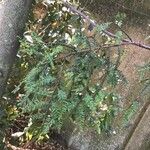
Dacrycarpus dacrydioides
Kahikatea · New Zealand dacryberry · Kahika · White-pine · New Zealand white pine
Description
Source: leafsnapDacrycarpus dacrydioides, commonly known as kahikatea (from Māori) and white pine, is a coniferous tree endemic to New Zealand. A podocarp, it is New Zealand's tallest tree, gaining heights of 60 m and a life span of 600 years. It was first described botanically by the French botanist Achille Richard in 1832 as Podocarpus dacrydioides, and was given its current binomial name Dacrycarpus dacrydioides in 1969 by the American botanist David de Laubenfels. Analysis of DNA has confirmed its evolutionary relationship with other species in the genera Dacrycarpus and Dacrydium. In traditional Māori culture, it is an important source of timber for the building of waka and making of tools, of food in the form of its berries, and of dye. When Europeans discovered it in the 18th century they found large remnant stands in both the North and South Islands, despite burning of forest by early Māori. Its use for timber and its damp fertile habitat, ideal for dairy farming, have led to its decimation almost everywhere except South Westland. Kahikatea seeds have fleshy structures called receptacles attached to them, which encourage birds such as kererū and tūī to eat them and disperse the seeds. The water storage ability of this structures may also be to protect seeds from drying out. It supports many smaller plants in its own branches, which are called epiphytes; 100 different species have been recorded on one tree alone.
Care Guide
💧 Water
The white pine is well-suited to areas with sporadic rainfall, as it thrives with moderate moisture and is resilient during dry spells. Generally, it needs to be watered every 2-3 weeks. Being an evergreen, its water requirements change with the seasons. It's important to carefully monitor the soil moisture to prevent overwatering, especially during the cooler growth phases.
How should I water my White pine tree in the best way possible?
Your White pine is not particular about the watering method you choose. You can use any common watering tool, like a watering can, hose, or even a cup, to water your White pine. It is important to water the plant by directly applying the water to the soil. Make sure to evenly moisten all areas of the soil to ensure the entire root system receives the necessary water. Using filtered water is recommended, as tap water may contain harmful particles. It is also beneficial to use water that is at or slightly above room temperature, as extremely cold or hot water can shock the White pine. However, the White pine generally responds well to any type of water.
What should I do if I give my White pine plant too much water or not enough water?
Outdoor plants, especially newly planted or seedling plants, are prone to not getting enough water. It is important to continue watering adequately for a few months until the tree is small or has just been planted. Once the roots are established, White pine trees can rely on rain most of the time. When White pine trees are planted in pots, overwatering is more likely. If you accidentally overwater your White pine, take immediate action to remedy the situation. Stop watering the plant right away to minimize the impact of overwatering. Then, remove the White pine from its pot to check its roots. If there is no root rot, you can put the plant back in its container. However, if you find signs of root rot, trim the affected roots and consider applying a fungicide to prevent further damage. Lastly, repot the White pine in well-draining soil. On the other hand, underwatering a White pine is an easy fix. If you underwater, the leaves will droop, dry out, and may fall off. After sufficient watering, the leaves will quickly regain fullness. Correct your watering frequency as soon as you notice underwatering occurring.
How frequently should I water my White pine tree?
Most outdoor plants can grow naturally with rainfall, but if your area doesn't get much rain, you'll need to water them adequately every 2 weeks in the spring and fall. During the summer, you'll need to water more frequently. In the winter, when growth slows down and plants need less water, you can water less often, or even not at all. If you have a young or newly planted White pine, you should water it more frequently to help it establish and grow into a more adaptable and drought-tolerant plant. For potted plants like the White pine, there are two main ways to determine how often to water. The first way is to set a watering schedule, like once a week or every other week. However, this may not always be reliable because it doesn't consider the specific growing conditions of your plant. Another approach is to check the soil moisture. It's usually best to wait until the top two to four inches of soil, about ⅓ to ½ of the pot's depth, have completely dried out before watering again. This can vary depending on the season, as the plant's water needs are higher during the summer.
How much water should I give my White pine tree?
To water your White pine effectively, you don't always need to use a lot of water. Instead, if only a few inches of soil have dried since the last watering, giving it five to ten ounces of water should support healthy growth. You can also gauge the amount of water based on the moisture in the soil. Keep track of how many inches of soil have dried between watering sessions. To make sure your White pine receives enough moisture, water it until all the dried soil layers are moistened. If over half of the soil has dried, you may need to provide more water. In these cases, keep adding water until you see excess water draining from the pot's drainage holes. If your White pine is planted in a location that receives sufficient rainfall, it may not require additional watering. However, when the White pine is young or still establishing, it needs about 1-2 inches of rain each week. As it grows and becomes established, it can mostly rely on rainfall. Only in extremely hot weather with no rainfall for 2-3 weeks should you consider giving your White pine a thorough watering to prevent stress.
How can I know if I'm giving enough water to my White pine tree?
The White pine commonly experiences issues with overwatering, which can be identified through several signs. An overwatered White pine will typically have yellowing leaves and may shed some of its leaves. Additionally, overwatering can lead to the plant's structure appearing shriveled and root rot may develop. Conversely, an underwatered White pine will also exhibit wilting and may have brown or brittle leaves. Regardless of whether signs of overwatering or underwatering are present, it is important to intervene and restore the health of your White pine.
☀️ Light Full sun
White pine is native to open habitats, such as sunny meadows and forest edges, which offer plenty of light. It grows best in Full Sun but can also tolerate Partial Sun, adapting well to different light conditions.
How many hours of sunlight per day does White pine need to grow healthily?
To ensure healthy growth, it is important for White pine to receive a minimum of 3-6 hours of sun per day. Most plants that can handle part sun also do well in full sun, but they are more adaptable because they require less light for photosynthesis compared to plants that need full sun or part shade.
What kind of sunlight does White pine require?
White pine thrives when exposed to full or partial sun. They do especially well with direct morning light, but during the summer they require protection from the intense afternoon sun. In temperate environments, excessive hot afternoon sun can cause leaf burn, harming the plant's overall appearance and well-being.
Can the sun harm White pine? How can I keep White pine safe from the sun and heat?
When white pine is planted indoors and then moved outdoors, it can be easily damaged by direct sunlight. To prevent sunburn, it's best to gradually move the pots from a shaded area to a brighter spot. However, even plants acclimated to the summer sun can be harmed by extreme heat. During a heatwave, it is crucial to keep the soil consistently moist to help the plants handle the excessive heat. To protect sensitive white pine during extreme weather, you can consider either moving the plants in containers to shaded areas in the afternoon or putting up a shade cloth over them.
Should I keep White pine out of the sun?
White pine benefits from bright morning sun and some full sun exposure. However, the harsh midday sun of summer can be too intense for the tree to handle. If it is planted in the ground, the tree can gradually adapt to the increasing intensity of the summer sun. However, if the tree is in a pot and has been indoors or in a protected area, it may suffer injury if suddenly exposed to direct sun in the hottest part of the day. To protect the tree from the intense afternoon sun, it is recommended to plant or place it in an area with shade from taller trees, plants, a building, or a landscape feature during midday.
What will happen if White pine doesn't get enough sunlight?
White pine may become pale green or display drooping, yellow leaves when they receive too little sun. It is normal for some leaves to drop, but if new ones are not growing in to replace them, something is wrong. If White pine receiving inadequate light does manage to grow, the new growth is often spindly, pale, and prone to insect infestation. By paying attention to these signs and adjusting the lighting conditions, you can make a significant difference.
🌡️ Temperature 15–37.8°C
White pine is indigenous to temperate regions and generally prefers temperatures between 59 and 100 °F (15 to 38 ℃). Depending on the season, it may be necessary to make adjustments to recreate this favored environment.
What temperature is best for White pine?
Plants are affected by colder temperatures because they are the same temperature as the surrounding air. When exposed to sunlight, they can warm up, but this doesn't happen in winter. The White pine tree thrives in temperatures between 70~85℉(21~30℃). It can tolerate temperatures as low as 20~30℉(-6~0℃), and occasionally as low as 15℉(-10℃), but prolonged exposure to such low temperatures can cause frost damage. To ensure the best conditions for the White pine, keep temperatures within the range of 70~85℉(21~30℃), and remember to water them regularly and provide some shade to prevent wilting.
Should I change the temperature for White pine at different stages of growth?
Before growing White pine, it is important to conduct research to ensure the temperature is suitable. Some growers may consider lowering the plants' thermostats during the growing season to save on HVAC costs. However, it is crucial to understand that temperature can impact flowering, pest management, and plant quality. Additionally, White pine growth may cease at a certain temperature, particularly during winter when some species go dormant. As seasons change and White pine can grow faster, the base temperature increases. Compared to species adapted to cooler climates, those naturally found in warm habitats have higher optimum temperatures. Exposing White pine seeds to cool temperatures can lead to decreased uniformity and delays. Lowering the temperature during flowering may be necessary, but it should not be done during other phases. Cooler night temperatures also require less water, so adjust irrigation accordingly.
How can I keep White pine trees warm during cold seasons?
To ensure the White pine is prepared for colder temperatures, it's important to halt fertilizer use. By doing so, the plant's existing growth will become stronger and more resilient. To provide additional protection, consider constructing structures such as cages or trellises around the plant. Another option is using heat mats, which can gently warm the soil and maintain an optimal temperature range for the White pine.
How can I protect White pine from getting damaged by temperature?
In order to protect the White pine from frost during winter, there are several options you can use, such as cloths, tarps, burlap, sheets, or plastic buckets. It's important to secure these covers so that they act as insulators and don't get blown away by the wind. However, be cautious not to let the plastic sheets or burlap covers touch any part of the fruit or foliage, as this can transfer the cold temperatures and cause burns. Once the temperature starts to rise during the daytime, you can safely take off the covers.
Do I need to change the temperature for White pine in different seasons?
When growing the White pine in spring, it is recommended to increase humidity because the air temperature is cooler during this time. Dry temperatures can be stressful for various species, so increasing humidity can help. In summer, the large greenhouse cover and warm temperatures naturally create a higher humidity level in the air. However, this can lead to condensation on the greenhouse walls, which may cause problems with pollination and infections when the water falls on the leaves. Therefore, it is important to make adjustments based on the temperature and consider spraying the plants on hotter days of the year.
💨 Humidity
🪴 Soil 5-6
🌱 Fertilizer
White pine has specific nutrient needs and does not require heavy fertilization. Fertilizing in spring is the best time to encourage optimal growth. Providing nutrients improves its health, increases resistance to pests and diseases, and supports its long lifespan.
🪴 Pot & Repot
✂️ Pruning
To promote healthy growth in white pine, it's important to prune them during early to late winter. Remove any dead or diseased branches to improve airflow and light penetration. Be sure to use sharp tools to minimize the risk of infection. Avoid heavy pruning to help maintain the tree's natural shape, which will result in a stronger and more attractive plant.
🌿 Propagating
🐛 Diseases & pets
☠️ Toxicity
Characteristics
- Plant Type
- Tree
- Life Cycle
- Perennial
- Genus
- Dacrycarpus
- Family
- Podocarpaceae
- Hardiness Zone
- 8-11
- Mature Height
- 54.86 m
- Mature Spread
- 10.06 m to 14.94 m
- Leaf Color
- Dark Green
- Leaf Type
- Evergreen
- Flower Size
- 1.02 cm
- Bloom Time
- Mid fall, Late fall
- Planting Time
- Spring, Summer
- Harvest Time
- Mid spring, Late spring, Early summer
- Native Area
- New Zealand