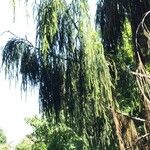
Dacrydium cupressinum
Red Pine · Rimu · New Zealand red pine
Description
Source: leafsnapDacrydium cupressinum, commonly known as rimu, is a large evergreen coniferous tree endemic to the forests of New Zealand. It is a member of the southern conifer group, the podocarps. The former name "red pine" has fallen out of common use.
Care Guide
💧 Water
Red pine thrives in high humidity and is notably drought-tolerant. It should be watered every 2 to 3 weeks, with the soil allowed to dry out between watering sessions. As an evergreen, red pine needs consistent moisture to maintain its foliage year-round. When grown outdoors, it particularly benefits from the natural water cycle.
What is the most effective way to water my Red pine?
Your Red pine is not too picky when it comes to watering. You can use any common watering tool, like cans, hoses, or cups. It's important to water directly on the soil, making sure to moisten all areas equally. Using filtered water can be helpful as tap water may have harmful particles. Water at or slightly above room temperature is best, as extreme temperatures can shock the Red pine. However, the Red pine generally responds well to any kind of water.
What should I do if I give too much or too little water to my Red pine tree?
Outdoor plants, especially new ones or seedlings, are often at risk of not getting enough water. It's important to consistently water these plants for a few months while they are still small or newly planted. This is because once the roots are established, Red pine trees can usually rely on rainfall. When Red pine trees are planted in pots, there is a higher chance of them being overwatered. If you accidentally overwater your Red pine, you should take immediate action to fix the situation. First, stop watering the plant to minimize the impact of the overwatering. Then, remove the Red pine from its pot and examine the roots. If there is no root rot, you may be able to put the plant back in its container. However, if there is root rot, trim away the affected roots and consider applying a fungicide to prevent further damage. Finally, make sure to repot the Red pine in well-draining soil. On the other hand, underwatering a Red pine is a simpler problem to solve. If you notice drooping, drying, or falling leaves, simply water the plant more frequently. The leaves should regain their fullness after sufficient watering. It's important to adjust your watering frequency as soon as you notice the signs of underwatering.
How frequently should I give water to my Red pine tree?
Most outdoor plants can grow naturally with rainfall. However, if your area lacks rainfall, here are some guidelines for watering your plants
How much water does my Red pine tree require?
When watering your Red pine, keep in mind that it does not always require a large amount of water. If only a few inches of soil have dried since the last watering, giving the plant around five to ten ounces of water will support healthy growth. You can also gauge the amount of water based on the moisture of the soil. Take note of how many inches of the soil have dried between waterings. To ensure the Red pine receives the necessary moisture, water enough to moisten all the dry soil layers since the last watering. If over half of the soil is dry, consider giving more water than usual. In such cases, continue watering until excess water drains from the pot's drainage holes. If your Red pine is planted in an outdoor area with ample rainfall, it may not require additional watering. However, when the Red pine is young or establishing itself, it should receive 1-2 inches of rain per week. As it grows and becomes more established, it can rely on rainwater alone. Only when the weather is hot and there has been no rainfall for 2-3 weeks should you give the Red pine a thorough watering to prevent stress.
How do I know if I am giving enough water to my Red pine tree?
The Red pine is often overwatered, which can be identified by yellowing leaves and leaf loss. Overwatering can also lead to a shriveled plant structure and root rot. In contrast, an underwatered Red pine will show wilting and have brown or brittle leaves. Regardless of signs of overwatering or underwatering, it is important to intervene and restore the health of your Red pine.
☀️ Light Partial sun
Red pine prefers a moderate amount of sunlight, though it can tolerate fairly high sun exposure. In its native habitat it does best in places where it gets a blend of shade and sun. While it can adapt to bright conditions, excessive exposure can harm its health and may result in reduced vigor and slowed growth.
How much sunlight does Red pine need to grow?
Red pine requires 3-6 hours of direct sunlight daily, but it also needs shade during the hottest parts of the day. Morning sunlight is ideal, but it can tolerate some afternoon sun if not too hot. To provide the perfect balance, plant it in a partially sunny area like under a tree or on the east side of a building.
What will happen if Red pine doesn't get enough sunlight?
To avoid sun damage, it's important to protect Red pine from too much direct sunlight. If the plant receives excessive sunlight, its leaves can turn yellow, dry out, or even burn. Additionally, you may observe that the plant wilts or stops growing properly. To mitigate these issues, provide some shade for Red pine during the hottest parts of the day. This can be achieved by using a shade cloth or planting Red pine near taller plants that offer natural shade.
What happens if Red pine gets too much sunlight?
If Red pine doesn't receive sufficient sunlight, it may grow tall and thin, with not much foliage. Additionally, the leaves may become yellow or pale green, indicating a lack of chlorophyll production due to insufficient sunlight. To fix this issue, you can try moving Red pine to a sunnier location or trim nearby foliage to enable more light to reach the plant.
🌡️ Temperature 15–37.8°C
Native to regions with wide temperature swings, red pine performs well between 59–100 °F (15–38 °C). Seasonal adjustments may be necessary to ensure its successful growth.
What is the best temperature for Red pine?
Plants are affected by colder temperatures because they have the same temperature as the air. When exposed to sunlight, they can warm up again, but this doesn't happen in winter. The ideal temperature range for Red pine is between 70~85℉(21~30℃). They can withstand temperatures as low as 20~30℉(-6~0℃), and sometimes even 15℉(-10℃), but not for long as it can cause frost damage. To prevent wilting, it's important to keep the maximum temperatures around 70~85℉(21~30℃) and water the plants regularly while providing some shade.
Should I change the temperature for Red pine at different stages of growth?
To grow Red pine successfully, it is important to research and ensure the right temperature conditions. Although some growers may consider lowering the plants' thermostats to save on HVAC costs during the growing season, it is crucial to understand that temperature impacts the plants' flowering, pest management, and overall quality. There is a temperature threshold where Red pine growth ceases, particularly during winter when certain species may become dormant. As the seasons transition and the base temperature increases, Red pine growth accelerates. It is worth noting that species naturally found in warmer habitats have higher optimum temperatures compared to those that thrive in cooler climates. Exposure to cool temperatures can result in decreased uniformity and delayed growth when Red pine seeds are involved. Adjusting the temperature during flowering specifically, but not during other growth phases, may be beneficial. Cooler temperatures at night also require less water, so irrigation adjustments should be made accordingly.
How can I make sure Red pine stays warm during cold seasons?
To help the plant withstand colder temperatures, consider stopping the application of fertilizer. This will promote the hardening of existing growth. Additionally, you can provide protection for the Red Pine by constructing structures like cages or trellises. Alternatively, using heat mats can gently warm the soil and provide a consistent and ideal temperature range for the plant.
How can I protect Red pine from getting damaged by temperature?
In winter, you can shield the Red pine from frost by using clothes, tarps, burlaps, sheets, or plastic buckets. Just remember to secure them well so they stay in place as insulators and are not blown away by the wind. But be careful not to let the plastic sheets or burlap touch any part of the fruit or leaves, as this could transfer the cold temperatures and cause damage. As the temperatures warm up during the day, take off the covers.
Do I need to change the temperature for Red pine in different seasons?
If you are growing Red pine in the spring, it's important to increase humidity since the air temperature tends to be cooler at this time. Dry temperature can be stressful for plants, so increasing humidity can be beneficial. In summer, the greenhouse provides a large cover and warm temperature, leading to higher humidity in the air. However, this can cause issues with pollination and infections when condensation forms on the greenhouse walls and falls onto the leaves. Adjustments should be made based on temperature and regular spraying is recommended on hotter days of the year.
💨 Humidity
🪴 Soil 5-6
🌱 Fertilizer
Red pine has specific nutrient needs and does not require heavy fertilization. The best time to fertilize for optimal growth is in spring. Providing nutrients enhances its health, strengthens its resistance to pests and diseases, and helps maintain its long lifespan.
Why is it necessary to add fertilizer to my Red pine tree?
Adding nutrients to the soil in the spring is important for promoting healthy growth in Red pine. Since the plant has a long lifespan, it requires support to thrive. Fertilizing not only improves the plant's overall health, but it also enhances its ability to resist common pests and diseases that can hinder growth or shorten its lifespan.
When should I fertilize my Red pine?
The growing medium may not always provide sufficient nutrients for healthy growth. However, Red pine is unique compared to garden annuals and perennials because it does not need a lot of additional nutrients. The optimal time to fertilize Red pine is in the spring, before new growth emerges.
When is it best to not use fertilizer on my Red pine?
While some plants benefit from regular fertilization, Red pine is not one of them. It has low nutrient requirements and excessive fertilizer can actually cause it to deteriorate. It is best to only fertilize Red pine in the spring and avoid doing so during the summer, fall, and winter seasons. Therefore, refrain from adding any fertilizer or organic matter to the soil during those times.
What kind of plant food does my Red pine tree need?
The age of your plant is important for choosing the right fertilizer. Keep in mind that Red pine does not need a lot of nutrients. Look for a balanced plant food that promotes healthy root development and growth. Avoid fertilizers with high nitrogen levels.
How do I make my Red pine tree grow better with nutrients?
When fertilizing Red pine, it is important to pay attention to both the timing and method. Add the fertilizer in the spring, directly at the base of the plant, being careful to avoid contact with the trunk. For granulated fertilizers, it is beneficial to cover the pellets with a thin layer of soil. This technique helps ensure that the fertilizer is fully absorbed into the soil.
🪴 Pot & Repot
✂️ Pruning
The evergreen red pine features dense foliage and a conical shape. To keep it healthy, prune the tree from early to late winter. This will help remove dead branches and improve air circulation. Proper pruning promotes better growth, reduces the risk of disease, and maintains the tree's shape. For the best results, use clean, sharp tools while pruning.
🌿 Propagating
🐛 Diseases & pets
☠️ Toxicity
Characteristics
- Plant Type
- Tree
- Life Cycle
- Perennial
- Genus
- Dacrydium
- Family
- Podocarpaceae
- Hardiness Zone
- 8-11
- Mature Height
- 20.12 m to 49.99 m
- Mature Spread
- 10.06 m
- Leaf Color
- Green
- Leaf Type
- Evergreen
- Flower Size
- 0.51 cm to 1.02 cm
- Bloom Time
- Late fall, Early winter
- Planting Time
- Spring, Summer, Autumn
- Harvest Time
- Mid spring, Late spring, Early summer
- Native Area
- New Zealand