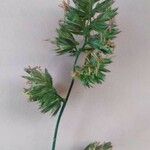
Dactylis glomerata
Orchard grass · Cock's-foot · Barnyard grass · Cocksfoot · Cocksfoot grass
Description
Source: leafsnapDactylis glomerata, commonly known as cock's-foot or orchard grass, is a perennial grass species that belongs to the Poaceae family. Native to Europe and Asia, it has been introduced and naturalized in many parts of the world. The plant has a robust root system, enabling it to thrive in a wide range of soil types and conditions. It can grow up to 1 meter tall, featuring long, flat leaves that are rough on the upper surface but smooth underneath. During the summer months, Dactylis glomerata produces dense clusters of spikelets at the tops of its stems. These spikelets contain numerous small flowers with long awns or bristles. This grass species is widely used for forage production due to its high yield potential and palatability for livestock such as cattle, sheep, goats, and horses. Additionally, it provides excellent ground cover, helping to prevent soil erosion. Beyond its agricultural uses, Dactylis glomerata has been employed in traditional medicine as an herbal remedy for various ailments, including coughs and respiratory infections. Overall, Dactylis glomerata is an important species both ecologically and economically. Its versatility in various applications, including agriculture, makes it a valuable crop worldwide.
🌳 Orchard grass, a modest yet important player in the agricultural field, fulfills a crucial role in supporting farm incomes and grass-fed animal husbandry across various regions. It provides nutrient-rich grazing, making it a high-quality feed for livestock such as cows, goats, and sheep. Its less obvious strengths extend further: research suggests it has potential as a renewable bioenergy crop, with low maintenance requirements and high biomass yields indicating a possible sustainable fuel alternative.
🎭 Psychic abilities, protection. It represents food, concealment and resilience.
Care Guide
💧 Water Every 7 days
Orchard grass thrives when it receives moderate moisture and prefers to be watered consistently twice a week. It is adaptable to different soil moisture levels and also benefits from natural sources of water like dew and rainfall. Known for its resilience and adaptability, orchard grass is well-suited for areas with changing weather patterns.
When Should I Water My Orchard Grass?
Watering orchard grass properly is key to its health and development. Check the soil's moisture by inserting your finger about 1 to 2 inches into the soil; if it's dry, it's time to water. Other indicators include wilting, yellowing, or browning leaves, stunted growth, soil cracking or pulling away from container edges, and a lighter weight pot for potted plants. Be aware of the risks of both late and overwatering. Watering too late can cause temporary wilting or even stunt the plant's growth, while overwatering can harm the roots and lead to diseases. Proper water management encourages growth, ensures plant health, and extends the lifespan of your orchard grass.
How Should I Water My Orchard Grass?
Orchard grass thrives when watered deeply and infrequently, allowing the soil to dry out slightly between waterings. Watering directly at the base of the plant helps to avoid diseases that can be promoted by wetting the foliage. A watering can with a long spout or a watering wand is ideal for directing water precisely to the base, providing the targeted hydration the roots need. This method helps maintain the plant's overall health and vitality.
How Much Water Does Orchard Grass Really Need?
Orchard grass requires a moderate amount of water, reflecting its native habitat in Europe, Asia, and North Africa. An optimal watering session involves ensuring water penetrates to a depth of 12-18 inches, typically amounting to 1-2 liters per session for a mature plant in a medium-sized pot. Proper hydration is indicated by healthy, green leaves and good vigor. Both too much and too little water can result in issues such as root rot, fungal diseases, poor growth, and reduced stress resistance. Maintaining a consistent moisture level without letting the soil completely dry out between waterings is key.
What Kind of Water is Best for Orchard Grass?
Rainwater is the ideal choice for watering orchard grass, being softer and more acidic, which suits the grass's preferences. If using tap water, it should be filtered or treated to remove chlorine and other chemicals. Distilled water, lacking essential minerals, should be used sparingly. Orchard grass is sensitive to chlorine and fluoride, as well as to hard water. Letting tap water sit overnight before using can allow chlorine to evaporate. Also, water temperature matters; it should be at room temperature to avoid shocking the plant's roots or causing damage.
How Do Orchard Grass's Watering Needs Change with the Seasons?
Seasonal changes affect the watering needs of orchard grass. In spring, water thoroughly but avoid overwatering as the grass exits its winter rest phase. Summer demands more frequent watering to support peak growth, especially during dry spells. As growth slows in autumn in preparation for dormancy, reduce your watering regimen. During winter, the plant's needs are minimal; light watering every few weeks, if there isn't sufficient rainfall, suffices. Always check the soil moisture before watering to ensure you're not overwatering.
☀️ Light Full sun
Orchard grass performs best in full sun but also copes well in partial shade. The strength of sunlight strongly affects its health, promoting vigorous growth. Conversely, prolonged insufficient sun leads to stunted development and reduced vigor. Its native habitat is characterized by a substantial amount of sunshine.
What are the sun requirements for orchard grass?
Orchard grass thrives in conditions ranging from full sun, which is above 6 hours of direct sunlight, to partial sun, approximately 3-6 hours of sunlight. It's important to observe the movement of sunlight through your garden, choosing spots that offer the right balance of light and shade. This ensures the plants remain healthy and happy, reflecting the natural solar exposure of orchard grass's origin habitat, which is abundant in sunshine.
How does sunlight affect the health and growth of orchard grass?
Sunlight plays a crucial role in the health and growth of orchard grass. With full exposure to sun, it encourages lush and vigorous growth. However, a lack of adequate sunshine can result in stunted growth and a decrease in plant vigor. This makes sunlight intensity a vital factor for the successful cultivation of orchard grass, emphasizing the importance of choosing the right location that simulates its natural, sun-rich habitat.
Can artificial lighting be used for indoor orchard grass, and how?
Yes, artificial lighting can be beneficial for growing indoor orchard grass, especially when natural sunlight is insufficient, like during winter or in less sunny spaces. LED lights, which can be customized to provide specific wavelengths necessary for the plant, are a popular choice. For full sun plants, 30-50W per square foot is recommended; partial sun plants require 20-30W per square foot; and full shade plants need 10-20W per square foot. The artificial light source should be placed 12-36 inches above the plant to mimic natural sunlight and left on for 8-12 hours a day depending on the plant species' needs.
What symptoms indicate that orchard grass is not receiving enough light?
Symptoms of inadequate light in orchard grass include smaller new leaves, leggy or sparse growth, faster leaf drop, slower or halted growth, and lighter-colored or irregularly patterned new leaves. These signs suggest that the plant is trying to adapt to low light conditions by conserving resources or attempting to maximize light absorption, potentially leading to weak and unsustainable growth patterns.
What are the symptoms and solutions for orchard grass exposed to too much sunlight?
Excessive sunlight can lead to chlorosis (leaves turning yellow due to breakdown of chlorophyll), sunscald (pale, bleached areas on leaves/stems), leaf curling, wilting, and leaf scorching (brown, dry leaf edges). Solutions include gradually adjusting plants to sunlight exposure, particularly for indoor plants which might benefit from a south-facing window or artificial lighting if relocation is not possible. For outdoor plants, it’s crucial to move them gradually to avoid sunburn. If obstruction is an issue, consider pruning or transplanting to ensure adequate sunlight access.
🌡️ Temperature 5–32.2°C
Orchard grass is a cool-season grass native to Europe, where it grows in temperate areas. It favors temperatures from 41 to 90 °F (5 to 32 °C). To cope with seasonal changes, it is recommended to plant it in early spring or autumn, when temperatures are cooler.
What is Orchard Grass and where is it native to?
Orchard grass, botanically known as Dactylis glomerata, is a cool-season grass native to Europe. It thrives in temperate regions across the continent, preferring temperatures between 41 to 90°F (5 to 32°C). This grass is well-suited for growth in early spring or fall, benefitting from the cooler temperatures of these seasons. With its notable cold resistance, Orchard grass generally requires no special frost protection measures during winter, although precautions may be necessary if temperatures are expected to fall below -30°C.
How should Orchard Grass be cared for in winter?
During winter, Orchard grass demonstrates strong cold resistance and does not usually require special frost protection. However, if winter temperatures are anticipated to drop below -30°C, it is important to protect the plant by covering it with soil or straw. To prepare for the first freeze in autumn, it's advisable to water the plant abundantly. This ensures the soil remains moist and helps prevent drought and water scarcity for the plant throughout the winter and into early spring, as the moist soil enters a frozen state.
What should be done if Orchard Grass experiences temperatures below its tolerance?
Orchard grass is quite cold-tolerant, thriving best when the temperature is maintained above 5°C and kept above -25°C during the winter months. In instances when temperatures fall below -30°C, it may not show immediate damage during winter but could lead to decreased sprouting or even an absence of sprouting in spring. In such cases, any parts of the grass that have failed to sprout by spring should be removed to encourage new growth.
How can Orchard Grass be protected from high temperatures?
To protect Orchard grass from high temperatures, especially during summer when temperatures should ideally remain below 32°C, it's crucial to address any overheating immediately. Signs of excessive heat include leaves becoming lighter in colour, prone to curling, and susceptible to sunburn, with severe cases leading to wilting and dryness. Counteracting these effects involves trimming away sunburned and dried parts of the plant, moving it to a shaded location or using a shade cloth to mitigate direct sunlight, especially during midday and afternoon hours. Additionally, watering the grass in the morning and evening helps maintain soil moisture, assisting in the plant's recovery and continued health.
💨 Humidity normal (40-60%)
This plant will thrive in moderate humidity, which is probably the level in your home. However, misting it a few times a week can be very beneficial. Make sure the room has good ventilation.
🪴 Soil 5-7
🌱 Fertilizer
Orchard grass needs extra nutrients to encourage healthy new growth. In spring, putting some compost around the plant’s base can effectively supply the nutrition it requires. Fertilizing helps support vigorous growth and improves the plant’s resistance to diseases and pests.
🪴 Pot & Repot
✂️ Pruning
Although the animals will nibble on the Cat Grass, it’s best to prune it back by at least an inch every other week to prevent overly tall, floppy growth.
🌿 Propagating
🐛 Diseases & pets
☠️ Toxicity
Dactylis glomerata, commonly known as Cat Grass or Orchard Grass, is not reported as toxic to both humans and animals. In fact, it is widely cultivated as forage grass in pastures.
Characteristics
- Plant Type
- Grass
- Life Cycle
- Perennial
- Genus
- Dactylis
- Family
- Poaceae
- Hardiness Zone
- 4-8
- Mature Height
- 0.2 m to 1.37 m
- Mature Spread
- 30 cm
- Leaf Color
- Green, Blue
- Leaf Type
- Evergreen, Deciduous
- Flower Color
- Green
- Flower Size
- 4.06 cm to 20.32 cm
- Bloom Time
- Late spring, Early summer
- Planting Time
- Spring
- Harvest Time
- Early summer, Mid summer
- Native Area
- Libya, Egypt, Turkey, Sweden, India, Austria, Slovakia, Pakistan, Slovenia, Morocco, Croatia, Belarus, Uzbekistan, Russia, Iraq, Germany, Jordan, Estonia, Romania, Latvia, Belgium, Moldova, Portugal, Nepal, Netherlands, France, Tajikistan, Tunisia, Czech Republic, Cyprus, Bulgaria, Poland, Armenia, Greece, Ukraine, Serbia, Lebanon, Lithuania, Norway, China, Afghanistan, Syria, Kyrgyzstan, Kazakhstan, Italy, Spain, Switzerland, Denmark, Mongolia, Israel, Finland, Bhutan, Iran, Ireland, United Kingdom, Hungary, Algeria, Azerbaijan, Turkmenistan