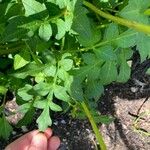
Dahlia merckii
Mystic Dreamer
Description
Source: leafsnapDahlia merckii, Merck's dahlia, is a species of flowering plant in the daisy family Asteraceae, native to Mexico. This tuberous herbaceous perennial has divided leaves, and produces single flowers in shades of lilac, white and pink, in late summer and autumn.Growing to 2.5 m (8.2 ft), it is hardy only in milder areas which do not suffer prolonged frosts, where tubers may be left in the ground throughout the year, and protected with a mulch in the dormant season. Otherwise tubers must be lifted and stored over winter. They begin to sprout in spring, but must be protected until all danger of frost has passed. Propagation is by seed or cuttings in spring.
Care Guide
💧 Water
Originating from highland regions, the dahlia species thrives in environments with balanced moisture and good drainage. While it can tolerate moderate drought, it prefers consistent moisture and needs weekly watering. When grown outdoors, the dahlia flourishes in soil that remains evenly moist throughout the growing season, which enhances both its foliage and blooms.
☀️ Light Full sun
Dahlia species is a sun-loving, herbaceous perennial that originates in open habitats and often thrives in meadows and grasslands. It prefers full sun but can also tolerate partial sun conditions.
What are the sunlight requirements for Dahlia merckii?
Dahlia merckii requires full sun, which means it needs above 6 hours of sunlight daily. It's important to observe how sunlight moves through your garden over the day to find spots that offer the right balance of light and shade. This careful placement ensures the plants thrive in their environment.
What is the botanical name of the Species dahlia?
The botanical name of the Species dahlia is Dahlia merckii.
🌡️ Temperature 15–35°C
Species dahlia can tolerate a wide range of temperature conditions, but its distribution may still be restricted by different combinations of moisture and heat. It does best in warm summer climates with sufficient rainfall or irrigation. Extended periods of cloudy, rainy weather, as well as prolonged high temperatures, increase the chance that Species dahlia will die. In winter, adequate protection from cold can improve the plant's chances of survival.
What is the species name of the plant?
The species name of the plant is Species dahlia.
What is the botanical name of Species dahlia?
The botanical name of Species dahlia is Dahlia merckii.
💨 Humidity
🪴 Soil 6-7
🌱 Fertilizer
The best time to fertilize a Species dahlia is in early spring, when it is coming out of dormancy and starting active growth. Fertilizing supplies essential nutrients for healthy development. Although Species dahlia has fairly low fertilizer requirements, an annual application can boost its survival and encourage better, longer-lasting blooms.
🪴 Pot & Repot 2-3 years
To promote optimal growth and vibrant blooms, repot your 'species dahlia' every 2-3 years in the spring. Choose a wider pot for stability and use a well-draining soil mix. After repotting, water moderately to aid in recovery. This process aligns with the plant's active growth cycle and helps ensure healthy development.
✂️ Pruning
The dahlia species is characterized by its tall stems and daisy-like flowers. To maintain these plants, prune them in early to late spring by removing dead stems and thinning out crowded growth. This practice improves air circulation, boosts flower production, and enhances the plant's shape. For the best care advice, consult the recommendations of the Royal Horticultural Society.
🌿 Propagating
🐛 Diseases & pets
☠️ Toxicity
Characteristics
- Plant Type
- Herb
- Life Cycle
- Perennial
- Genus
- Dahlia
- Family
- Asteraceae
- Hardiness Zone
- 7-10
- Mature Height
- 91 cm
- Mature Spread
- 91 cm
- Leaf Color
- Green
- Leaf Type
- Deciduous
- Flower Color
- Pink, Lavender, White
- Flower Size
- 5.08 cm to 6.35 cm
- Bloom Time
- Summer, Fall
- Planting Time
- Spring, Summer, Autumn
- Harvest Time
- Late summer, Fall, Early winter
- Native Area
- Mexico