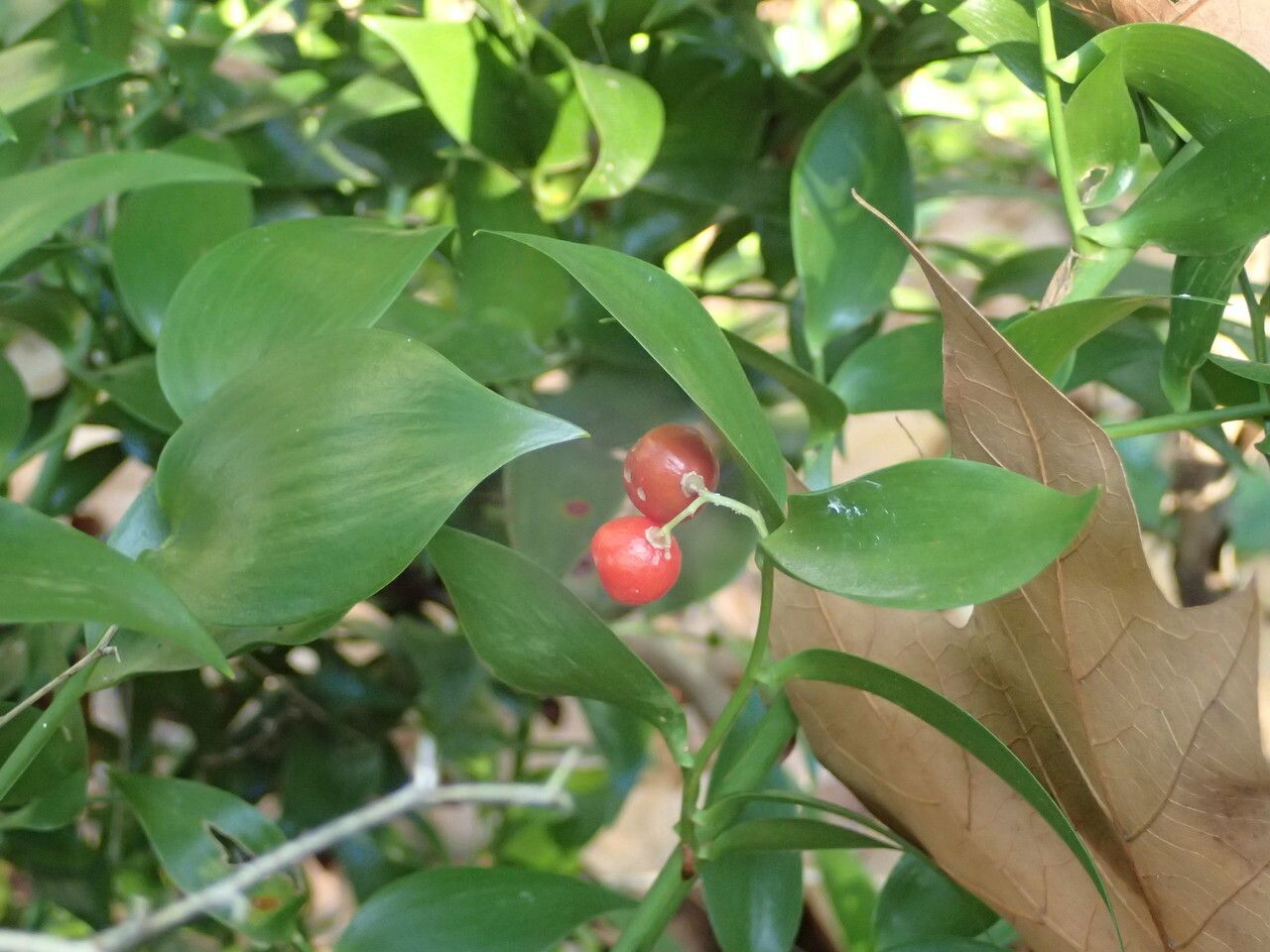
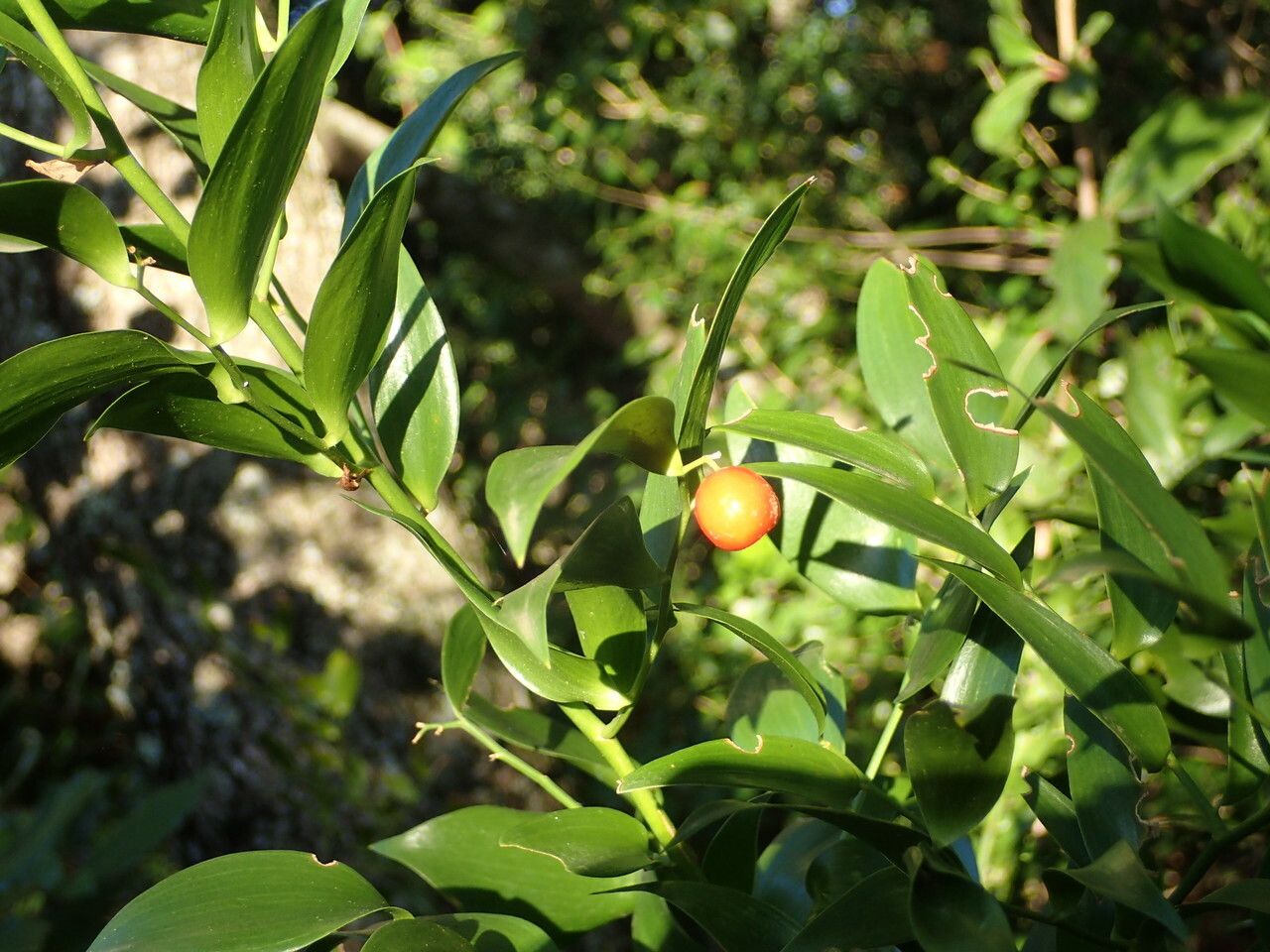
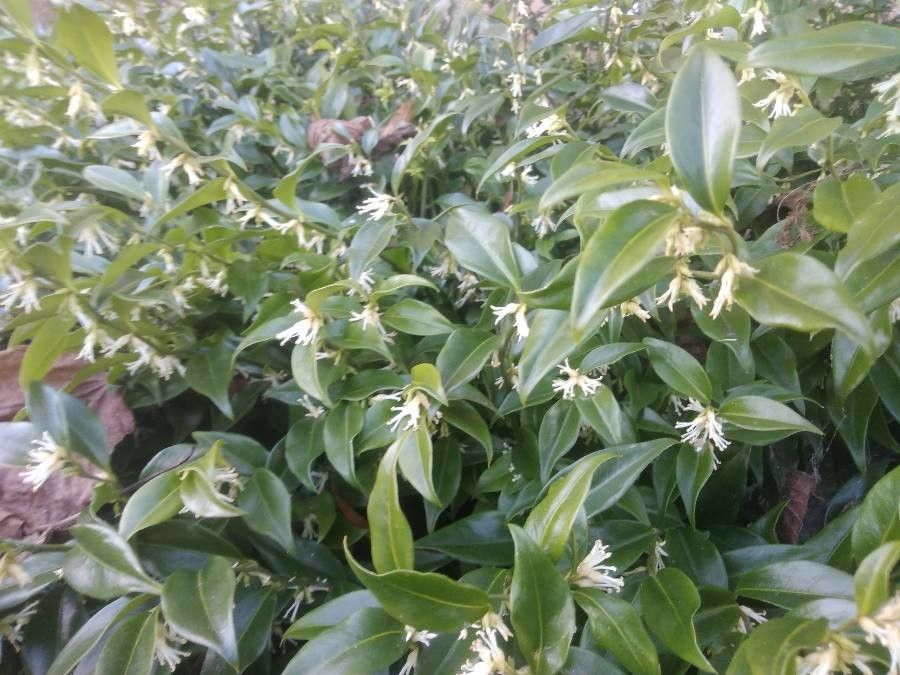
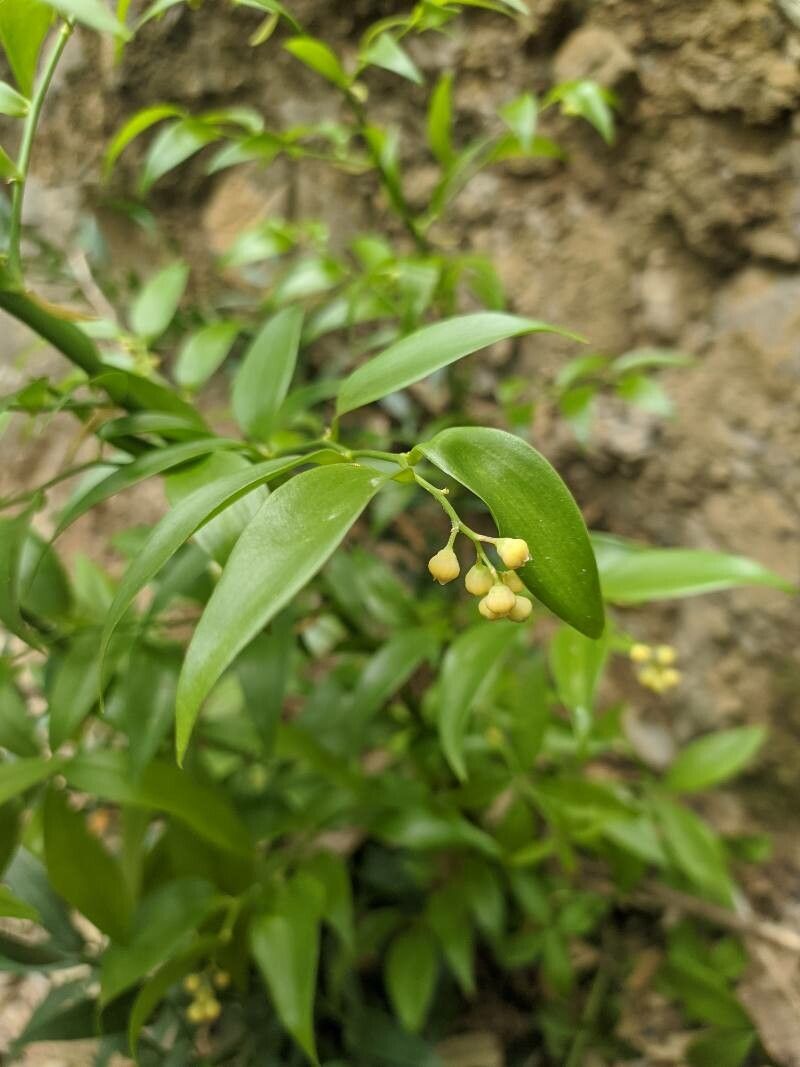
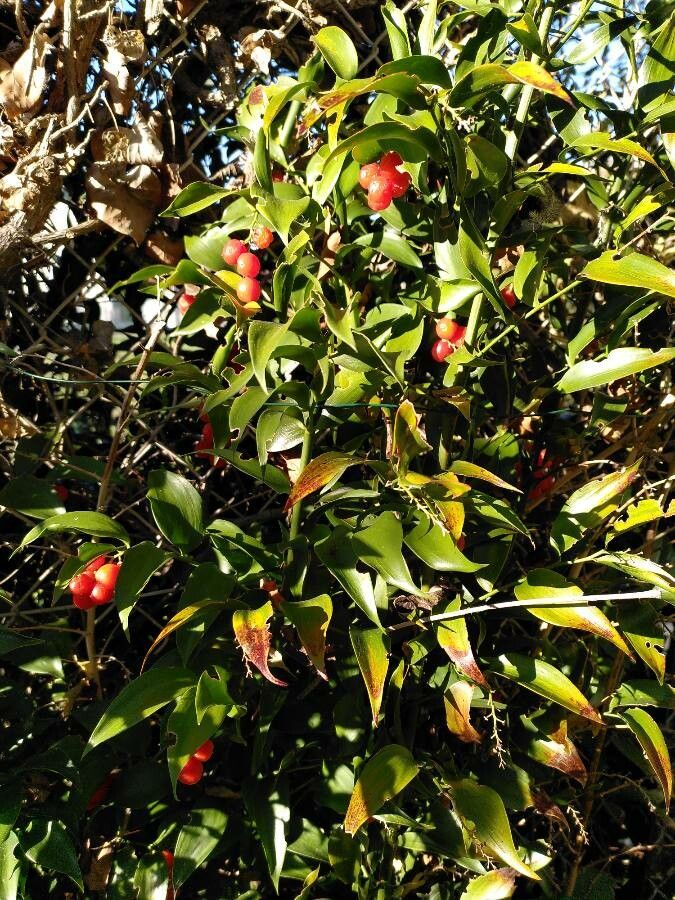
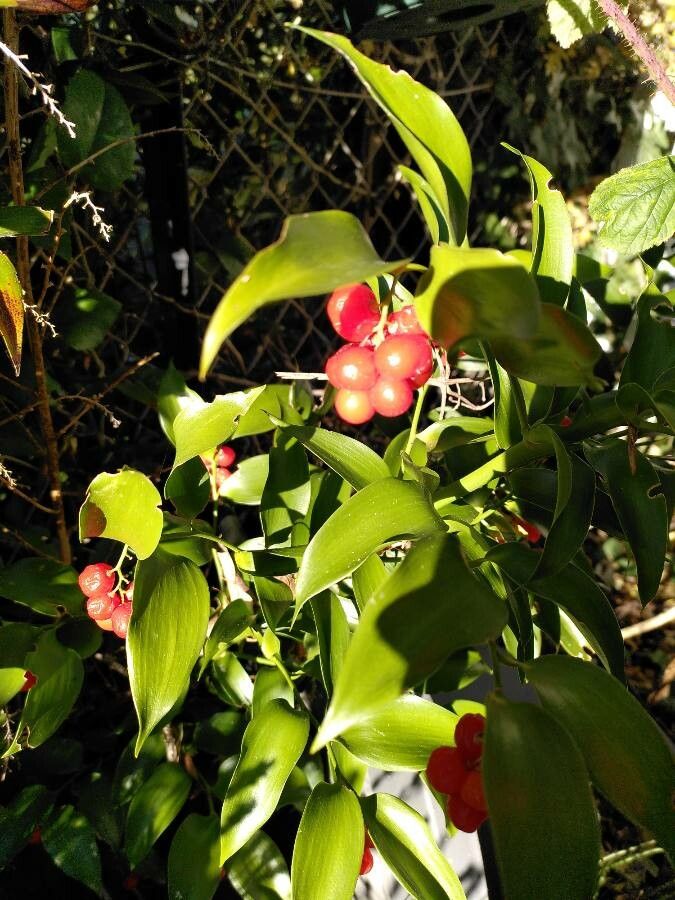
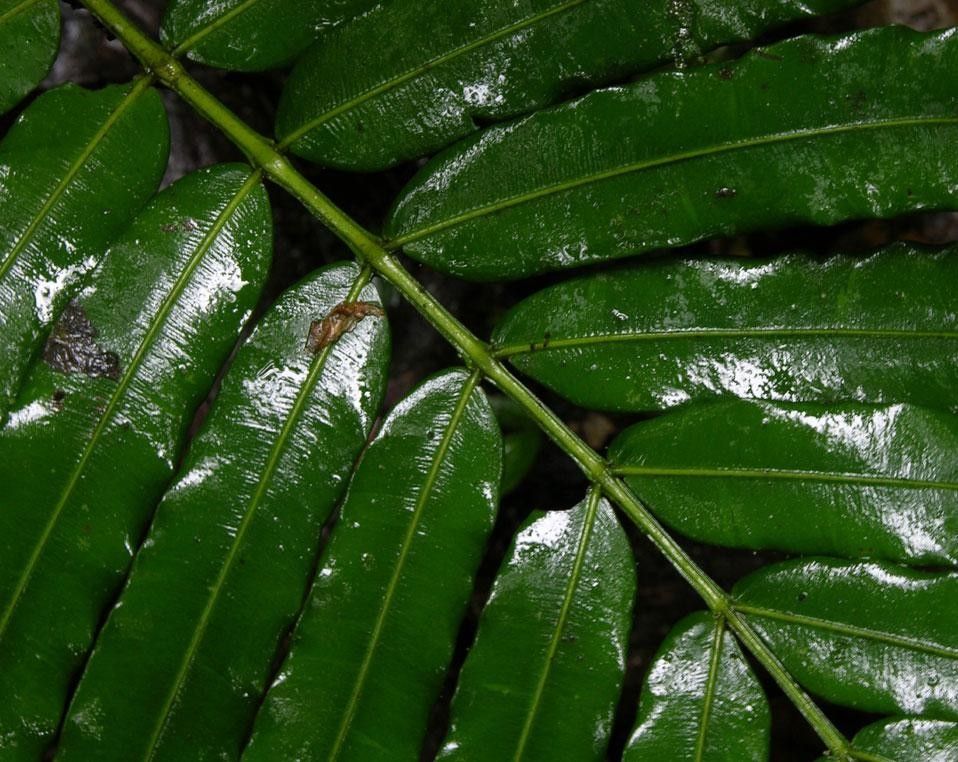
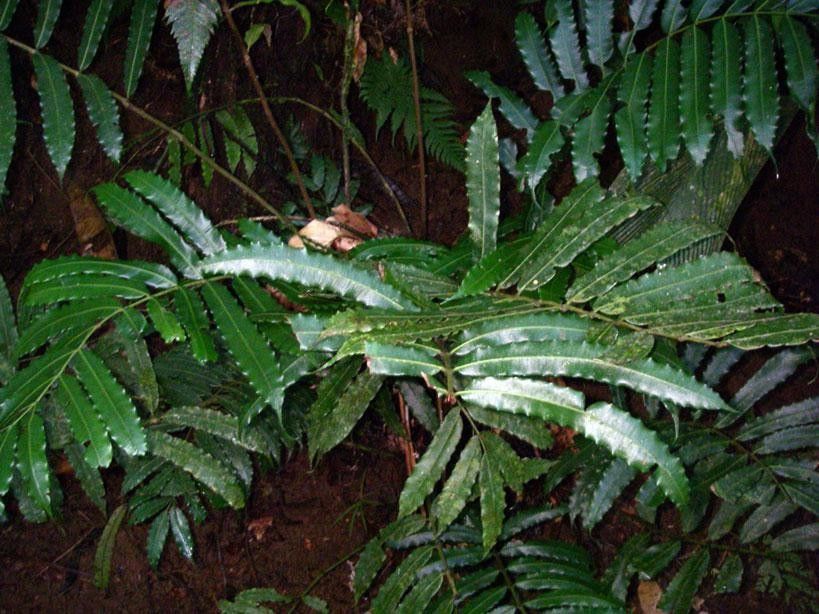
Danae racemosa, commonly known as Alexandrian laurel or pothos, is a small evergreen shrub within the Asparagaceae family. Native to the Mediterranean region, it thrives in various habitats, including rocky slopes, woodlands, and scrublands. This slow-growing plant can reach up to 1 meter in height. The leaves of Danae racemosa are dark green, glossy, leathery, and lanceolate in shape. They are alternately arranged on the stem and typically measure 5 to 10 cm in length. In late spring or early summer, the plant produces small white flowers, which are followed by red berries that mature in autumn. Danae racemosa is popular as an ornamental plant due to its attractive foliage, which adds texture and color to gardens or indoor spaces. It prefers well-drained soil and partial shade but can also tolerate full sun if provided with adequate moisture. Historically, ancient Greeks used Danae racemosa for its diuretic properties. However, it should only be consumed under medical supervision due to its toxicity if ingested improperly. Overall, Danae racemosa is a beautiful evergreen shrub that enhances any environment with its aesthetic appeal and holds historical significance for its medicinal uses.
Alexandria laurel resists disease well and is generally unlikely to develop illnesses. Regarding care, this plant is fairly low-maintenance. When grown outdoors it needs little watering, and larger specimens typically do not require pruning. Smaller plants, however, should be pruned after they finish blooming. Alexandria laurel is suitable for anyone who has an outdoor area, such as a garden or a deck, and does not call for extensive care experience.
How to keep Danae Racemosa.
Light
Alexandria laurel is native to habitats like forest understories and rocky areas, where it grows in natural shade. It prefers partial sun but can tolerate full sun or full shade, showing its versatile and hardy nature.
Water
Alexandria laurel, which originates from woodland understories, thrives in shaded and humid conditions. It is adapted to conserve water and requires moderate moisture, so a weekly watering routine is ideal. As an evergreen often grown indoors, alexandria laurel benefits from regular misting to replicate the humidity levels of its natural habitat.
Temperature
Alexandria laurel shows good temperature adaptability, able to withstand higher heat and wider temperature swings. In hot weather, attention should be paid to watering and providing suitable shade to avoid sunburn. Conversely, Alexandria laurel tolerates low temperatures poorly. It can handle some cold, but very low temperatures can cause frost damage.
Fertilizer
Proper timing is essential for fertilizing Alexandria laurel. Apply fertilizer in early spring and continue monthly until early summer. Fertilizer promotes attractive blooms and supplies energy during both dormant and active growth periods.
Pruning
Alexandria laurel is a shade-loving evergreen shrub with glossy, dark green leaves and vibrant red berries. For optimal health and growth, prune it from early to late winter to remove damaged branches and encourage new growth. However, avoid heavy pruning to preserve berry production. Regular, moderate pruning helps maintain the shrub's overall health and structure.
Botanical profile.
- Plant Type
- Shrub
- Life Cycle
- Perennial
- Genus
- Danae
- Family
- Asparagaceae
- Hardiness Zone
- 7-9
- Mature Height
- 61 cm to 91 cm
- Mature Spread
- 0.91 m to 1.22 m
- Leaf Color
- Green
- Leaf Type
- Evergreen
- Flower Color
- Yellow, Green
- Flower Size
- 2.54 cm
- Bloom Time
- Early summer, Mid summer
- Planting Time
- Spring, Summer, Autumn
- Harvest Time
- Mid fall, Late fall, Early winter
- Native Area
- Turkey, Syria, Iran, Armenia, Azerbaijan
Other names.
Reader questions.
What are the sunlight requirements for Alexandria laurel?
Alexandria laurel, known botanically as Danae racemosa, has specific sunlight requirements to thrive. For partial sun, the plant needs about 3-6 hours of sunlight daily. If you're aiming for conditions that meet the criteria for full sun or full shade, then the plant should receive over 6 hours of sunlight daily. It's important to observe the way sunlight moves through your garden throughout the day. Selecting the right spots that provide a harmonious balance of light and shade is crucial for the well-being of your Alexandria laurel, ensuring it grows healthy and happy.