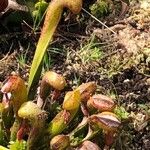
Darlingtonia californica
California-pitcherplant · Cobra-lily · Cobraplant · California Pitcher Plant · Calf's head
Description
Source: leafsnapDarlingtonia californica, commonly known as the California pitcher plant or cobra lily, is a carnivorous plant native to the western United States. This unique and fascinating species has adapted to thrive in nutrient-poor environments by trapping and digesting insects. The cobra lily is striking in appearance, featuring tubular leaves that resemble a cobra's head. These green leaves, adorned with red veins, have translucent patches near the top that allow light to enter but prevent insects from escaping once they are inside. The plant's modified leaves act as traps for its prey. Insects are lured by the nectar secreted on the lip of each leaf, which also serves as an entrance. Once inside, the insects become disoriented by downward-pointing hairs on the interior walls of the leaves, making escape nearly impossible. The trapped insects eventually fall into a pool of digestive enzymes at the bottom, where they are broken down to provide nutrients for the plant. Darlingtonia californica thrives in wetlands or boggy areas, where it can access water but not nutrients from the soil due to high acidity levels caused by decomposing organic matter, such as peat moss or sphagnum moss. This extraordinary carnivorous plant plays a crucial role in maintaining ecological balance within its habitat. It helps control insect populations and provides shelter for small animals, such as frogs and salamanders, that use its tubular leaves for protection against predators. In summary, Darlingtonia californica is an intriguing example of nature's ability to adapt and flourish under challenging conditions, all while offering valuable ecological services within its ecosystem.
Care Guide
💧 Water Every 7 days
The California pitcher plant is native to the bogs of Northern California and Oregon, where it thrives in high humidity and moist soils. This evergreen plant is best grown outdoors and should be watered twice a week. It captures insects to obtain nutrients, which is essential for its survival in nutrient-poor environments.
What is the best way to water your California pitcher plant?
To adequately water your California pitcher plant, you should grow it in a pot with good drainage holes and place a plastic dish or tray underneath. Fill the dish with about a third to half an inch of water, allowing it to naturally draw water from the pot to the roots as the soil dries. Avoid letting the dish completely dry out and adjust the amount of water based on how quickly the plant absorbs it. Avoid using pots made from terra cotta, as they will seep water and filter out dissolved solids. If you still prefer to use terra cotta, place the pot inside a larger one and only add water to the outer pot. The mineral content of the water you use is crucial for watering your California pitcher plant properly. Collecting rainwater is the safest option, but distilled water and water from a reverse osmosis system are also suitable choices. Purified water can be used, but make sure the mineral content falls within the tolerable range for the plant. If using tap water, ensure that it has less than 50 parts per million of total dissolved solids by using a meter to measure it. It is advisable to fill your watering device 24 hours in advance to allow the chlorine in the water to dissipate.
What should I do if I give the California pitcher plant too much or too little water?
When a California pitcher plant is overwatered, there are several symptoms to look out for. Brown spots may appear on the undersides of the leaves, white mold may develop in the soil, and the plant may have a wilted appearance. This wilted look occurs because the plant is unable to draw water into the stem. Overwatering can lead to root rot, which can be recognized by a bad smell. If root rot is present, it is recommended to remove the plant from its soil and rinse it with distilled water. Cut away any rotted roots and affected leaves, then rinse the plant again with distilled water. Finally, replant the plant in fresh soil. On the other hand, an underwatered California pitcher plant will exhibit different signs. The leaves will become brittle. To address this, affected leaves should be cut away. Additionally, make sure the soil is damp and mist the leaves. For an underwatered plant, it is important to resume watering as soon as possible to allow the plant to recover. However, due to root damage, yellow leaves may dry out in the short term.
How frequently should I water my California pitcher plant?
The tray method is the most common way of watering insectivorous plants. To do this, pot your California pitcher plant in a container that has several drainage holes and place it in a dish or tray that is filled about one-third of the way with water. This setup allows the plant to draw up water naturally as the soil dries. Make sure to add more water promptly after the water level drops, and don't let the dish dry out completely. By maintaining the right moisture level, you can better understand how often the plants need to be watered. The California pitcher plant is native to a humid environment, so it's important to find the right balance between watering and preventing root rot by allowing the soil to dry out. During the active seasons (spring to autumn), make sure not to let the soil dry out completely. In these seasons, water your California pitcher plant 2-3 times per week in spring and fall, and water more frequently in summer to keep the soil moist. However, the plant goes dormant in winter and early spring, so you need to adjust your watering routine accordingly. Cut back on the amount of water and allow both the soil and the water level in the tray to dry out for a few days before adding more. If you live in a naturally dry area, you might need to mist the plant in addition to regular watering to replicate its humid growing conditions. Misting works best in the morning, and it is especially necessary in dry environments.
How much water do I need to give my California pitcher plant?
The California pitcher plant is a popular houseplant because it is one of the few carnivorous plants. To successfully care for it, you will need to recreate its natural growing conditions, which involve high humidity levels and low nutrient environments. If you live in an area with naturally high humidity, you can grow it outside in a bog garden, which is a great way to group plants that need lots of humidity. However, most people grow California pitcher plants as houseplants. To keep them thriving, use a pot that retains moisture, such as plastic or a self-watering pot. The tray method is the best way to provide water for these insectivorous plants. Make sure the water in the tray pots covers the small hole at the bottom and replenish it before it dries out. This will ensure that your plant receives the right amount of water and continues to grow well.
Do I need to water the California pitcher plant differently when I plant it inside instead of outside?
When growing California pitcher plants indoors, they need less water than if they were exposed to more sunlight. The amount of water they need depends on the amount of light they receive. To keep them healthy, it is important to provide adequate light and water. Additionally, for indoor plants, it is necessary to create a humid environment. One way to achieve this is by growing them in a terrarium or as part of a plant display in an aquarium, which helps in retaining the humid air. However, it is crucial to ensure proper air circulation for the plants.
☀️ Light Full sun
The California pitcher plant flourishes with abundant light but can also tolerate moderate illumination. Light powers its growth and overall vigour, reflecting its native habitat, which lacks elements that cast shade. All growth stages share the same sunlight requirements. Too much or too little sun can potentially hinder the plant’s development.
What are the sunlight requirements for the California pitcher plant?
The California pitcher plant thrives in full sunlight, requiring more than 6 hours of sunlight daily. However, it can also tolerate partial sunlight conditions, which means about 3-6 hours of sunlight. To ensure your plants are happy, it's essential to observe how sunlight moves through your garden, picking spots that offer a good balance of light and shade. Light is a crucial factor for the plant's growth and vigour, closely mirroring its natural habitat, which lacks shadowy areas. Regardless of the growth stage, consistent sun exposure is needed. Too much or too little sunlight can hinder the plant's development.
How can artificial lighting be used for the California pitcher plant?
Indoor plants, like the California pitcher plant, require sufficient lighting for optimal growth, especially when natural sunlight is scarce, such as during winter or in less sunny locations. Artificial lights, such as LED lights, are beneficial as they can be customized to provide specific wavelengths of light needed by the plant. For example, full sun plants need 30-50W per square foot, partial sun plants require 20-30W per square foot, and full shade plants benefit from 10-20W per square foot. The light should be placed 12-36 inches above the plant, mimicking natural sunlight as closely as possible, for 8-12 hours per day to support healthy growth.
What are the symptoms of insufficient light for the California pitcher plant?
When the California pitcher plant does not receive enough light, it may exhibit several symptoms indicating light deficiency. These include smaller new leaves compared to older ones, leggy or sparse growth due to longer spaces between leaves or stems, faster leaf drop as the plant attempts to conserve resources, and slower or halted new growth. Leaves might also show lighter colors or chlorosis, where they lose their green hue and turn yellow due to a lack of chlorophyll and essential nutrients. Furthermore, intense sunlight exposure can cause symptoms like sunscald, leaf curling, wilting, and leaf scorching, which damage the plant tissue and affect overall health.
How can lighting conditions be improved for the California pitcher plant?
To improve lighting conditions for the California pitcher plant, gradually move the plant to a location with at least 6 hours of direct sunlight daily, using a south-facing window for indoor plants and keeping curtains open during the day. If the plant is large or not easily movable, consider providing additional light through artificial sources, keeping a lamp on for at least 8 hours a day or investing in grow lights. Outdoors, ensure the plant is gradually introduced to sunnier spots to avoid shock and potential sunburn. Minimizing obstructions by pruning trees or relocating smaller plants to areas with better sunlight and drainage can also enhance light exposure. It's important to note that while parts of the plant affected by low light may not recover, increasing light exposure will promote healthy new growth.
🌡️ Temperature 10–35°C
The California pitcher plant is native to habitats where temperatures range from 50 to 95 °F (10 to 35 ℃). It prefers temperate conditions and steers clear of extreme heat or cold. Depending on the season, consider applying warming or cooling measures to preserve optimal growth.
What are the optimal temperature conditions for the growth of the California pitcher plant?
The California pitcher plant, or Darlingtonia californica, thrives in environments with temperatures ranging from 50 to 95 °F (10 to 35 °C), preferring mild conditions while avoiding extreme heat or cold. It is important to maintain temperatures above 10°C during winter to support plant growth, ensuring the minimum temperature remains above the freezing point to prevent freezing damage. When outdoor temperatures approach -5°C (25°F) during winter, it is advisable to bring the plant indoors or to provide protection via a temporary greenhouse or by wrapping the plant in protective materials such as plastic film or fabric.
How does low temperature affect the California pitcher plant and what are the solutions?
The California pitcher plant has moderate tolerance to low temperatures, optimal growth occurring between 10°C and 35°C. It should be kept above -15°C during winter to avoid damage. Exposure to temperatures below -25°C can cause the leaves to darken and in severe cases, lead to water-soaked necrosis, wilting, and drooping with the leaves eventually turning brown. Solutions for frost damage include trimming away the frost-damaged parts and moving the plant to a warmer environment indoors or setting up a makeshift greenhouse. If moved indoors, placing the plant near a south-facing window ensures ample sunlight, and if sunlight is insufficient, supplemental lighting can be used.
What impact does high temperature have on the California pitcher plant and how can it be mitigated?
During summer, the California pitcher plant should ideally be kept below 35°C. Temperatures exceeding 38°C can slow the plant's growth, lighten the color of its leaves, and increase susceptibility to sunburn. To mitigate the effects of high temperature, trim away sunburned and dried-up parts of the plant. Moving the plant to a location with shade from the afternoon sun can protect it from excessive exposure. Additionally, watering the plant in the morning and evening helps keep the soil moist, further alleviating stress from high temperatures.
💨 Humidity normal (40-60%)
This plant will thrive in moderate humidity, which is probably the level in your home. However, misting it a few times a week can be very beneficial. Make sure the room has good ventilation.
🪴 Soil 5-7
🌱 Fertilizer
🪴 Pot & Repot 2-3 years
When repotting a California pitcher plant, select a pot 1-2 inches (2.5–5.1 cm) larger with ample drainage. Use a well-draining potting mix. Repot in spring or fall, ensuring the root ball is positioned slightly lower than the rim of the flower pot. Water thoroughly after repotting and place in a warm spot with indirect sunlight.
✂️ Pruning
The California pitcher plant has uniquely shaped leaves resembling pitchers and needs minimal pruning. It's best to prune in early to late spring to encourage growth and improve its ability to trap insects. Regularly inspecting the plant for browning leaves helps prevent mold, which ensures better air circulation and light, creating a healthier environment for the plant.
🌿 Propagating
🐛 Diseases & pets
☠️ Toxicity
Darlingtonia californica plants are non-toxic to dogs, cats and horses , although Cobra lily may cause an unpleasant sensation when ingested.
Characteristics
- Plant Type
- Herb
- Life Cycle
- Perennial
- Genus
- Darlingtonia
- Family
- Sarraceniaceae
- Hardiness Zone
- 6-9
- Mature Height
- 91 cm
- Mature Spread
- 49 cm
- Leaf Color
- Green, Red
- Leaf Type
- Evergreen
- Flower Color
- Green
- Flower Size
- 4.06 cm to 6.35 cm
- Bloom Time
- Mid spring, Late spring
- Planting Time
- Summer
- Harvest Time
- Early summer, Mid summer
- Native Area
- North America