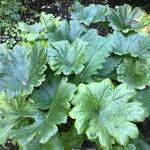
Darmera peltata
Indian-rhubarb · Umbrella-plant
Description
Source: leafsnapDarmera peltata, commonly known as Indian rhubarb or umbrella plant, is a perennial herbaceous species native to North America. This plant belongs to the Saxifragaceae family and can grow up to 1.5 meters tall, with leaves that can span up to 60 cm in diameter. The large, deeply lobed leaves of Darmera peltata resemble those of common garden rhubarb. They first appear in early spring with a reddish tint, gradually turning green as they mature. In late spring or early summer, tall stalks rise from the center of the plant, featuring clusters of pink flowers that attract various pollinators. Darmera peltata thrives in moist soil and partial shade, although it can tolerate full sun if provided with sufficient water. It is typically found growing near streams or in wetlands but can also be cultivated in garden settings, provided its moisture requirements are met. The roots of Darmera peltata have been used for medicinal purposes by Native American tribes for centuries, primarily to treat digestive issues such as constipation and diarrhea. Overall, Darmera peltata is an attractive ornamental plant that enhances wetland areas or shady gardens, while also offering potential medicinal benefits.
🎭 Security, Loyalty
Care Guide
💧 Water Every 7 days
Indian rhubarb thrives in moist conditions, preferring consistent hydration and requiring weekly watering for optimal growth. While it can tolerate short dry spells, it prefers damp environments. Typically cultivated outdoors, Indian rhubarb is resilient during the growing season, even when faced with unpredictable rainfall.
How should I water my Indian rhubarb plant?
To properly water the Indian rhubarb, it is recommended to use filtered water at room temperature. Tap water should be avoided as it may contain harmful particles. The plant prefers warmer temperatures, so cold water should be avoided to prevent any shock. It is also best to water the plant at the soil level rather than overhead, as overhead watering can cause issues with the foliage. Simply apply the filtered, room temperature water to the soil until it is completely soaked. This will help keep the roots moist and allow them to spread and gather necessary nutrients.
What should I do if I give too much or too little water to my Indian rhubarb?
Overwatering and underwatering can harm your Indian rhubarb, but overwatering is more common. When the plant receives too much water, the stems and leaves may wilt and turn yellow. Over time, overwatering can cause diseases like root rot, mold, and mildew, which can be deadly. Underwatering is less likely for Indian rhubarb because it can tolerate drought. However, it can still happen, and the leaves may become brittle and brown. It's important to recognize the signs of overwatering quickly. Some diseases caused by overwatering, like root rot, may be irreversible if not addressed promptly. If you notice early signs of overwatering, reduce watering immediately. Also, check the soil's quality. If it doesn't drain well, replace it with a loose, well-draining potting mix. If you see signs of underwatering, simply water more regularly until the signs improve.
How often do I need to water my Indian rhubarb?
If your Indian rhubarb is planted in a pot, the best way to determine if it needs water is by checking the soil moisture. Simply stick your finger into the soil and if you find that the top two to three inches are dry, it's time to water it. If you have your Indian rhubarb planted outdoors in the ground, you can use the same method to test the soil moisture. Once again, if the first few inches of soil have dried out, it means it needs water. Typically, during spring and early fall, you'll need to water this plant approximately once a week using this method. However, when it's very hot, you may have to increase the frequency to about two or more times a week. It's worth noting that mature, well-established Indian rhubarb plants have a remarkable ability to withstand drought.
How much water should I give my Indian rhubarb?
To properly water your Indian rhubarb, don't hold back on the amount of water you provide. Wait until the top layer of soil is dry, then give the plant a thorough watering that completely saturates the soil. Make sure to add enough water so that it flows out of the drainage holes at the bottom of the pot. If you don't see any excess water draining, it means you haven't watered enough. However, be cautious not to let water accumulate in the soil, as this can harm the plant. On the other hand, if water doesn't drain properly from the pot, it may indicate that the soil is not draining well, which is not good for the plant's health. If the plant is kept outside, receiving around 1 inch of rain per week will be sufficient.
How should I water my Indian rhubarb as it grows?
The water needs of the Indian rhubarb can vary depending on its growth stages. In the first few years or after transplanting to a new location, you'll need to provide more water. During these stages, the plant focuses on growing new roots, which require extra moisture for optimal performance. As the plant matures, it will require less water. Another stage that may require more water is during the bloom period, as the development of flowers uses up a significant amount of moisture.
☀️ Light Partial sun
Indian rhubarb thrives in spots with lightly filtered sunlight and can tolerate both full sun and full shade. Originating from shaded woodland habitats, it benefits from different amounts of sun at various stages of growth. However, too much sunlight can stunt its growth, while too little light can cause the leaves to discolor.
What are the sunlight requirements for Indian rhubarb?
Indian rhubarb, or Darmera peltata, thrives in conditions ranging from partial sun to full shade. Partial sun conditions require about 3-6 hours of sunlight, while full sun or full shade conditions require more than 6 hours of sunlight. Originating from shady woodland areas, Indian rhubarb can adapt to varying levels of sun exposure at different growth stages. However, it's essential to monitor how sunlight moves through your garden to find spots offering the perfect balance for these plants. Excessive sunlight may hinder growth and cause leaf discoloration.
How can artificial lighting benefit Indian rhubarb, especially indoors?
For Indian rhubarb plants grown indoors where natural sunlight might be insufficient, especially during winter or in less sunny spaces, artificial lighting can be a crucial aid for optimal growth. LED lights are a popular choice because they can provide specific wavelengths needed by plants. For full sun plants, 30-50W/sq ft of artificial light is recommended; partial sun plants need 20-30W/sq ft, and full shade plants should receive 10-20W/sq ft. The artificial light source should be placed 12-36 inches above the plant to mimic natural sunlight, and the duration should replicate natural daylight hours for the particular species, generally 8-12 hours per day.
What are the signs of insufficient light for indoor-grown Indian rhubarb?
When Indian rhubarb is grown indoors without adequate light, several symptoms can manifest, indicating light deficiency. These include the growth of smaller leaves compared to previously matured ones, leggy or sparse growth due to longer spaces between leaves or stems, faster leaf drop as the plant conserves resources, slower or halted new leaf production, lighter-colored new leaves symbolizing a lack of chlorophyll, and conditions like chlorosis, sunscald, leaf curling, wilting, and leaf scorching. Each of these symptoms reflects the plant's struggle with insufficient sunlight.
What solutions are recommended for Indian rhubarb facing light-related growth issues?
To address light-related growth issues in Indian rhubarb, several strategies can be employed. For indoor plants, begin by gradually shifting them to sunnier spots each week to achieve 3-6 hours of direct sunlight daily, allowing the plant to adapt slowly. If the plant is large or difficult to move, artificial lighting such as desk or ceiling lamps for at least 8 hours a day or professional plant grow lights can provide sufficient light. For outdoor plants, the key is to avoid sudden changes in light exposure and instead gradually move the plants to sunnier locations each week. Reducing obstructions such as tree branches can also increase sunlight access. Transplanting smaller plants to sunnier spots with good drainage during their dormant period can help too. It's important to note that while parts of the plant affected by insufficient light may not recover, new growth will be healthy after improving light exposure.
🌡️ Temperature 5–32.2°C
Indian rhubarb comes from climates where temperatures generally range from 68 to 95°F (20 to 35°C). It performs best at those temperatures. In cooler or hotter seasons, adjustments may be necessary to maintain its optimal growth.
What is the native climate for Indian rhubarb?
Indian rhubarb, botanically known as Darmera peltata, is native to climates where temperatures generally range between 68 to 95°F (20 to 35°C). It thrives best within these temperature ranges, ensuring optimal growth conditions. During seasons with cooler or warmer temperatures, certain adjustments may need to be made to sustain its ideal growing environment.
Does Indian rhubarb need protection from cold temperatures?
Indian rhubarb exhibits strong cold resistance, typically requiring no special frost protection measures during the winter months. However, in locations where winter temperatures are expected to plummet below -25°C, it becomes crucial to safeguard the plant. Providing cold protection can be as simple as covering the plant with insulating materials such as soil or straw. Additionally, it is advisable to water the plant generously before the first freeze in autumn to keep the soil moist, which helps in preventing drought and water scarcity for the plant throughout the winter and into the early spring.
How does low temperature affect Indian rhubarb and what are the solutions?
Indian rhubarb is quite cold-tolerant, favoring temperatures above 20°C for optimal growth, and it should remain above 0°C during the winter. If temperatures dip below -25°C, there may not be immediate noticeable effects during winter, but come spring, there could be a reduction in sprouting or in some cases, no sprouting at all. A solution for this issue in the spring is to remove any parts of the plant that have failed to sprout, encouraging new growth and vitality.
What are the implications of high temperature on Indian rhubarb and how can it be managed?
In the summer months, it's important to keep the Indian rhubarb at temperatures below 35°C. Exceeding 38°C can cause the plant's leaves to lighten in color, become more likely to curl, prone to sunburn, and in extreme cases, the plant may wilt and dry out completely. Managing this involves trimming away any sunburned and dried parts of the plant, relocating it to a spot with more shade during the midday and afternoon sun, or using a shade cloth to protect it. Additionally, watering the plant during the cooler hours of the morning and evening will help keep the soil consistently moist.
💨 Humidity
🪴 Soil 5-6
🌱 Fertilizer
For Indian rhubarb, the primary time to apply fertilizer is in early spring when the flowers are beginning to form. Using the appropriate fertilizer promotes stronger blooms and helps Indian rhubarb produce attractive flowers. Fertilizing in early spring ensures excellent flowering throughout the season and supplies energy for the plant’s dormant growth phases.
Why is it important to fertilize my Indian rhubarb?
Fertilization plays a crucial role in supporting the growth of Indian rhubarb and other plants. By providing essential nutrients, fertilization supports both the above-ground and below-ground development of the plant. Although the Indian rhubarb typically has low fertilization requirements and can survive without it, annual fertilization is highly beneficial. It not only helps the plant thrive and stay alive but also improves the quality and longevity of its flowers. Therefore, those looking to enhance the appearance of their Indian rhubarb should prioritize annual fertilization.
When should I fertilize my Indian rhubarb?
The best time to fertilize an Indian rhubarb is in late winter to early spring when it is transitioning from its dormant phase to a phase of active growth. Fertilizing at this time promotes healthy growth and prepares the plant for the upcoming season. Although it is generally recommended to fertilize in early spring, it is also acceptable to fertilize in the fall. However, it is not advisable to feed the Indian rhubarb during summer and winter.
When should I not add fertilizer to my Indian rhubarb?
To properly care for your Indian rhubarb, it is best to fertilize it only during the late winter and early spring. This plant requires minimal fertilization, so a single yearly feeding is sufficient. Fertilizing during the spring, summer, and fall can cause overfertilization and various complications. However, if you missed fertilizing in the spring, you can still feed the plant during the fall. Additionally, it is important to note that there is no need to fertilize the Indian rhubarb during the winter. During this time, the plant is dormant and does not engage in new growth, making fertilization unnecessary.
What kind of fertilizer should I use for my Indian rhubarb?
For Indian rhubarb, any general-purpose fertilizer with a balanced amount of the three main plant nutrients will work well. However, there are specific nutrient blends that can be more beneficial. Many gardeners believe that higher levels of phosphorus lead to stronger roots and better flowers, so applying a phosphorus-rich fertilizer may be the best approach for Indian rhubarb, as it is a flowering plant. You can choose between granular or liquid forms as long as there are plenty of nutrients present. Additionally, you can improve the soil for your Indian rhubarb using organic materials like compost, manure, and similar substances, which will help create a healthy growing medium.
How should I add fertilizer to my Indian rhubarb?
The easiest way to fertilize an Indian rhubarb is by applying granular or pellet fertilizer to the soil around the plant. It is essential to fertilize during the plant's active growth phase, which occurs after the winter dormant phase. When spring begins and the plant starts to send shoots through the soil, that is the ideal time to apply fertilizer. Alternatively, some individuals may opt for liquid fertilizer. If choosing this method, dilute the fertilizer with water before application. Regardless of the type of fertilizer used, it is crucial to moisten the soil before, during, and after applying the fertilizer.
🪴 Pot & Repot Every 12 months
✂️ Pruning
Indian rhubarb is characterized by its large, umbrella-like leaves and clusters of flowers that range from white to pink. For optimal growth and air circulation, prune the plant in early to late spring by removing dead foliage and spent flowers. Be sure to use clean, sharp tools to maintain the plant's health and prevent disease.
🌿 Propagating
🐛 Diseases & pets
☠️ Toxicity
Characteristics
- Plant Type
- Herb
- Life Cycle
- Perennial, Annual
- Genus
- Darmera
- Family
- Saxifragaceae
- Hardiness Zone
- 5-8
- Mature Height
- 2.13 m
- Mature Spread
- 91 cm
- Leaf Color
- Green, Red
- Leaf Type
- Deciduous
- Flower Color
- Pink, White
- Flower Size
- 0.05 cm to 0.10 cm
- Bloom Time
- Mid spring, Late spring
- Planting Time
- Spring, Autumn
- Harvest Time
- Early summer, Mid summer