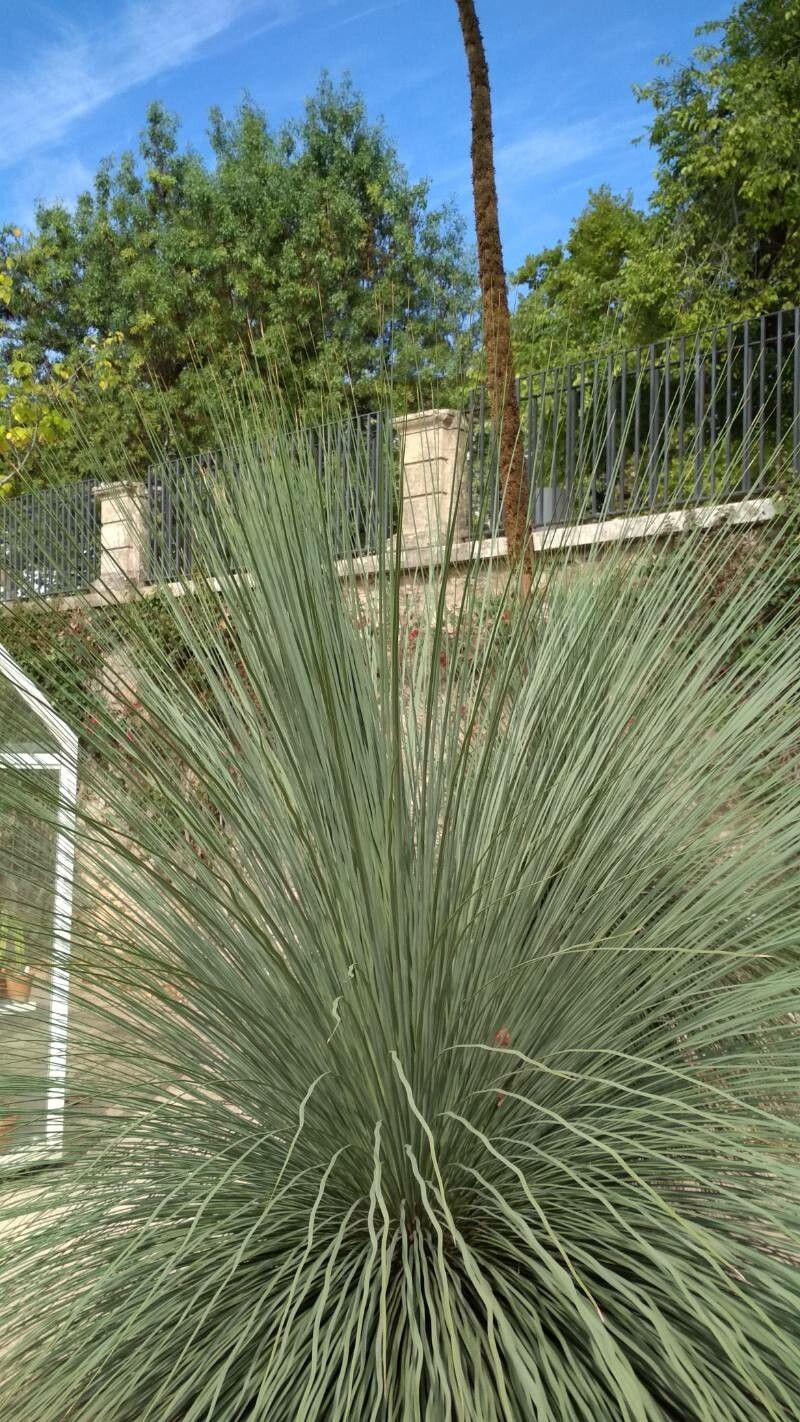
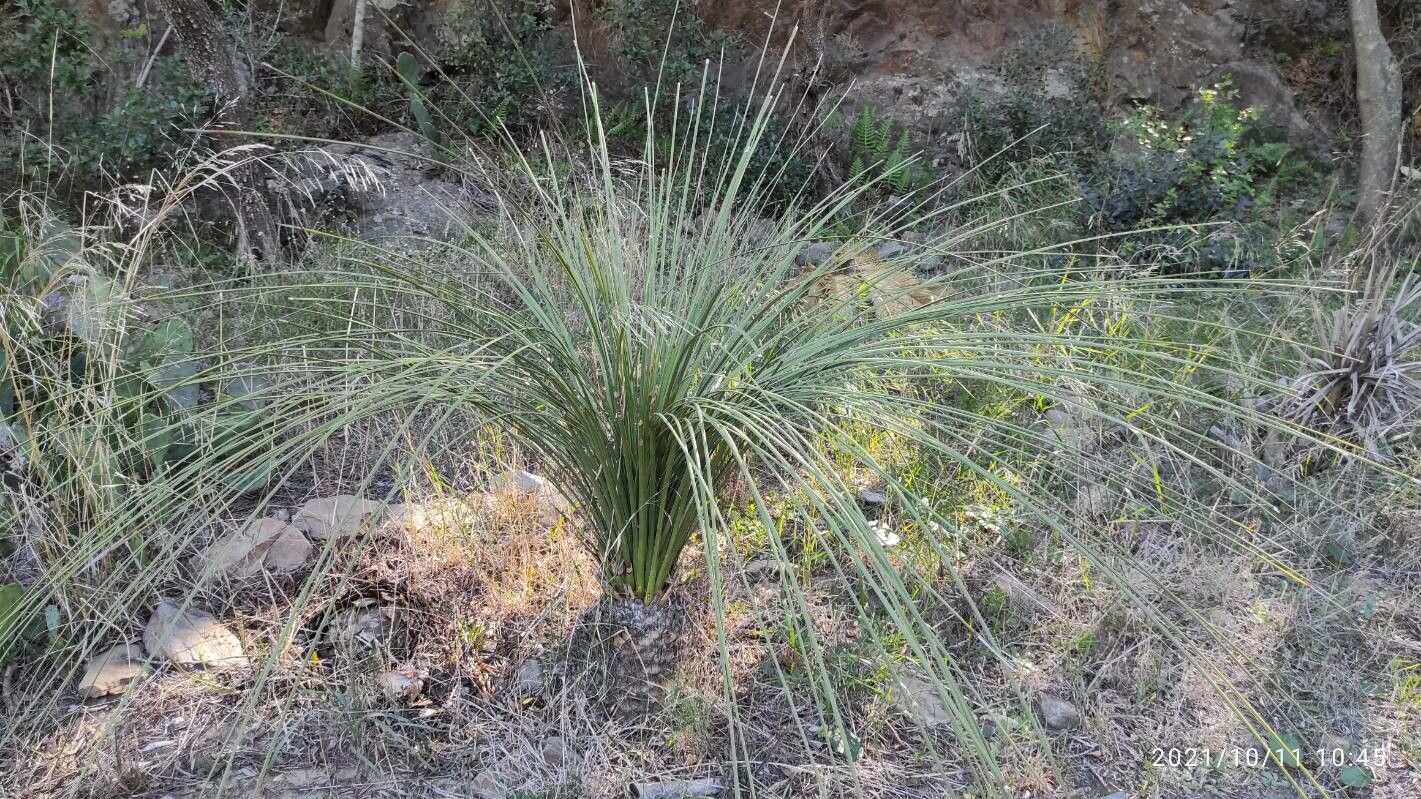
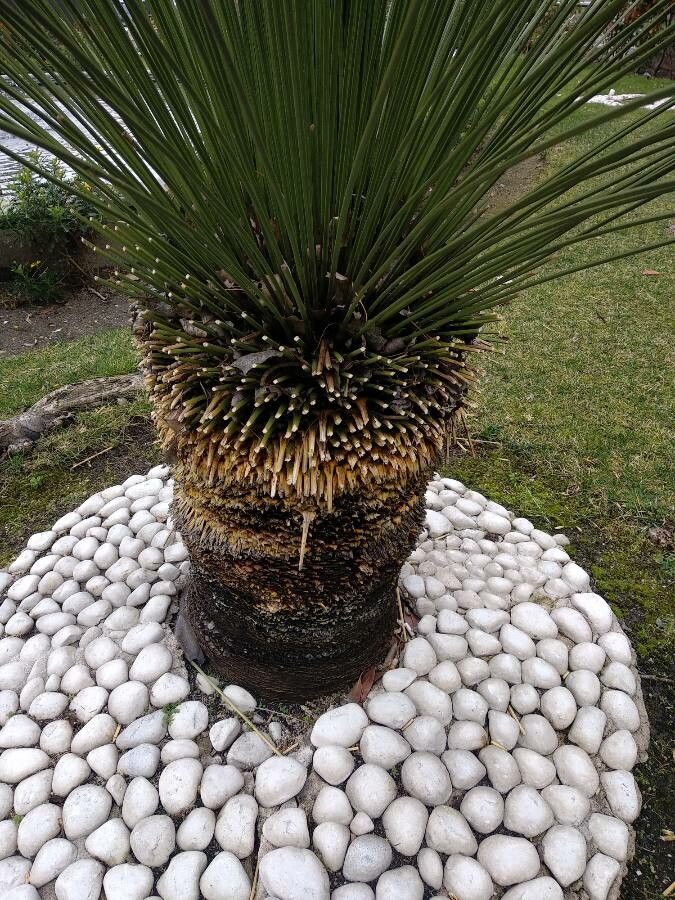
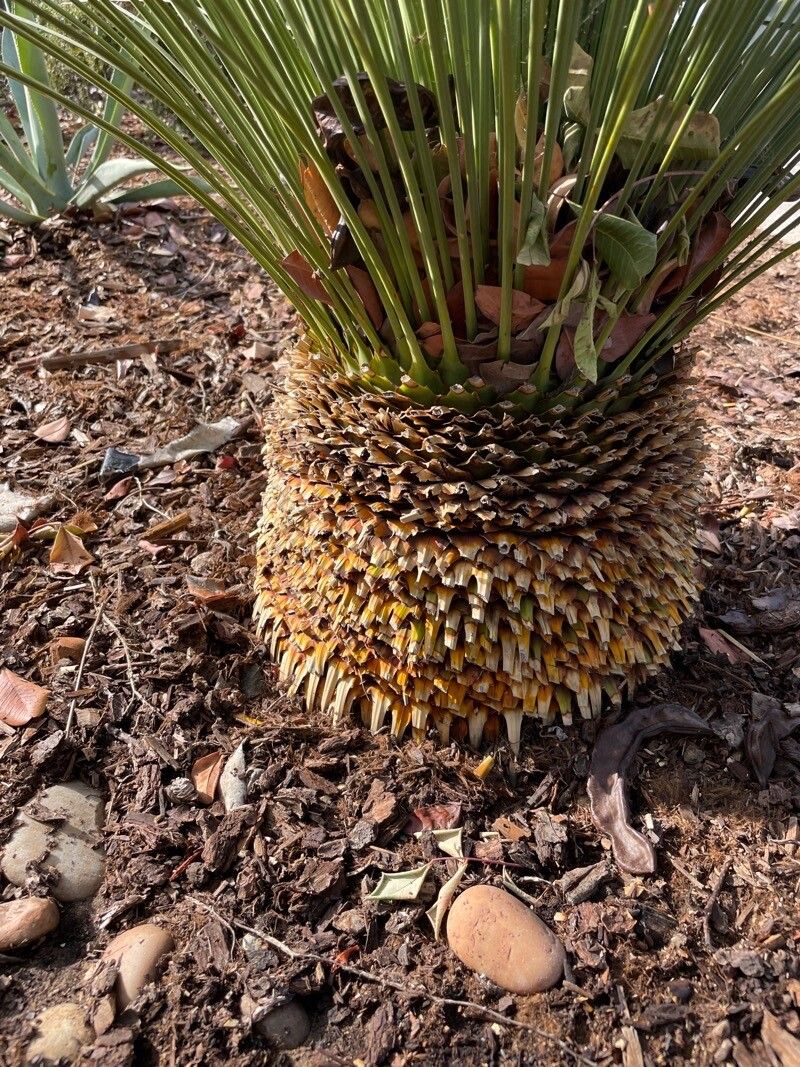
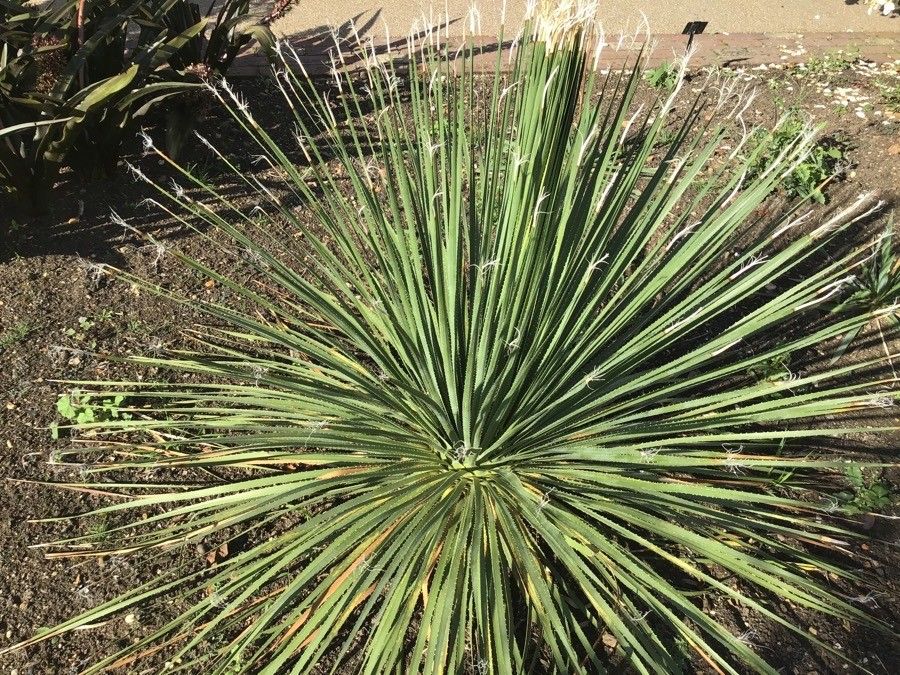
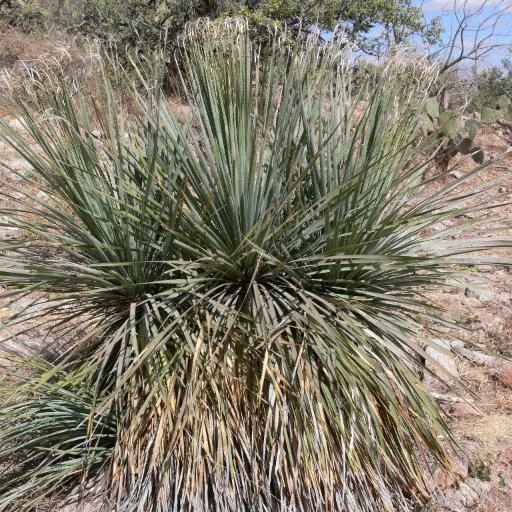
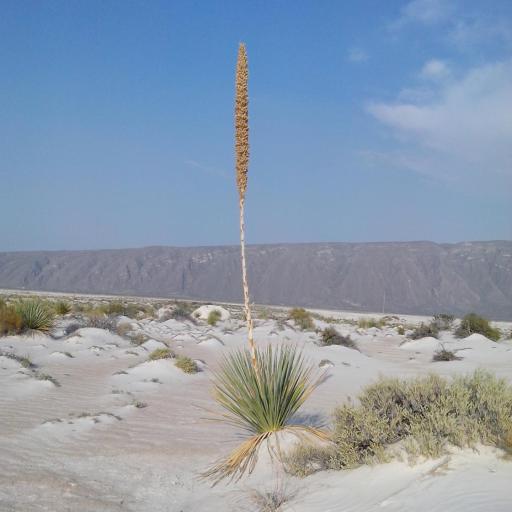
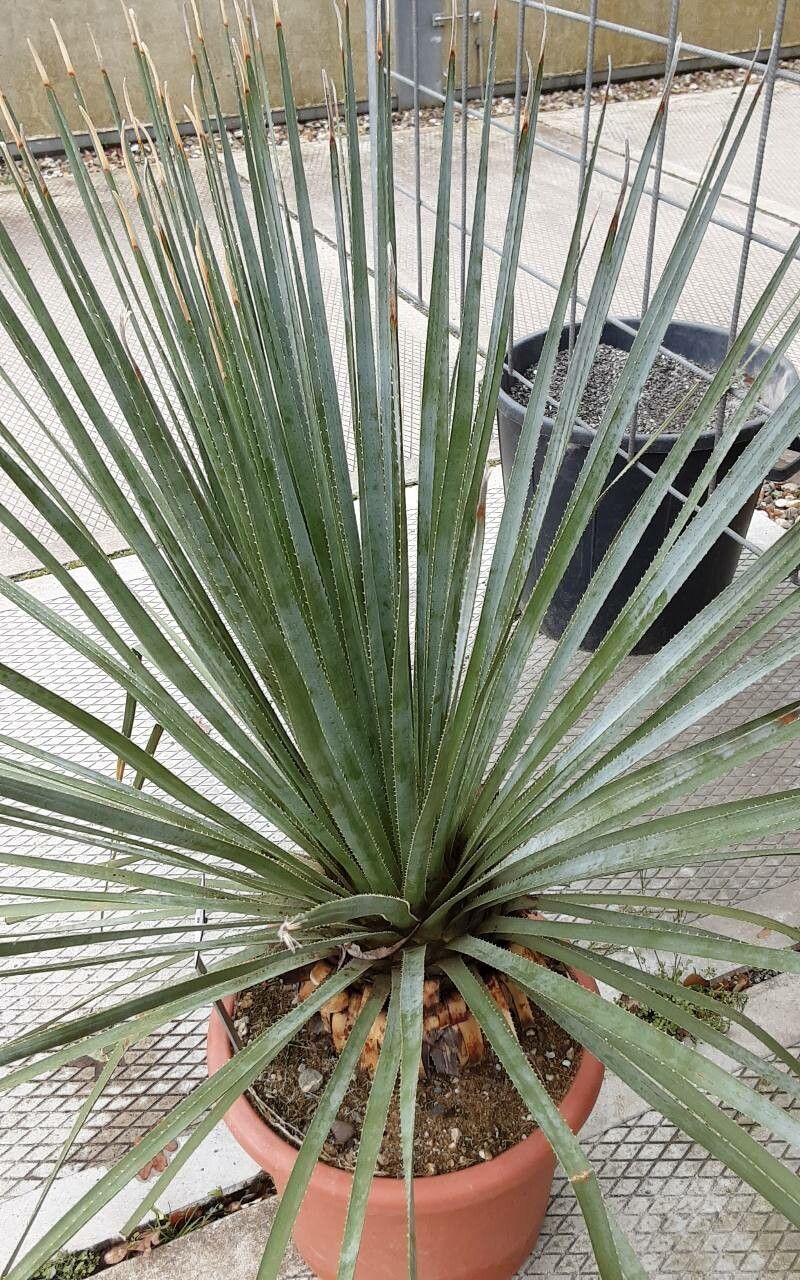
Dasylirion longissimum, commonly known as the Mexican Grass Tree or Sotol, is a striking plant native to Mexico. It belongs to the Asparagaceae family and is a member of the Dasylirion genus. The plant features long, narrow leaves that can grow up to 6 feet in length, arranged in a rosette pattern at the base of its stem.
The Mexican Grass Tree is an evergreen perennial that can reach up to 10 feet in height and up to 6 feet in width. It thrives in well-drained soil with full sun exposure, although it can also tolerate partial shade. In late spring or early summer, the plant produces tall spikes of creamy white flowers.
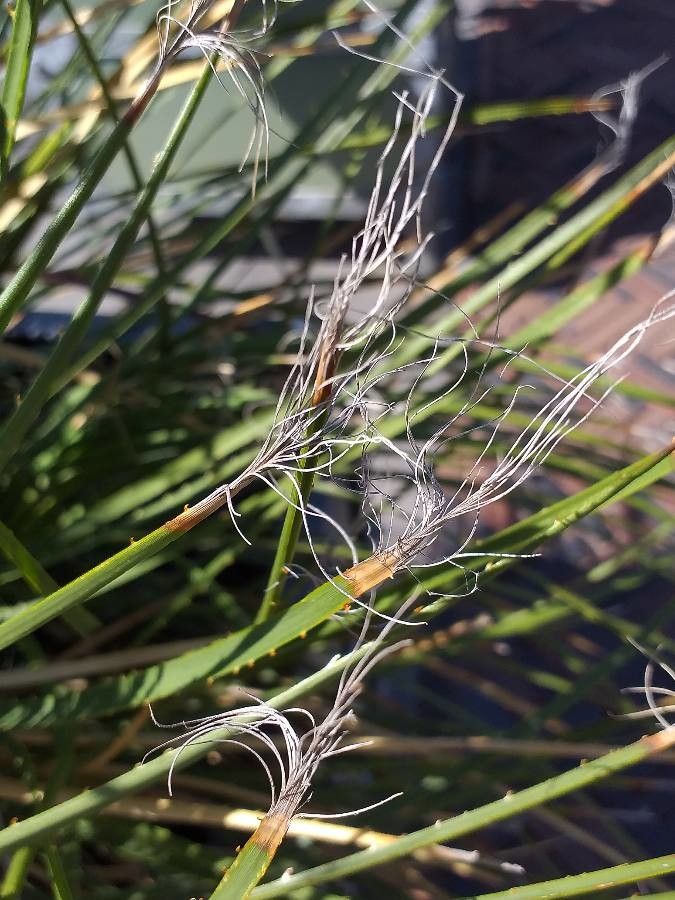
The leaves of Dasylirion longissimum are tough and fibrous, making them resistant to drought conditions. Additionally, the sharp edges of the leaves serve as natural defense mechanisms against herbivores.
In Mexico, Sotol has been used for centuries for its medicinal properties, such as treating fever and stomach ailments. It is also utilized in the production of alcoholic beverages like Mezcal.
Overall, Dasylirion longissimum is an attractive ornamental plant with unique foliage that adds texture and interest to any landscape design. Its drought-tolerant nature makes it a low-maintenance choice for gardeners.
The Mexican grass tree has moderate resistance to disease but is more vulnerable to high humidity and excess watering. It becomes especially prone to illness if it is kept in low light and also overwatered. Regarding care, the Mexican grass tree tolerates drought and can go for extended periods without being watered. It requires little fertilizer and only needs pruning occasionally. Because of these traits, it is a suitable choice for people with any level of experience, particularly those who prefer to spend less time on plant care or who may be away from home for long stretches. It is well suited to anyone who does not want to devote a lot of time to maintenance but still wants a plant that is simple to care for.
How to keep Dasylirion Longissimum.
Light
The Mexican grass tree performs best with plentiful sunlight and adjusts well to settings that reproduce the lighting of its native habitat. Too little or too much light can affect the plant’s vigor, potentially causing stunted growth, leaf discoloration, or leaf drop. Nevertheless, plants at the various stages of growth generally tolerate a range of light intensities.
Water
The Mexican grass tree thrives in arid conditions thanks to its excellent drought tolerance, needing water only every three weeks. It prefers well-draining soil to prevent root rot and is typically grown outdoors. This resilient plant can also endure long periods of dryness effectively.
Temperature
The Mexican grass tree comes from temperate areas and prefers temperatures of 59 to 95°F (15 to 35℃). Its surroundings should be adjusted in colder seasons to replicate the warmth of its native habitat.
Fertilizer
For the Mexican grass tree, light applications of fertilizer once or twice a year during the growing season are adequate. Do not fertilize in winter or summer when the plant is dormant. Use less fertilizer for repotted plants and wait a couple of months after repotting before applying it. Fertilizing aids healthy growth and encourages blooms.
Pot & Repot
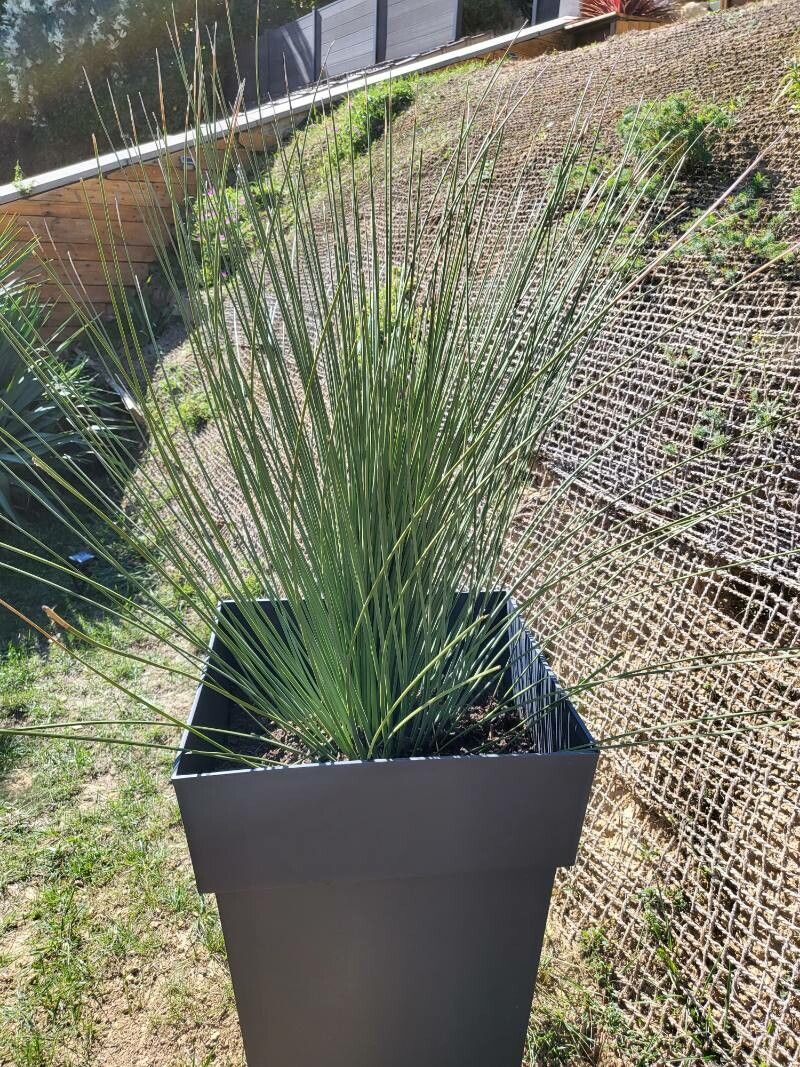
Repot the Mexican grass tree every two years in the spring to support its robust root system. Use a slightly larger pot with excellent drainage to minimize transplant shock. After repotting, place the plant in bright light and water sparingly to encourage recovery. This slow-growing, tree-like succulent can eventually reach impressive heights.
Botanical profile.
- Plant Type
- Succulent
- Life Cycle
- Perennial
- Genus
- Dasylirion
- Family
- Asparagaceae
- Hardiness Zone
- 8-10
- Mature Height
- 3.96 m
- Mature Spread
- 1.52 m
- Leaf Color
- Green
- Leaf Type
- Evergreen
- Flower Color
- White
- Bloom Time
- Early summer, Mid summer
- Planting Time
- Spring, Summer
- Harvest Time
- Late summer, Early fall
- Native Area
- Mexico
Other names.
Reader questions.
What do I need to do if I give my Mexican grass tree too much or too little water?
Mexican grass trees and other succulents are known for their ability to survive without much water, so it's rare to see them suffering from underwatering. However, if you forget to water your Mexican grass tree for a month or more, you'll likely notice signs of thirst and damage due to lack of water. These signs include a lackluster and wrinkled appearance, dried-up leaves that have turned brown and crispy, and dry soil. To rehydrate an underwatered Mexican grass tree, immerse the pot in water for about 5-10 minutes until the soil feels moist on the surface. On the other hand, overwatering is a serious issue for Mexican grass trees and can be fatal if not addressed. Excessive moisture leads to root rot, which prevents the roots from absorbing nutrients and water. To prevent this, ensure proper air ventilation and adjust the watering frequency. Symptoms of overwatering include yellow, swollen, and translucent organs, and the plant may turn brown or black and easily fall off. Check the soil to confirm overwatering as the cause. Saving an overwatered plant is challenging, but not impossible. Catching the problem early is crucial before extensive damage occurs. Remove the plant from its pot, clean the roots in room-temperature water to eliminate fungi, and assess their health. Dark brown or black, soft, mushy, or slimy roots indicate root rot. If most of the roots are affected, it may not be salvageable. If only some roots are affected, remove the unhealthy ones, dip the remaining healthy roots in fungicide, and repot the plant in well-draining soil. While not always successful, in many cases the plant will recover and start new growth in the next growing season.
Why is it necessary to add fertilizer to my Mexican grass tree?
Fertilizing Mexican grass tree is beneficial for its growth. Although it already stores water and nutrients, applying plant food during the growing season further supports healthy growth. Fertilizing the grass tree can also stimulate blooming in mature specimens during the growing season.
What are the sunlight requirements for the Mexican grass tree?
The Mexican grass tree thrives optimally with abundant sun exposure, requiring above 6 hours of sunlight daily to mimic its origin habitat's lighting conditions. Lack or excessive exposure can lead to stunted growth, leaf discoloration, and defoliation, although the plant shows resilience to varying light intensities. Watching how sunlight moves through your garden helps in choosing spots that provide the perfect balance of light and shade for your plants.
What is the native climate for the Mexican grass tree?
The Mexican grass tree, known botanically as Dasylirion longissimum, is native to regions with a temperate climate. It thrives in temperatures ranging from 59 to 95°F (15 to 35°C). To mimic its native conditions in colder seasons or regions, adjustments to its environment are necessary. This heat-loving plant gradually ceases to grow and enters a dormant state during the winter. It's essential to move it indoors when the outdoor temperature drops below -5°C, placing it near a south-facing window to maximize sunlight exposure. Supplemental lighting may be employed if natural light is insufficient. As the temperature falls below 15°C, the plant's growth slows, and watering should be reduced or stopped to prevent root rot. For those grown outdoors, watering should halt entirely in low temperatures. Moreover, you can protect the plant with a temporary greenhouse or by wrapping it with plastic film or fabric during cold temperatures.
How often should I pour water on my Mexican grass tree?
To determine how often to water Mexican grass tree, it is best to check the soil and only water when it is completely dry. You can check the soil by either sticking your finger or a moisture meter into the pot. If the soil feels slightly moist, wait a few days and check again. In general, most people will need to water Mexican grass tree every two weeks in summer and once a month in winter. However, there are several factors that can affect the frequency of watering. Please refer to the section below for considerations that can help determine how often to water.
When should I put fertilizer on my Mexican grass tree?
Mexican grass trees benefit from extra nutrients, but they only need a small amount of fertilizer during the growing season. It is recommended to fertilize them 1-2 times a year, specifically in the spring and autumn. Avoid fertilizing in winter and summer when the plant is dormant. If you have repotted the plant, be cautious with the amount of fertilizer you use. It's best to wait a few months after repotting before applying fertilizer.
How can artificial lighting be used for indoor Mexican grass trees?
Indoor Mexican grass trees require adequate lighting for optimal growth, especially when natural sunlight is insufficient. Artificial lights, like LED lights that can be customized to provide specific wavelengths of light needed by the plants, serve as a vital solution. Full sun plants need 30-50W/sq ft of artificial light, partial sun plants need 20-30W/sq ft, and full shade plants need 10-20W/sq ft. The artificial light source should be placed 12-36 inches above the plant to mimic natural sunlight for about 8-12 hours per day.
How should you care for a Mexican grass tree in low temperatures?
In low temperatures, particularly when the temperature is above 15°C but dips below during winter to -5°C or even lower, the Mexican grass tree's growth can be severely impacted. It may become weak, wilt, and be prone to root rot at temperatures below -10°C. If mild frost damage occurs, it may not show immediate symptoms but will gradually wither over time. The solution includes trimming off the frostbitten areas while checking for root rot. If the roots are rotted, they should be cut off, and the plant can be propagated through cuttings. It's crucial to move the plant indoors to a warm environment promptly and place it near a south-facing window to ensure it receives sufficient sunlight. Supplemental lighting could be used if natural light is not adequate.
What should I think about when giving water to my Mexican grass tree?
To properly water your Mexican grass tree, you need to consider several environmental factors. The container size, soil type, temperature, and humidity will all affect how often and how much you should water the plant. First, choose a container with good drainage holes in the bottom. This allows excess water to escape. Keep in mind that a smaller container holds less soil and moisture, so it will need more frequent watering. On the other hand, a larger pot retains moisture longer, so it requires less frequent watering. Avoid using an oversized pot, as this can lead to overwatering. When repotting, move to a container that is only one size larger than the current one. Also, opt for a shallow container since Mexican grass trees have shallow root systems. In terms of seasons, water the plant less frequently during winter when growth slows down. The cooler air reduces water evaporation, so the soil stays wet for longer. On the other hand, in the active growing seasons of spring and autumn, the plant will need more frequent watering. Consider the climate of your region. In a humid area with ample rainfall, you will need to water the plant less often. In contrast, in a dry and arid climate, more frequent watering is necessary. Keep in mind that even within the same location, conditions can change with the season and the use of indoor heating and air conditioning. If you have planted the Mexican grass tree in the ground, it typically doesn't require additional watering once its root system is established. It will receive enough water from precipitation and dew. However, during a prolonged dry period, occasional watering might be necessary. In areas where the plant can only be grown in a container, you can move it outside during spring and summer when the temperature is suitable. Just remember that potted Mexican grass trees kept outdoors generally need more water than those kept indoors due to increased sun exposure, even on a shaded porch.
When is it not a good idea to put fertilizer on my Mexican grass tree?
The Mexican grass tree, like other plants, goes through a dormancy period. During this time, which occurs in both summer and winter, the plant stops growing, so it's important to avoid applying fertilizer. It's also recommended to pause fertilizing for a few months after repotting in the spring.
What are the symptoms of inadequate lighting in Mexican grass trees?
Mexican grass trees may develop several symptoms when placed in suboptimal lighting conditions, including smaller new leaves, leggy or sparse growth, faster leaf drop, slower or no new growth, lighter-colored new leaves, chlorosis, sunscald, leaf curling, wilting, and leaf scorching. These symptoms are indicators of light deficiency or excessive sunlight exposure, both of which can affect the plant's health and growth.
What measures should be taken for a Mexican grass tree in high temperatures?
During the summer, it’s vital to ensure that the Mexican grass tree's environment does not exceed 35°C. When temperatures surpass 41°C, the plant's growth halts, leading to water loss, wilting, and an increased risk of sunburn. The steps to mitigate damage from high temperatures include removing sunburned and rotted sections of the plant. It may also be necessary to shield the plant from the intense afternoon sunlight until it begins to recover and show signs of growth. In instances of root rot, it’s critical to halt watering until new roots develop, as continued watering can exacerbate the condition.