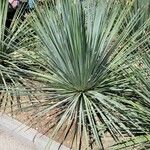
Dasylirion texanum
Sotol · Texas sotol
Description
Source: leafsnapDasylirion texanum, the Texas sotol and sotol, is a monocot flowering plant native to central and southwestern Texas and in Coahuila state of northeastern Mexico, including the Chihuahuan Desert.
Care Guide
💧 Water Every 3 weeks
Texas Sotol is well-suited to arid environments, exhibiting high drought tolerance and requiring watering only once every three weeks. Overwatering can be detrimental, which makes it an excellent choice for xeriscaping. Typically grown outdoors, Texas Sotol thrives in drier conditions that replicate its natural habitat.
How should I water my Texas Sotol?
Watering your Texas Sotol is easy and forgiving. You can use various tools like watering cans, hoses, or even cups. Just make sure to water directly onto the soil, ensuring equal moisture for all parts of the root system. Filtered water is preferable to tap water due to potential harmful particles. It's also best to use water at or slightly above room temperature to avoid shocking the plant. However, the Texas Sotol generally thrives with any type of water.
What should I do if I give my Texas Sotol plant too much water or too little water?
Newly planted outdoor plants or seedlings are often prone to not being watered enough. It is important to consistently water them for the first few months after planting. Once the roots are established, Texas Sotol plants can usually rely on rainwater. However, if your Texas Sotol is in a pot, overwatering is more likely to occur. If you accidentally overwater your Texas Sotol, you should take immediate action to address the issue. Stop watering the plant right away to minimize the impact of overwatering. Then, remove the plant from its pot and check the roots for any signs of root rot. If no root rot is found, you can return the plant to its pot. But if root rot is present, trim away the affected roots and consider applying a fungicide. Finally, repot your Texas Sotol in well-draining soil. On the other hand, if your Texas Sotol is underwatered, simply increase the frequency of watering. Underwatering is usually easy to fix, as the plant's leaves will droop and dry out, but they will quickly become full and healthy again after sufficient watering. Make sure to adjust your watering schedule promptly if you notice signs of underwatering.
How frequently should I water my Texas Sotol plant?
If your area doesn't receive enough rainfall, you can water your outdoor plants every 2 weeks during spring and fall, and more frequently in summer. In winter, when plants require less water, you can water them sparingly or not at all. However, if your Texas Sotol is young or newly planted, it will need more frequent watering to help it establish and grow. For potted plants, there are two ways to determine watering frequency. One option is to follow a predetermined schedule, such as once a week or once every other week. However, this may not always account for the specific conditions of your Texas Sotol's environment. The other option is to check the soil moisture and wait until the top two to four inches have completely dried out before watering again. It's important to note that during summer, when water needs are highest, a predetermined schedule may not be sufficient.
How often should I water my Texas Sotol plant?
When watering your Texas Sotol, remember that it does not always require a large amount of water. If only a few inches of soil have dried since the last watering, give it about five to ten ounces of water each time. You can also gauge the water volume based on the dryness of the soil. If more than half of the soil has dried, provide more water until it starts draining from the pot's holes. In rainy areas, the plant may not need extra watering. Young Texas Sotol should receive 1-2 inches of rain per week, but as it grows, it can rely on rainwater alone. Only in very hot weather and extended periods without rain should you give it a thorough watering to prevent stress.
How can I know if I am giving enough water to my Texas Sotol plant?
When caring for a Texas Sotol, overwatering is a common issue to watch out for. You can identify overwatering by looking for yellowing leaves and leaf drop. Overwatering can also lead to the plant's structure shriveling and root rot. Conversely, an underwatered Texas Sotol will start to wilt and may have brown or brittle leaves. Regardless of whether you notice signs of overwatering or underwatering, it's important to take action and restore the plant's health.
☀️ Light Full sun
Texas Sotol strongly prefers locations that receive abundant sunlight throughout the day. It can also tolerate settings with moderate sun exposure. Its native habitat, typical of desert-like areas, has conditioned it for these conditions. If sunlight is too limited, the plant may display stunted growth.
What are the sunlight requirements for Texas Sotol?
Texas Sotol thrives in environments that offer ample sunlight throughout the day, as its origin habitat is characteristic of desert-like areas. It requires full sun, which is above 6 hours of sunlight daily, but can also tolerate partial sun, about 3-6 hours of sunlight. It's important to choose spots in your garden that provide a perfect balance of light and shade to ensure the plant's happiness and prevent stunted growth if sun exposure is too scant.
How can I provide adequate lighting for Texas Sotol indoors?
For Texas Sotol plants indoors, when natural sunlight is insufficient, especially in winter or less sunny spaces, artificial lighting becomes crucial for optimal growth. It's recommended to use LED lights as they can be customized for the specific wavelengths your plant needs. For full sun plants, 30-50W/sq ft of artificial light is needed, partial sun plants require 20-30W/sq ft, and full shade plants need 10-20W/sq ft. The light source should be placed 12-36 inches above the plant, mimicking natural sunlight as closely as possible, and it's suggested to provide 8-12 hours of light per day to promote healthier, faster growth.
What are the signs of insufficient light exposure in Texas Sotol?
When Texas Sotol is exposed to suboptimal lighting conditions, it may show signs of light deficiency, including smaller new leaves compared to the older ones, leggy or sparse growth, and faster leaf drop as a way to conserve resources. This could also lead to slower or completely halted new growth, lighter-colored new leaves indicating a lack of chlorophyll, and symptoms of chlorosis where the leaves lose their green color. Furthermore, excessive sunlight exposure can cause symptoms such as sunscald, leaf curling as a defense mechanism, wilting due to water loss, and leaf scorching, resulting in brown, dry edges on leaves.
How can I address and remedy light exposure issues for Texas Sotol?
To ensure optimal growth for Texas Sotol, gradually moving plants to sunnier locations to receive at least 6 hours of direct sunlight daily is crucial. For indoor plants, using a south-facing window and keeping curtains open during the day or employing artificial light, like a desk or ceiling lamp for at least 8 hours daily, can help. Outdoors, it's essential to adapt plants to sunlight gradually to prevent sunburn. If natural light is obstructed, consider pruning or transplanting to a location with better sunlight and drainage. Note that parts of the plant affected by insufficient sunlight may not recover, but new growth will be healthy once light exposure increases.
🌡️ Temperature 15–37.8°C
Texas Sotol is native to habitats where temperatures range from 59 to 100 °F (15 to 38 °C). It prefers warm climates and does not require temperature adjustments between seasons.
What is the native climate of Texas Sotol?
Texas Sotol, or Dasylirion texanum, is indigenous to environments experiencing temperatures ranging between 59 to 100 °F (15 to 38 °C). It thrives in warmer climates without needing temperature adjustments across different seasons. The plant has some cold tolerance, typically not requiring protective measures when temperatures are above -5°C. However, if temperatures are expected to drop below -5°C, temporary cold protection measures, such as wrapping the plant with materials like plastic film or fabric, are necessary. These protective measures should be removed once temperatures rise again.
How does Texas Sotol react to low temperatures, and what should be done?
Texas Sotol has a moderate tolerance to low temperatures, thriving best above 15°C. During the winter, it should be kept above -5°C to prevent damage. If temperatures fall below -10°C, the leaves may droop and, in severe cases, wilt and fall off. To mitigate frost damage, frost-damaged parts should be trimmed off. Before encountering low temperatures again, wrap the plant with non-woven fabric or cloth and construct a wind barrier to protect it from cold winds.
What are the effects of high temperatures on Texas Sotol, and how can they be addressed?
During the summer, it's important to keep Texas Sotol below 38°C to avoid heat stress. Exceeding 43°C can cause the leaves to lighten in color, the leaf tips to dry and wither, leaves to curl, and increase the plant's susceptibility to sunburn. To address this, trim away sunburned and dried-up parts. Move the plant to a shaded location or use a shade cloth to protect it from midday and afternoon sun. Additionally, water the plant in the morning and evening to maintain soil moisture.
💨 Humidity
🪴 Soil 6-7
🌱 Fertilizer
Fertilize your Texas Sotol in early spring to encourage healthy growth. Regular feeding improves overall health, producing vigorous growth, increased tolerance of harsh conditions, and enhanced resistance to pests and diseases. Adhere to a specific fertilization schedule for your Texas Sotol to maintain vibrant foliage with rich color and a lush appearance.
Why is it important to fertilize my Texas Sotol?
No matter which type of Texas Sotol you have, regular fertilization is key for its overall health. By providing the proper nutrients, your plant will experience better growth, withstand tough conditions, and fend off diseases and pests. The foliage of your Texas Sotol is particularly attractive, so it's important to maintain it. This involves following a specific fertilization schedule to promote deep color and a lush appearance for the leaves.
When should I fertilize my Texas Sotol for the best results?
To keep your Texas Sotol healthy and thriving, it is recommended to fertilize it twice a year. The first fertilization should be done in late winter or early spring, supplying your plant with the necessary nutrients to promote healthy growth once the weather warms up. If you live in a warm climate region, it's beneficial to provide an additional fertilizer feeding in early fall. This not only adds extra nutrients for the following growing season but also helps your Texas Sotol withstand winter cold without foliage damage. By fertilizing earlier, new branches will have the time they need to grow and endure the cold winter.
When is it a bad idea to fertilize my Texas Sotol?
To ensure the health of your Texas Sotol, there are specific times when you should avoid fertilizing it. Firstly, during the early and mid-winter months, your Texas Sotol will be in its dormant phase and does not require any feeding. Additionally, it is best to refrain from fertilizing this plant throughout late spring and all of summer. During this period, the weather tends to be hotter and drier, which can lead to a negative reaction if fertilized. To prevent such problems, it is recommended to follow a fertilization schedule that involves feeding only during early spring and early fall.
What kind of plant food does my Texas Sotol plant need?
The most important nutrient for a Texas Sotol is usually nitrogen, but phosphorus and potassium are still important. A balanced fertilizer with equal amounts of all three nutrients, such as a 10-10-10, can work well. However, a more specific ratio of nutrients can lead to even better growth for a Texas Sotol. Fertilizers with a slightly higher nitrogen content, like a 10-6-4 ratio, often work well. You can choose between a granular or liquid-based fertilizer when applying it.
How do I make my Texas Sotol plant grow healthy and strong?
To fertilize your Texas Sotol, you have two options: using granular fertilizer or liquid fertilizer. If you choose granular fertilizer, simply sprinkle it on the soil at the right time. This type of fertilizer will release nutrients slowly over time. It's recommended to lightly water your Texas Sotol before applying the granular fertilizer. On the other hand, liquid fertilizer is less common but still an option. To use it, mix the fertilizer with water and pour it around the base of your Texas Sotol. Before fertilizing, it may be helpful to conduct a soil test to determine if any pH adjustments are necessary.
🪴 Pot & Repot
✂️ Pruning
Texas Sotol, recognized for its spiky rosette leaves, should be pruned from early to late winter to remove any damaged foliage. Trim the older leaves at the base, but avoid pruning during the growing season to prevent stressing the plant. Regular pruning not only improves the plant's appearance but also minimizes the risk of pests and diseases.
🌿 Propagating
🐛 Diseases & pets
☠️ Toxicity
The fleshy, spongy central stem of the Dasylirion texanum (sometimes referred to as the heart) is known for being edible. However, it is normally only consumed after being cooked in an earth oven for around 48 hours. This is because the long-chain carbohydrates need to break down, as do the bitter-tasting and toxic saponins the plant contains. Although they are unlikely to cause any serious damage if consumed raw, they could cause gastrointestinal upset if consumed in large quantities.
Characteristics
- Plant Type
- Shrub
- Life Cycle
- Perennial
- Genus
- Dasylirion
- Family
- Asparagaceae
- Hardiness Zone
- 8-11
- Mature Height
- 4.57 m
- Mature Spread
- 1.22 m to 1.83 m
- Leaf Color
- Green, Dark Green
- Leaf Type
- Evergreen
- Flower Color
- White
- Flower Size
- 2.54 cm
- Bloom Time
- Early summer, Mid summer
- Planting Time
- Spring, Summer, Autumn
- Harvest Time
- Late summer, Early fall
- Native Area
- Mexico