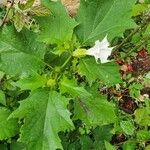
Datura ferox
Fierce thorn-apple · Large thorn-apple · Long-spine thorn-apple · Long-spur thorn-apple · Angel's-trumpets
Description
Source: leafsnapDatura ferox, commonly known as long spined thorn apple and fierce thornapple, as well as Angel's-trumpets, is a species of Datura. Like all such species, every part of the plant contains deadly toxins that can kill animals (including humans) that ingest it. Its fruit, red-brown when ripe, has unusually long thorns or spikes. The species was first described in 1756 by Linnaeus. Ferox means "strongly fortified," referring to the fearsome-looking spines on the seed pod. The species was long thought to have originated in southeastern China, but recent work by Symon and Haegi has demonstrated that, like all other Datura species, it is in fact native to the Americas. The species is very close in morphology to Datura quercifolia, of which it may constitute a subspecies. Today it is found in all the warm parts of the earth, where it is regarded as a dangerous pasture weed.Datura ferox is a stout, upright annual herb 1.5 to 3 ft (45 to 90 cm) high. Its thick stalks often have a red-violet color at the base. All the young shoots are noticeably hairy. The most conspicuous part of the plant is its very wide, undulate, irregularly toothed leaves, which are covered with soft, downy hairs. The yellowish white flowers are funnel-shaped and inconspicuous, and usually do not open completely.
🎭 Fear, gloom, strength, carefulness
Care Guide
💧 Water
☀️ Light Full sun
The jimsonweed plant, native to sunny habitats, flourishes with plentiful sunlight, which promotes strong growth and good overall health. It can also tolerate conditions with less light. However, very low or excessively intense light can harm its vitality and vigor and may inhibit growth.
🌡️ Temperature 5–35°C
Jimsonweed originates from areas where temperatures range from 68 to 95 °F (20 to 35 ℃). It prefers warmer climates, so it's recommended to adjust conditions accordingly by placing it in cooler locations during hot seasons.
💨 Humidity
🪴 Soil 6-7
🌱 Fertilizer
Jimsonweed responds well to regular, light applications of fertilizer to encourage healthy leaf development. You should feed Jimsonweed about once a month during the summer. Nitrogen is essential for foliage, and providing nitrogen-rich sources helps Jimsonweed do well.
🪴 Pot & Repot
When repotting Jimsonweed, choose a pot that is 1–2 inches (2.5–5 cm) larger in diameter and that offers good drainage. Use a well-draining potting mix, and consider mixing in perlite to improve drainage. Repot in spring or early summer, water thoroughly afterward, and keep the plant in a shady spot at first.
✂️ Pruning
🌿 Propagating
🐛 Diseases & pets
☠️ Toxicity
Characteristics
- Plant Type
- Herb
- Life Cycle
- Annual, Perennial, Biennial
- Genus
- Datura
- Family
- Solanaceae
- Hardiness Zone
- 4-9
- Mature Height
- 0.61 m to 1.52 m
- Mature Spread
- 30 cm to 91 cm
- Leaf Color
- Green
- Leaf Type
- Deciduous
- Flower Color
- White
- Flower Size
- 3.05 cm to 5.08 cm
- Bloom Time
- Early summer, Mid summer
- Planting Time
- Spring, Summer
- Harvest Time
- Mid summer, Late summer, Early fall
- Native Area
- Mexico, Bolivia