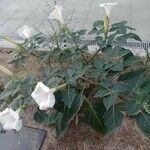
Datura innoxia
تاتوره علفی، - · Indian Apple · Moonflower · Angel'S Trumpet · Downy Thornapple
Description
Source: leafsnapDatura innoxia, commonly known as devil's trumpet or thorn apple, is a plant species in the nightshade family. Native to North and South America, this plant has spread to other parts of the world. It can grow to a height of 1 to 2 meters and features large, white or pale yellow trumpet-shaped flowers that bloom at night. The leaves are large and ovate-shaped with toothed margins. The plant contains alkaloids such as scopolamine, hyoscyamine, and atropine, which have been used medicinally for centuries. However, these substances can also be toxic if ingested in large quantities. Datura innoxia has been utilized for its psychoactive properties by some cultures, but it is important to recognize the dangers associated with its high toxicity levels. This plant prefers warm climates with well-drained soil but can adapt to various environments, including deserts and coastal areas. It is often found growing along roadsides or in disturbed areas. Overall, Datura innoxia is a fascinating plant species with both medicinal properties and toxic effects if not handled properly, making it an important subject of study for botanists worldwide.
🌳 Besides its well-known hallucinogenic effects, downy thorn apple also has an intriguing role as a biological insecticide, using its toxic alkaloids to repel pests. In addition, indigenous communities have long used downy thorn apple's stupefying impact on fish, evidence of its various bioactive constituents. When the seeds are crushed and placed in bodies of water, they temporarily immobilize fish, enabling an unconventional yet effective fishing method. This demonstrates downy thorn apple's promise for biocontrol uses and underscores traditional knowledge systems' savvy in employing natural resources.
🎭 Strength and prudence
Care Guide
💧 Water Every 3 days
The downy thorn-apple thrives in semi-arid conditions where rain is infrequent but substantial. It does well in dry soil between waterings and shows a strong tolerance for drought. It's best to water it weekly, but reduce irrigation during periods of natural rainfall, especially in warmer outdoor settings.
How should I water my Downy thorn-apple plant?
You can water Downy thorn-apple using various tools like a garden hose with a spray nozzle or a watering can. This plant is not too particular about the type of water it receives, whether it's rainwater, tap water, or filtered water. However, it is generally advised to avoid watering from overhead as it can harm the leaves, flowers, and even cause diseases. A better option is to set up a drip irrigation system, which can evenly and directly water the soil. For a container-grown Downy thorn-apple, you can use a cup, watering can, or tap to water the soil directly.
What should I do if I give too much or too little water to my Downy thorn-apple plant?
Underwatering the Downy thorn-apple can be easily resolved by increasing the frequency of watering when you notice the plant is lacking moisture. On the other hand, overwatering can lead to more serious consequences if not detected early. Overwatered plants are at risk of developing diseases that can cause them to decline and eventually die. To prevent this, it is important to choose a suitable location for your Downy thorn-apple plant that receives ample sunlight to dry the soil and has good drainage to prevent water from pooling and saturating the soil. If you have overwatered a potted Downy thorn-apple, it may be necessary to transfer it to a new pot. The previous container may have had poor drainage or insufficient drainage holes. When repotting your overwatered plant, use loose soil and ensure that the new pot has efficient drainage.
How often should I water my Downy thorn-apple plant?
To keep your Downy thorn-apple healthy and happy, remember to water it regularly throughout the growing season. In the spring, watering once per week should be sufficient. However, as the weather gets warmer, you may need to increase the frequency to two to three times per week. Be careful not to overwater, as this can harm the plant. Regardless of how often you water, make sure the soil remains consistently moist but not soaked. If your Downy thorn-apple is in a pot, it will likely need more frequent watering compared to one planted in the ground. Generally, watering a potted Downy thorn-apple a few times per week should suffice, while an in-ground plant may only need watering once per week.
How much water does my Downy thorn-apple plant need?
To determine how much water to give your Downy thorn-apple, there are a few options. One method is to feel the soil and water until the top six inches are moist. Alternatively, you can use a set measurement, such as two gallons per week, depending on weather conditions. However, be cautious of overwatering if your plant needs less. For container-grown Downy thorn-apples, check the soil moisture by inserting your finger or look for excess water drainage.
How do I know if I'm watering my Downy thorn-apple plant enough?
Avoiding overwatering your Downy thorn-apple can be a bit tricky. These plants have deep roots that need moist soil, but they are also prone to root rot and browning if overwatered. Underwatering is less of a concern as these plants can go without watering for some time. However, if you wait too long, the plant will wilt and the leaves may turn dry.
☀️ Light Full sun
Downy thorn apple grows best with plentiful sunlight, similar to fully exposed conditions, for optimal growth and development. It can also tolerate some shade, described as partial exposure. Sun availability has a major impact on its health. Too much or too little sun can interfere with its normal growth.
How many hours of sunlight does Downy thorn-apple need each day to grow well?
To ensure the health and thriving of the plants, they should be exposed to at least 6 to 8 hours of sunlight each day. Particularly during the summer, they benefit from increased exposure to morning light. The Downy thorn-apple, in particular, requires full sun and benefits from as much sunlight as possible. More light allows these species to produce ample food, display stunning blooms, and increase their chances of survival.
What kind of sunlight does Downy thorn-apple prefer?
The Downy thorn-apple prefers full sunlight for optimal growth. To ensure each plant gets enough sun, avoid overcrowding. It's important to allow the leaves to receive adequate sunlight. If planting in pots, place the herbaceous flowers in windows with direct sun and make sure they receive full sunlight throughout the year. Avoid partial or filtered light, as this can result in weak stems and unhealthy flowers. It's ideal for the Downy thorn-apple to always be exposed to sunlight.
Does sunlight harm plants? How can I shield Downy thorn-apple from damage caused by the sun and heat?
In order to prevent damage to the Downy thorn-apple, it is important to provide some shade during the hot summer afternoons when the temperature rises above 90℉(32℃). This is because extreme temperatures and prolonged exposure to sunlight can be harmful to the plant. It is also worth noting that the sunlight in the summer is stronger and lasts longer compared to the winter. If the Downy thorn-apple appears to be stressed from too much sunlight, it is recommended to ensure they are well hydrated by watering them when the top of the soil is about 2 inches dry. If it is exceptionally hot outside, especially for plants planted in containers, it may be wise to bring them indoors. During the day, it is normal for the plant leaves to wilt, as they often recover during the night. However, if the Downy thorn-apple continues to droop, it is a sign that the plant is losing water quickly and needs to be watered promptly.
Do I need to keep Downy thorn-apple away from the sun?
The Downy thorn-apple thrives in the sun and even loves it. Some types of this plant are heliotropic, meaning they actively seek out the sun. It is recommended to plant them in south-facing gardens to maximize their sun exposure from morning to afternoon. However, it is important to note that excessive sunlight can lead to sunburn for some varieties. To protect them from the harsh afternoon and midday sun, consider providing shade from a tree or wall. Growing the Downy thorn-apple in shady areas is not feasible because the larger flowers require a significant amount of energy to grow and produce. Therefore, it is crucial to ensure they are placed in an area with full sun for optimal growth and results.
What happens when Downy thorn-apple doesn't get enough sunlight?
If the Downy thorn-apple doesn't receive enough sunlight or isn't in a full sun location, the photosynthetic process will slow down. This lack of sunlight causes the stems to become thin and long as they try to find more sunlight, making them leggy. Additionally, they won't bloom or produce seeds in the shade. Insufficient sunlight can also lead to older leaves dying, new leaves being lighter in color, and new growth being smaller. Despite their love for the sun, Downy thorn-apples can wilt in excessive heat and ultraviolet light during the summer. To prevent the leaves and flowers from scorching, consider covering them with a green shaded net in the summer. When kept indoors, use a fan to reduce the heat.
🌡️ Temperature 20–35°C
Downy thorn apple is a warm-season species. It does best at temperatures between 68 and 95 °F (20 and 35 °C). The plant prefers hot, dry conditions with ample sunlight during the day. In colder weather it becomes dormant and stops growing until temperatures return to its preferred range.
What temperatures are suitable for Downy thorn-apple growth?
Downy thorn-apple is considered a warm-season plant that thrives in temperatures ranging from 68 to 95°F (20 to 35°C). It grows well in hot, dry weather with plenty of sunlight throughout the day. In cold weather, the plant goes dormant and stops growing until the temperature rises back to its preferred range. The plant has some cold tolerance and doesn't generally require additional protection if the temperature remains above a certain minimum (not specified). However, if the temperature is expected to drop below this minimum, protective measures like wrapping the plant with plastic film, fabric, or other materials should be taken.
How does low temperature affect Downy thorn-apple, and what solutions are recommended?
Downy thorn-apple has moderate tolerance to low temperatures and performs best when kept above a certain minimum temperature (not specified). During winter, it's important to keep the plant above another specific minimum temperature to avoid damage. When temperatures fall below a certain growth limit (not specified), the leaves may droop, and in severe cases, they can wilt and fall off. To mitigate frost damage, trim off the affected parts. Before low temperatures hit again, wrap the plant with non-woven fabric or cloth, and construct a wind barrier to protect from the cold.
What are the effects of high temperature on Downy thorn-apple, and what are the solutions?
In the summer months, Downy thorn-apple should be kept below a certain maximum suitable growth temperature (not specified). Exceeding this temperature can cause the leaves to lighten in color, tips to dry and wither, leaves to curl, and increase the plant's susceptibility to sunburn. To handle this, trim away sunburned and dried parts of the plant. Move the plant to a shaded area during midday and afternoon sun or use a shade cloth. Additionally, water the plant in the morning and evening to maintain soil moisture.
💨 Humidity
🪴 Soil 5-7
🌱 Fertilizer
Downy thorn apple responds well to regular, dilute applications of fertilizer to encourage healthy leaf development. You should feed Downy thorn apple about once a month during the summer. Nitrogen is essential for foliage, and supplying nitrogen-rich sources helps Downy thorn apple thrive.
🪴 Pot & Repot
When repotting Downy thorn apple, choose a pot that is 1-2 inches (2.5–5.1 cm) larger in diameter and has good drainage. Use a well-draining potting mix and consider adding perlite for extra drainage. Repot in spring or early summer, water thoroughly afterward, and initially place the plant in a shady location.
✂️ Pruning
🌿 Propagating
🐛 Diseases & pets
☠️ Toxicity
Characteristics
- Plant Type
- Herb
- Life Cycle
- Annual, Perennial
- Genus
- Datura
- Family
- Solanaceae
- Hardiness Zone
- 9-10
- Mature Height
- 0.61 m to 1.52 m
- Mature Spread
- 0.91 m to 1.83 m
- Leaf Color
- Green
- Leaf Type
- Deciduous, Evergreen
- Flower Color
- White
- Flower Size
- 6.35 cm to 10.16 cm
- Bloom Time
- Summer
- Planting Time
- Spring
- Harvest Time
- Mid summer, Late summer, Early fall
- Native Area
- Bahamas, Cuba, Honduras, Mexico, Haiti, Guatemala, Venezuela, Nicaragua, Dominican Republic, Jamaica