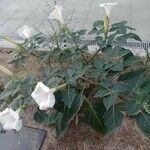
Datura inoxia
تاتوره علفی · ماه گل عطری · Moonflower · Pricklyburr · Indian-apple
Description
Source: leafsnapDatura innoxia (often spelled inoxia), known as pricklyburr, recurved thorn-apple, downy thorn-apple, Indian-apple, lovache, moonflower, nacazcul, toloatzin, toloaxihuitl, tolguache or toloache, is a species of flowering plant in the family Solanaceae. It is more rarely called sacred datura, a common name which is applied more often to the closely related Datura wrightii. It is native to the Southwestern United States, Central and South America, and introduced in Africa, Asia, Australia and Europe. The scientific name is often cited as D. innoxia. When English botanist Philip Miller first described the species in 1768, he misspelled the Latin word innoxia (inoffensive) when naming it D. inoxia. The name Datura meteloides was for some time erroneously applied to some members of the species, but that name has now been abandoned.
Care Guide
💧 Water 1-2 times a week
This plant requires moderate water. Keep the soil equally wet but not waterlogged throughout its first growth season. Root rot may result from standing water. Mature plants have some drought resistance but require weekly irrigation during dry periods in the summer. Reduce winter watering to avoid the soil drying up. In summer, water every morning. Also, water when the soil is one inch dry.
☀️ Light
🌡️ Temperature
Angel's trumpet is most comfortable in warm weather. As long as its moisture requirements are satisfied, it has a high heat tolerance. Frost and freezing weather may kill or harm this plant. It should ideally be stored at a temperature above 50 degrees Fahrenheit. When the plant is properly watered, humidity is often not a problem.
💨 Humidity
🪴 Soil
🌱 Fertilizer
Rich soil may not need fertilizer. If your plant needs a push, use a high-nitrogen flowering plant fertilizer in the spring. Spring compost may be useful. Apply high-phosphorus (NPK 5-10-5) fertilizer 4 to 6 weeks later to stimulate blooming. Liquid fertilizer is easy to use and may be diluted to minimize plant burn.
🪴 Pot & Repot
✂️ Pruning
In most cases, pruning is not required. Nevertheless, you may give the plant a gentle trim at any time throughout the growing season in order to maintain its clean form and keep the growth under control. Remove any sick, damaged, or dead stems from the plant.
🌿 Propagating
🐛 Diseases & pets
☠️ Toxicity
All parts of Datura plants contain dangerous alkaloids, especially the seeds and flowers, that are toxic to people and animals when ingested. Just a small amount is enough to kill a person or large animal.
Characteristics
- Plant Type
- Herbaceous, perennial
- Genus
- Datura
- Family
- Solanaceae
- Hardiness Zone
- 9-10
- Bloom Time
- Summer, fall
- Native Area
- North America, Central America, South America