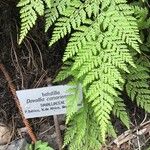
Davallia canariensis
Deer-foot fern · Hare-foot fern · Hare's-foot fern · Canary Fern · Rabbit foot fern
Description
Source: leafsnapDavallia canariensis, commonly known as the Hare's Foot Fern, is a fern species native to the Canary Islands. It is a popular ornamental plant because of its unique appearance and easy care requirements. The plant features long, furry rhizomes that resemble a hare's foot, often used in floral arrangements. Its fronds are dark green and leathery with finely divided leaflets, giving the plant an airy appearance. The Hare's Foot Fern prefers bright indirect light and moist soil with good drainage. These ferns can be propagated by division or spores, making them ideal for beginners to grow at home or in the garden.
Care Guide
💧 Water Every 7 days
The deer-foot fern, native to the humid forest floors of the Canary Islands, thrives in conditions of high humidity and consistent moisture. To keep its fronds lush, water the plant twice a week and mist it regularly. It does best in evenly moist soil, ideally replicating its natural habitat.
What do I do if I give too much or too little water to my Deer-foot fern?
The Deer-foot fern can be overwatered if it is left in standing water or planted in a pot with no drainage holes. This will make the soil too wet for the roots to absorb nutrients and moisture, and can lead to fungal or bacterial diseases. Signs of overwatering include wilted and yellow leaves, drooping stems, and soft, mushy texture. However, it's important to check for other causes before concluding that the fern is overwatered, as similar symptoms can be caused by other issues. On the other hand, underwatering can also be a problem, especially if the plant is not in a self-watering planter. In dry conditions, the fern can quickly turn brown and crispy. If the plant appears completely dried up, there may still be a chance to save it if there are healthy roots. Trim off the dry and dead stems, water the plant thoroughly, and place it back in its usual spot. With proper care, the fern can recover and grow new fronds, although it may take several months to regain its original size.
How should I water my Deer-foot fern correctly?
To keep your Deer-foot fern happy, it's important to provide consistent moisture in its soil. This means watering it every one or two days, as it should never be allowed to dry out. As soon as the top layer of soil starts to feel even slightly dry, it's time to water again. Make sure to thoroughly soak the soil until water drains out from the pot's bottom. Afterwards, be sure to discard any excess water to prevent the pot from sitting in a puddle. This method guarantees that the soil remains adequately hydrated at all times.
What are the important things to think about when I water my Deer-foot fern?
The frequency of watering your Deer-foot fern depends on the level of humidity in the air. Higher humidity means less watering. Avoid placing the plant near heating or cooling vents as it will dry out quickly. Choose a location that is draft-free. These ferns prefer indirect sunlight and temperatures between 55-80 degrees F (13-27 degrees C). Placing them in a warm and sunny spot like a windowsill can cause dehydration. Rainwater or distilled water is best for this plant, but tap water also works fine in most places. Tap water can cause brown leaf tips due to minerals and chemicals. Small pots can dry out quickly, so provide more space in the pot than other houseplants. Consider using a self-watering planter for consistent moisture.
☀️ Light Full shade
Deer-foot fern is native to habitats such as forest understories or rocky areas that provide natural shade. It prefers Full Shade but can tolerate Partial Sun.
What are the sunlight requirements for plant growth?
Plants need varying degrees of sunlight to thrive, which is categorized mainly into partial sun and full shade. Partial sun refers to about 3-6 hours of sunlight daily, while full shade describes areas that receive less than 3 hours of sunlight. It's crucial to observe the movement of sunlight through your garden to determine the best spots that meet these requirements, thus ensuring your plants' optimal growth and happiness.
What are the essentials for growing Deer-foot fern?
Deer-foot fern, or Davallia canariensis, naturally grows in environments such as forest understories or rocky areas where shade prevails. It prefers full shade but can also tolerate partial sun conditions. In situations where natural sunlight is insufficient, such as during winter or in less sunny spaces indoors, artificial lighting can be a vital solution. It's recommended to use LED lights which can provide specific wavelengths needed for plant growth, with intensity requirements varying based on the plant's natural sunlight needs.
What are the important symptoms of inadequate light exposure in Deer-foot fern?
Deer-foot fern can tolerate low light but showcases certain symptoms when the light is inadequate, affecting its growth and health. Symptoms include smaller new leaves, leggy or sparse growth, faster leaf drop, slower or halted new growth, lighter-colored new leaves, chlorosis, sunscald, leaf curling, wilting, and leaf scorching. These symptoms are indicators of the plant struggling with either too little or too much light exposure.
What solutions can help improve light exposure for Deer-foot fern?
Improving light exposure for Deer-foot fern involves several strategies. Indoors, gradually shifting plants to sunnier spots each week or using artificial light such as desk lamps or professional grow lights for at least 8 hours daily can be beneficial. Outdoors, moving plants to better sunlight spots gradually to avoid shock is key. Reducing obstructions, like pruning trees to allow more sunlight through, or transplanting smaller plants during their dormant period to locations with better light and drainage, are effective strategies for ground-planted ferns. It's important to note that parts of the plant affected by previous light conditions might not recover, but new growth will be healthier following light condition improvements.
🌡️ Temperature 20–37.8°C
The deer-foot fern is fairly adaptable to temperature, able to withstand heat and wide temperature fluctuations. In hot conditions, attend to watering and provide suitable shading to prevent sunburn. However, the deer-foot fern is relatively sensitive to low temperatures. While it can tolerate some cold, very low temperatures can result in frost damage.
💨 Humidity high (>60%)
This plant needs special care because it loves high humidity levels of 60-80% or more. The best way to achieve this is by placing a humidifier near the plant. Daily misting is also essential! Make sure the room has good ventilation.
🪴 Soil 6-7
🌱 Fertilizer
The Deer-foot fern thrives when given high-nitrogen fertilizers every 4-6 weeks during the spring and summer months. For best results, use diluted fertilizer solutions on moist soil. As the weather cools, reduce the frequency of fertilization. Be careful not to over-fertilize, and never apply fertilizer to dry soil, as this can damage the roots. By following these guidelines, you can enhance the plant's vigor and increase the density of its foliage.
Why should I put plant food on my Deer-foot fern?
There are a few reasons why you should fertilize your Deer-foot fern. Firstly, your plant requires extra nutrients to develop strong and healthy new growth. Secondly, these additional nutrients also help maintain the vitality of the existing growth and enhance the plant's ability to resist diseases and pests.
When should I fertilize my Deer-foot fern?
The feeding schedule of Deer-foot fern depends on where it grows. While it is not a very hungry plant, it still requires some extra nutrients. For outdoor plants, they only need to be fertilized once in the spring. On the other hand, indoor specimens should be fed monthly, starting from spring and continuing through the summer.
When is it a bad idea to use fertilizer on my Deer-foot fern?
Avoid fertilizing after early autumn, as it can lead to excessive growth right before winter. It is also not recommended to fertilize Deer-foot fern during hot and dry periods, as dry soil does not distribute fertilizer effectively. Fertilizing at this time can stimulate growth that requires more water, which may not be available. It is better to apply fertilizer earlier in the season when temperatures are cooler. Lastly, be cautious not to accidentally over-fertilize Deer-foot fern by applying fertilizer to nearby plants or lawns.
What kind of fertilizer does my Deer-foot fern need?
When choosing a fertilizer for Deer-foot fern, it's important to consider if the plant is growing indoors or in the garden. Outdoor plants do well with mulch or compost. For indoor plants, an ideal fertilizer ratio is 3-1-2 (N-P-K). However, in some cases, a general-purpose fertilizer with even nutrient blend can also work. But, regardless of the fertilizer chosen, the volume of each nutrient should not exceed a 3 ratio.
How should I add fertilizer to my Deer-foot fern?
Fertilizing Deer-foot fern is straightforward, but it varies depending on the plant's location. For outdoor garden plants, the best approach is to add a layer of mulch or compost to the soil, ensuring that it is positioned around the base of the plant. On the other hand, indoor plants tend to do well with a diluted liquid fertilizer, applied before watering, typically on a monthly basis during the spring and summer seasons.
🪴 Pot & Repot 2-3 years
Repot your deer-foot fern every 2 to 3 years during the spring. Use larger containers with good drainage to accommodate its rhizomatous growth. After repotting, place the fern in bright, indirect light and maintain moderate humidity levels. Allow the top layer of soil to dry slightly between waterings, as deer-foot ferns prefer to be in snug pots.
✂️ Pruning
The deer-foot fern, recognized for its distinct foot-like rhizomes, benefits from pruning in early spring to maintain its vigor. Key techniques involve removing dead fronds and thinning out crowded areas. This promotes healthy growth and reduces the risk of fungal infections. For best results, use sharp, sterilized tools to make clean cuts, enhancing both the appearance and the health of the fern.
🌿 Propagating
🐛 Diseases & pets
☠️ Toxicity
Characteristics
- Plant Type
- Fern
- Life Cycle
- Perennial
- Genus
- Davallia
- Family
- Polypodiaceae
- Hardiness Zone
- 9-11
- Mature Height
- 23 cm to 46 cm
- Mature Spread
- 30 cm to 91 cm
- Leaf Color
- Green
- Leaf Type
- Evergreen
- Planting Time
- Spring, Summer, Autumn
- Native Area
- Morocco, Spain, Portugal