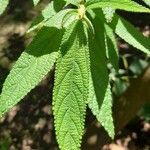
Debregeasia longifolia
Orange Wild Rhea
Description
Source: leafsnapDebregeasia longifolia also known as Orange Wild Rhea, is a large shrub growing up to a height of 5 meters seen in wet areas from plains to 1500m. Commonly found in India, Sri Lanka, Myanmar, Indo-China, west China and Malesia. In Matupi Township, Chin, Debregeasia longifolia is also known as Haikaeng Thing. Its wood is used for making charcoal and fiber used for fishing-lines. The fiber extracted from bark is used for house construction.
Care Guide
💧 Water
The orange Wild Rhea, which originates from humid subtropical areas, thrives best in environments with moderate moisture and constant humidity. It is drought-tolerant and usually requires watering every 2-3 weeks. Though it is typically grown outdoors, adding mulch around the plant can help retain soil moisture during its active growing season, reducing the risk of waterlogging.
☀️ Light Partial sun
Orange Wild Rhea occurs naturally in places like forest understories or rocky areas, where it experiences natural shade. It prefers partial sun but can adapt to full sun or full shade, showing its versatile, hardy nature.
🌡️ Temperature 15–35°C
Orange Wild Rhea shows good temperature adaptability, able to withstand high heat and wide temperature fluctuations. In hot weather, attention should be paid to watering and providing suitable shade to avoid sunburn. Conversely, Orange Wild Rhea is relatively sensitive to cold. While it can tolerate some chill, extremely low temperatures can cause frost damage.
What is the botanic name of Orange Wild Rhea?
The botanic name of Orange Wild Rhea is Debregeasia longifolia.
💨 Humidity
🪴 Soil 6-7
🌱 Fertilizer
Fertilize your Orange Wild Rhea in early spring to encourage healthy growth. Regular feeding improves overall health, producing vigorous growth, greater tolerance of harsh conditions, and stronger resistance to pests and diseases. Stick to a defined fertilization schedule to keep foliage vibrant, richly colored, and lush in appearance.
🪴 Pot & Repot
✂️ Pruning
Pruning the orange Wild Rhea in early spring promotes healthy growth and improves air circulation. To do this, trim away any dead branches and rejuvenate the plant by cutting just above the leaves or nodes. Regular pruning not only enhances the plant's appearance but also prevents overcrowding and reduces the risk of disease.
🌿 Propagating
🐛 Diseases & pets
☠️ Toxicity
Characteristics
- Plant Type
- Shrub
- Life Cycle
- Perennial
- Genus
- Debregeasia
- Family
- Urticaceae
- Hardiness Zone
- 7-10
- Mature Height
- 4.88 m
- Mature Spread
- 2.13 m to 3.96 m
- Leaf Color
- Green
- Leaf Type
- Semi-evergreen
- Flower Color
- Yellow, Green
- Flower Size
- 1.02 cm to 2.54 cm
- Bloom Time
- Mid spring, Late spring, Early summer
- Planting Time
- Spring, Summer, Autumn
- Harvest Time
- Mid summer, Late summer, Early fall
- Native Area
- Nepal, Sri Lanka, India, Malaysia, Indonesia, Cambodia, Vietnam, Myanmar, Philippines, Bhutan, Bangladesh, Laos, Thailand, China