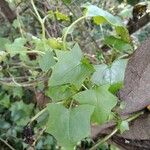
Delairea odorata
German-ivy · Cape-ivy · Parlor-ivy · Climbing Groundsel · Italian ivy
Description
Source: leafsnapDelairea odorata, commonly known as Cape ivy or German ivy, is a fast-growing vine native to South Africa and a member of the Asteraceae family. This vine can extend up to 10 meters in length. Its heart-shaped leaves are glossy, dark green, and have slightly serrated edges. The plant produces small yellow flowers that bloom from late summer to early autumn. Cape ivy is an invasive species that can quickly dominate an area by smothering other plants with its dense growth. While it prefers moist soil, it can tolerate drought conditions once established. In traditional African medicine, Cape ivy has been used for its anti-inflammatory properties and as a treatment for respiratory ailments such as asthma. Due to its invasive nature, Cape ivy should be avoided in garden settings unless it is carefully managed. It can, however, be utilized as ground cover on steep slopes where erosion control is necessary.
🌳 Commonly seen as a persistent weed, cape ivy presents potential as an unconventional garden ornamental because of its lush foliage and its habit of weaving through fences and trellises to form natural privacy screens. Although it isn’t widely recognized for uses beyond its invasive nature, the dense mats it creates suggest untapped possibilities in crafts or even as a biocontrol living mulch thanks to its rapid growth and ground-covering habit.
🎭 Faithfulness, Marital Love, Affection
Care Guide
💧 Water Every 7 days
Cape ivy flourishes in humid, shaded environments and needs consistent moisture, typically requiring weekly watering. It is often grown indoors to better manage its watering requirements, particularly during its active growth phase, when careful irrigation is essential to support its climbing habit.
How should I water my Cape ivy?
To ensure the health of your Cape ivy, it's important to water it correctly. Use filtered water at room temperature or slightly warmer, as tap water may contain harmful particles. The Cape ivy is native to warm environments, so avoid using cold water, as it can shock the plant. It's best to water the plant by applying filtered room temperature water directly to the soil until it's completely soaked. This helps moisten the roots and allows them to spread in the soil to gather nutrients. Avoid overhead watering, as it can cause problems with the foliage.
What do I do if I give my Cape ivy too much or too little water?
Both overwatering and underwatering can harm your Cape ivy, but overwatering is a more common issue. Overwatering can cause wilting and yellowing of the stems and leaves, as well as diseases like root rot, mold, and mildew, which can be fatal. While underwatering is less common for Cape ivy due to its drought tolerance, it can still occur and result in brittle and brown leaves. It's important to recognize the signs of overwatering early on, as some diseases may be irreversible if left unchecked. If you notice signs of overwatering, reduce your watering schedule and consider replacing poorly draining soil with a loose, well-draining potting mix. If you see signs of underwatering, simply increase your watering frequency until the signs improve.
How frequently should I give water to my Cape ivy?
If your plant is in a pot, the most precise way to determine if your Cape ivy needs water is by checking the soil. Stick your finger into the soil and if you find that the top two to three inches of soil are dry, it's time to water it. For Cape ivy grown outdoors in the ground, you can use a similar method. Once you notice that the first few inches of soil have dried out, it's time to water. Typically, during spring and early fall, you'll need to water this plant about once a week using this method. However, during extremely hot weather, you may need to increase watering to about twice or more per week. Nevertheless, mature and well-established Cape ivy plants have an impressive ability to tolerate drought.
How much water does my Cape ivy require?
To properly water your Cape ivy, you shouldn't hold back on the amount of water you give. Wait until the top two to three inches of soil are dry, and then water the plant thoroughly. Make sure the water completely soaks the soil, and add enough water for the excess to flow out through the drainage holes at the bottom of the pot. If you don't see any water draining, it means you haven't watered enough. However, be careful not to let water accumulate in the soil, as this can harm the plant. On the other hand, if water doesn't drain through the pot, it could mean that the soil doesn't drain well, which is bad for the plant's health. If the plant is outside, receiving 1 inch of rain per week should be enough.
How do I water my Cape ivy as it grows?
The water needs of Cape ivy can vary depending on its growth stages. In the first few years of its life or when it is recently transplanted, it requires more water. During these stages, Cape ivy focuses on growing new roots to support future growth, so they need extra moisture. However, after a few seasons, the water requirement reduces. Additionally, during the bloom period, Cape ivy may need more water to support flower development.
☀️ Light Full sun
Cape ivy does best with plenty of sun each day but can tolerate moderate light. Strong sunlight greatly speeds up its growth. It comes from regions with abundant sunshine. Too much or too little light can harm its health, causing poor growth and discoloration.
What are the sunlight requirements for Cape Ivy?
Cape Ivy requires full sun, defined as above 6 hours of sunlight daily, to thrive, but it can also tolerate partial sun, which is about 3-6 hours of sunlight. It's important to watch how sunlight moves through your garden and choose locations that provide the right balance of light and shade for your plants. This ensures their well-being. Cape Ivy is originally from environments with ample sunlight, and strong sun exposure accelerates its growth rate. However, too much or too little light might lead to poor growth and discoloration.
Is artificial lighting beneficial for Cape Ivy, and how should it be implemented?
Yes, artificial lighting can be beneficial for Cape Ivy, especially when natural sunlight is insufficient, like in winter or less sunny spaces. For optimal growth under artificial lights, you should consider the type, distance, and duration of lighting. LED lights are recommended because they can be customized to provide specific wavelengths needed by your plants. Full sun plants need 30-50W\/sq ft, partial sun plants 20-30W\/sq ft, and full shade plants 10-20W\/sq ft of artificial light. Position the light source 12-36 inches above the plant and ensure it's on for 8-12 hours per day to mimic natural sunlight.
What are the key symptoms of inadequate light for Cape Ivy?
When Cape Ivy gets less light than needed, it may exhibit several symptoms indicating light deficiency. These include smaller new leaves, leggy or sparse growth, faster leaf drop, slower or no new growth, lighter-colored new leaves, chlorosis (leaves turning yellow), sunscald, leaf curling, wilting, and leaf scorching. These symptoms point to insufficient sunlight exposure, while chlorosis and sunscald are consequences of excessive sunlight.
How can I address sunlight-related issues for Cape Ivy?
To address sunlight-related issues for Cape Ivy, consider gradually moving the plants to a location with at least 6 hours of direct sunlight daily, especially if they're indoors. Use a south-facing window and keep curtains open during the day. If moving the plant is not feasible, employ artificial light, ensuring it's on for at least 8 hours daily. For outdoor plants, adjust their location gradually to prevent sunburn. Pruning trees that block sunlight and transplanting smaller plants during their dormant period to sunnier spots can also help. It's crucial to remember that parts of the plant damaged by inadequate light may not recover, but new growth should be healthy with improved light conditions.
🌡️ Temperature 5–35°C
Cape ivy originates from regions where temperatures typically range from 41 to 95 °F (5 to 35 ℃). It prefers moderate conditions, and when there are extreme seasonal fluctuations, adjusting the temperature back into that preferred range will encourage healthier growth.
What is the native climate for Cape ivy?
Cape ivy, or Delairea odorata, thrives in climates with temperatures ranging from 41 to 95 °F (5 to 35 °C). It prefers moderate temperatures and remains healthy when provided conditions within this range, especially if temperatures are adjusted during extreme seasonal shifts to fit its preferred climate.
How does Cape ivy respond to cold temperatures?
Cape ivy has a strong resistance to cold, typically not requiring special frost protection measures in winter. However, in extremely cold conditions where temperatures are expected to drop below -25°C, it's important to take precautionary measures to protect the plant. This can be done by covering the plant with materials such as soil or straw. Additionally, watering the plant abundantly before the first freeze of autumn to keep the soil moist can help prevent drought and water scarcity during the colder months.
What are the symptoms of Cape ivy being exposed to temperatures below its tolerance, and what are the solutions?
When Cape ivy is exposed to temperatures below 5°C, it remains cold-tolerant but should not be allowed to stay below -20°C. If temperatures fall below -25°C, there may not be noticeable changes during winter, but a decrease in sprouting or no sprouting could occur in spring. The solution for this issue is to remove any parts of the plant that have failed to sprout in spring.
How does Cape ivy react to high temperatures and what can be done?
During the summer, Cape ivy should be kept below 35°C. Exposure to temperatures above 38°C can cause the leaves to become lighter in color, curl, and become prone to sunburn, and in severe cases, the plant may wilt and dry up. To mitigate this, sunburned and dried-up parts of the plant should be trimmed away. The plant should be moved to a location that provides shade during the midday and afternoon, or a shade cloth can be used to create necessary shade. Watering the plant in the morning and evening to maintain soil moisture is also beneficial.
💨 Humidity normal (40-60%)
This plant will thrive in moderate humidity, which is probably the level in your home. However, misting it a few times a week can be very beneficial. Make sure the room has good ventilation.
🪴 Soil 6-7
🌱 Fertilizer
The best time to fertilize a Cape ivy is in early spring, when it is coming out of dormancy and beginning active growth. Fertilizing supplies essential nutrients needed for healthy development. Although Cape ivy has relatively low fertilizer requirements, applying fertilizer once a year can improve its survival and encourage better, longer-lasting flowers.
Why should I put fertilizer on my Cape ivy?
Fertilization is important for the Cape ivy because it provides essential nutrients for the plant's growth above and below the ground. Although the overall fertilization needs of Cape ivy are relatively low, annual fertilization can be beneficial in keeping the plant alive and improving flower quality. Those who want their Cape ivy to thrive should make sure to fertilize it every year.
When should I fertilize my Cape ivy to make it grow best?
The best time to fertilize a Cape ivy is in late winter to early spring when it is transitioning from dormancy to active growth. Fertilizing at this time promotes healthy growth for the season. Fertilizing in the fall is also acceptable but avoid fertilizing in summer and winter.
When is it not a good idea to use fertilizer on my Cape ivy?
To properly fertilize your Cape ivy, it is best to wait until late winter or early spring as it requires minimal fertilization. Overfertilization can occur if you continue to fertilize throughout spring, summer, and fall. However, if you missed fertilizing in spring, it is acceptable to feed the plant in the fall. It is important to note that the Cape ivy does not require fertilization during the winter since it is in a dormant growth phase and does not produce new growth.
What kind of fertilizer should I use for my Cape ivy?
When fertilizing Cape ivy, most general-purpose fertilizers with balanced amounts of the three main plant nutrients will work well. However, there are specific nutrient blends that can be even more beneficial. Some gardeners believe that higher levels of phosphorus can lead to stronger roots and better flowers, making it a good idea to use a phosphorus-rich fertilizer for Cape ivy since it is a flowering plant. Granular or liquid fertilizers can be used as long as they contain an adequate amount of nutrients. Additionally, using organic methods such as compost, manure, and similar materials can greatly improve the quality of the soil for your Cape ivy.
How can I feed my Cape ivy?
The most common way to fertilize a Cape ivy is by using a granular or pellet fertilizer. It is important to fertilize the plant as it transitions from its winter dormant phase to an active growth phase. In early spring, wait for the plant to start producing shoots and then apply the fertilizer. Alternatively, some people opt for using a liquid fertilizer instead of granular. If choosing liquid, make sure to dilute it with water before application. Regardless of the type of fertilizer used, it is advisable to moisten the soil before, during, and after applying the fertilizer.
🪴 Pot & Repot 2-3 years
Repot Cape ivy in early spring, selecting a pot only slightly larger than the current one with good drainage. Use a well-draining potting mix and position the root ball at the same level as before. Gently loosen any root-bound roots. After repotting, water thoroughly and place the plant in a warm, shady spot. Regular pruning helps keep its size in check and encourages new growth.
✂️ Pruning
Cape ivy is a robust climbing plant known for its heart-shaped leaves and yellow flowers. To manage its growth and maintain its health, prune it from late winter to early spring. Regular pruning helps improve air circulation and light penetration, while also reducing the risk of pests. Be sure to use clean tools when pruning, and dispose of the cuttings properly to prevent the spread of disease.
🌿 Propagating
🐛 Diseases & pets
☠️ Toxicity
Characteristics
- Plant Type
- Herb
- Life Cycle
- Perennial
- Genus
- Delairea
- Family
- Asteraceae
- Hardiness Zone
- 5-9
- Mature Height
- 3.66 m to 4.57 m
- Mature Spread
- 61 cm
- Leaf Color
- Green
- Leaf Type
- Evergreen
- Flower Color
- Yellow
- Flower Size
- 2.54 cm
- Bloom Time
- Spring
- Planting Time
- Spring, Summer, Autumn
- Harvest Time
- Early summer, Mid summer
- Native Area
- South Africa, Lesotho