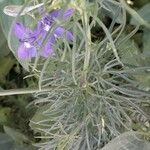
Delphinium ajacis
Larkspur · Doubtful Knight's-spur · Oriental Knight’s Larkspur · Rocket Larkspur · Nemţişor de câmp
Description
Source: leafsnapConsolida ajacis (doubtful knight's spur or rocket larkspur) is an annual flowering plant of the family Ranunculaceae native to Eurasia. It is widespread in other areas, including much of North America, where it is an introduced species. It is frequently grown in gardens as an ornamental for its spikes of blue, pink or white flowers. It may reach a meter in height. Since the aerial parts and seeds of C. ajacis have been found to contain diterpenoid alkaloids (see below), including the highly toxic methyllycaconitine, the plants should be considered as poisonous.
🌳 Besides its decorative use, rocket larkspur may serve as a natural dye owing to its pigments, notably its vivid blue flowers. It is also under study for phytoremediation, helping to indicate and remove soil heavy metals such as lead and cadmium, demonstrating an important role in ecosystem restoration and pollution reduction.
🎭 An open heart, warmth, tenderness, a longing to laugh
Care Guide
💧 Water Every 5-7 days
Water your black knight delphiniums 1 to 2 times per week with about an inch of water to maintain moist soil. You might need to increase the frequency of water in times of hot weather or less rainfall. However, if the top inch of soil feels moist, then you can withhold watering for another day or so.
☀️ Light Full sun
Rocket larkspur flourishes in locations that have unobstructed access to sunlight throughout the day and can endure areas where the sunlight is somewhat moderated. Insufficient sun exposure can potentially inhibit its development, whereas excessive amounts don't notably cause any harm.
🌡️ Temperature 10–35°C
The Rocket larkspur is native to environments where the typical temperatures vary between 68 and 95 °F (20 to 35 ℃). It thrives in warm weather, but can withstand some degree of change. Adjustments to seasonal temperatures may be required for its best possible growth.
💨 Humidity
🪴 Soil 6-7
🌱 Fertilizer
When the Rocket larkspur has most of its flowers fully bloomed, it indicates the appropriate moment to recommence fertilization. Start the fertilizing procedure once every three to four weeks, provided the weather conditions are suitable, when the flowers are flourishing the most. However, when the Rocket larkspur begins to generate fewer new flowers, cease fertilizing as there's no requirement for additional nutrients when the plant is not capable of producing more flowers.
🪴 Pot & Repot
During the repotting process of Rocket larkspur, choose a container that's 1-2 inches (2.5-5 cm) wider in diameter, with a focus on excellent drainage. Opt for a potting blend that provides good drainage and think about adding perlite for additional drainage capacity. Perform the repotting in spring or at the start of summer, drench completely with water, and then place it in a location with less sunlight initially.
✂️ Pruning
During its growing season, your delphinium will benefit from some trimming. Thin back flower stalks once they reach about 3 inches tall to ensure strong growth. When blooming occurs, deadhead the primary flower stalks and leave the smaller side flowers. After blooming, you can cut the stalks to ground level to encourage a second round of blooms late in the season.
🌿 Propagating
🐛 Diseases & pets
☠️ Toxicity
Black knight delphiniums contain a poisonous substance that may cause skin irritation and severe digestive problems. Wear protective gear when handling these plants and keep them away from children and pets.
Characteristics
- Plant Type
- Herb
- Life Cycle
- Annual, Perennial, Biennial
- Genus
- Delphinium
- Family
- Ranunculaceae
- Hardiness Zone
- 6-9
- Mature Height
- 0.61 m to 1.22 m
- Mature Spread
- 30 cm to 61 cm
- Leaf Color
- Green
- Leaf Type
- Deciduous
- Flower Color
- Blue, Purple, Pink, White
- Flower Size
- 5.08 cm
- Bloom Time
- Late spring, Early summer, Mid summer
- Planting Time
- Spring
- Harvest Time
- Mid summer
- Native Area
- Northern hemisphere