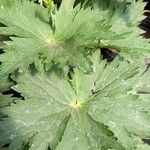
Delphinium elatum
Alpine delphinium · Larkspur · Alpine Larkspur · Candle larkspur · Bee larkspur
Description
Source: leafsnapDelphinium elatum, commonly known as the Alpine Delphinium or Candle Larkspur, is a perennial flowering plant belonging to the Ranunculaceae family. Native to Europe and Asia, it can grow up to 6 feet tall. The plant features tall, spike-like structures adorned with numerous flowers that bloom in shades of blue, purple, pink, or white during the summer months. The leaves of Delphinium elatum are deeply lobed and dark green. Its large, showy flowers have five petals that form an elongated spur at the back. These vibrant blooms attract bees, butterflies, and hummingbirds. Delphinium elatum thrives in full sun but can tolerate partial shade in hot climates. It requires well-drained soil with moderate moisture levels for optimal growth. Historically, the plant has been used in traditional medicine for its anti-inflammatory properties. However, caution is advised, as it contains toxic alkaloids that can be harmful if ingested. In summary, Delphinium elatum is a striking addition to any garden, boasting impressive flowers and an attractive appearance. Nonetheless, it requires careful handling due to its toxicity.
🌳 Aside from its aesthetic and horticultural uses, candle larkspur provides vivid dyes because of its strong pigmentation. Extracts from its flowers are used to make textile dyes that yield a range of blue shades seldom seen in the plant kingdom. It can also serve as a bioindicator of ecosystem health, particularly signaling high aluminum levels in soil, since it tends to prefer less acidic conditions.
🎭 Airiness, amusement, lightheartedness, delight
Care Guide
💧 Water Every 7 days
Candle larkspur, native to mountainous areas, thrives in environments with consistent moisture and cool temperatures. This plant benefits from regular weekly watering, although it can tolerate moderate drought conditions. Usually grown outdoors, it takes advantage of natural rainfall to support its growth and water needs.
When Should I Water My Candle Larkspur?
Watering your candle larkspur properly is vital for its health, growth, and bloom production. Check the soil regularly; if the top inch of soil feels dry, it's time to water your plant. Monitor the plant's leaf color and look for wilting as indicators for watering. Also, stunted growth can suggest improper watering. Be cautious of overwatering and underwatering, as both can negatively affect the plant's health.
How Should I Water My Candle Larkspur?
Candle larkspur requires careful watering to maintain constant moisture without becoming waterlogged. Use a pour method to gently water the base of the plant, avoiding the leaves and flowers. Utilizing a moisture meter can help you monitor the soil's moisture level accurately. Focus your watering on the base of the plant, avoiding the foliage and the top of the soil to prevent root rot.
How Much Water Does Candle Larkspur Really Need?
The actual water needs of candle larkspur vary based on the pot size, plant size, and root depth. Generally, smaller pots require 1-2 liters of water, while larger pots may need 3-4 liters. A well-hydrated candle larkspur should have green foliage and abundant blooms. Avoid overwatering to prevent root rot, and adjust watering based on soil moisture levels rather than a fixed schedule.
What Kind of Water is Best for Candle Larkspur?
Rainwater or filtered water is recommended for candle larkspur, due to its sensitivity to chlorine and fluoride found in tap water. Let tap water sit for a few hours before using it to allow chlorine to evaporate. Candle larkspur prefers room temperature water, as extreme temperatures can shock the plant, hindering its growth.
How Do Candle Larkspur's Watering Needs Change with the Seasons?
Candle larkspur's watering needs vary by season. During active growth in spring, keep the soil evenly moist. In summer, reduce watering slightly. Autumn calls for a gradual decrease in watering as the plant prepares for dormancy, and in winter, water sparingly, allowing the topsoil to dry out between waterings.
☀️ Light Full sun
Candle larkspur performs best when it gets the maximum amount of daylight, though it can tolerate situations where sunlight is partially filtered. In its natural habitat, generous sun exposure is key for ideal growth. Excessive or inadequate sunlight can negatively impact its health and vigor.
What are the sunlight requirements for Candle Larkspur?
Candle Larkspur, or Delphinium elatum, thrives best with maximum sun exposure during the day, benefiting significantly from being in full sun, which is defined as receiving above 6 hours of sunlight daily. It can, however, adapt to partial sun conditions, meaning it can also grow well in areas receiving about 3-6 hours of sunlight. The key is to monitor the sunlight moving through your garden to find the perfect balance of light and shade that ensures the well-being of your plant.
How can I use artificial lighting for Candle Larkspur indoor plants?
Indoor Candle Larkspur plants require adequate lighting to grow optimally. When natural sunlight is insufficient, especially in winter or in less sunny spaces, artificial lights can be a vital solution. LEDs are recommended for their ability to provide specific wavelengths needed by plants. For full sun plants, 30-50W per square foot is needed; partial sun plants require 20-30W per square foot, while full shade plants need 10-20W per square foot. The light source should be placed 12-36 inches above the plant, mimicking natural sunlight as closely as possible, and kept on for 8-12 hours per day to simulate the length of natural daylight.
What symptoms indicate Candle Larkspur is receiving inadequate light?
Symptoms of inadequate lighting in Candle Larkspur include smaller new leaves, leggy or sparse growth, faster leaf drop, slower or halted growth, and lighter-colored new leaves. These signs suggest the plant is struggling due to insufficient sunlight. Additionally, symptoms such as chlorosis, where leaves lose their green color, sunscald, leaf curling as a defense to minimize water loss, wilting from excessive water loss, and leaf scorching due to excessive sunlight, indicate the plant is receiving either too little or too much sunlight.
What solutions can help Candle Larkspur with insufficient sunlight?
For indoor Candle Larkspur, gradually moving the plant to a sunnier location each week, until it receives at least 6 hours of direct sunlight daily, is advised. Utilize a south-facing window and keep curtains open during the day. If moving the plant is not feasible, consider using artificial light, such as a desk or ceiling lamp, for at least 8 hours daily, or invest in professional grow lights. For outdoor plants, similarly, gradually acclimatize them to sunnier spots to avoid sunburn. Note, parts of the plant that suffered from previous insufficient sunlight may not recover, but new growth should be healthy once conditions improve. Additionally, reducing obstructions like pruning trees to let in more sunlight and transplanting smaller plants to sunnier locations can significantly benefit plant health.
🌡️ Temperature 0–32.2°C
Candle larkspur comes from temperate areas where temperatures typically range from 68 to 95 °F (20 to 35 °C). The plant does best in warm conditions. When seasons change, alter its environment to replicate those temperatures for optimal growth.
What is the origin and preferred climate for Candle Larkspur?
Candle larkspur, botanically known as Delphinium elatum, originates from regions that have temperate climates. These climates typically experience temperatures ranging from 68 to 95 °F (20 to 35 °C), conditions under which the plant thrives the best. To ensure optimal growth, it is important to adjust the plant's surroundings to emulate these temperature conditions as seasons change.
How does Candle Larkspur handle cold temperatures?
Despite being highly cold-tolerant, candle larkspur requires certain precautions to ensure its well-being during colder months. Before the first freeze in autumn, it is recommended to water the plant generously so the soil remains moist and enters a frozen state. This preparation helps prevent drought and water scarcity for the plant during winter and early spring. There is no need for additional frost protection measures.
What should I do if my Candle Larkspur experiences temperatures below its growth limit?
If the winter temperature around your candle larkspur drops below its growth limit, you may not notice immediate changes, but there can be a decrease in sprouting or possibly no sprouting at all come spring. To manage this, remove any parts of the plant that have failed to sprout in the spring.
How should I care for my Candle Larkspur if it's exposed to high temperatures?
Candle larkspur struggles in high temperatures, ceasing to grow and becoming more susceptible to rot when the temperature rises above its maximum suitable growth temperature. To tackle this, trim away any sunburned and dried-up parts of the plant. You should also move the plant to a location that provides shade during the midday and afternoon or use a shade cloth. Ensure to water the plant in the morning and evening to keep the soil moist.
💨 Humidity normal (40-60%)
This plant will thrive in moderate humidity, which is probably the level in your home. However, misting it a few times a week can be very beneficial. Make sure the room has good ventilation.
🪴 Soil 6-7
🌱 Fertilizer
The best time to fertilize a Candle larkspur is in early spring, as it comes out of dormancy and begins active growth. Fertilizing supplies essential nutrients needed for healthy development. While Candle larkspur has fairly low fertilizer requirements, feeding it once a year can improve its survival and encourage better, longer-lasting flowers.
Why should I add fertilizer to my Candle larkspur?
Fertilization is important for the Candle larkspur because it provides essential nutrients for the plant's growth. While the fertilization needs of a Candle larkspur are generally low, annual fertilization can greatly benefit the plant. It not only helps the plant survive but also promotes the development of longer-lasting, more beautiful flowers. Therefore, those who want their Candle larkspur to thrive should consider regular fertilization.
When should I fertilize my Candle larkspur?
To ensure optimal growth for your Candle larkspur, it is recommended to fertilize it in late winter to early spring when it transitions from dormancy to active growth. This timing benefits the plant and promotes healthy development for the season ahead. While early spring is the best time to fertilize, it is also acceptable to feed the plant during the fall. However, it is not advisable to fertilize during summer and winter.
When is the best time to not add fertilizer to my Candle larkspur?
To avoid overfertilization and its complications, it is recommended to only fertilize your Candle larkspur during the late winter and early spring. One annual feeding during this time is enough for this plant, except if you missed fertilizing in spring, then you can fertilize in fall. During the growing season, refraining from fertilizing is advised, as well as during the winter when the plant is dormant and not producing new growth.
Which fertilizer is best for my Candle larkspur?
When choosing a fertilizer for Candle larkspur, any general-purpose fertilizer with balanced nutrients will work well. However, some nutrient blends are particularly beneficial. Many gardeners believe that higher levels of phosphorus lead to stronger roots and better flowers, making a phosphorus-rich fertilizer the best choice for a flowering plant like Candle larkspur. Whether in granular or liquid form, the key is to ensure that the fertilizer has abundant nutrients. In addition to manufactured fertilizers, you can also improve the soil for your Candle larkspur using organic methods such as compost, manure, and similar materials. These can greatly contribute to creating a healthy growing environment for your Candle larkspur.
How should I feed my Candle larkspur?
To fertilize a Candle larkspur, the typical method is to use granular or pellet fertilizer applied to the soil surrounding the plant. It is important to time the fertilization when the plant is transitioning from its dormant growth phase to active growth, usually in early spring. Wait until shoots begin to emerge from the soil before applying the fertilizer. Alternatively, some people prefer using liquid fertilizer, which should be diluted with water before application. Regardless of the type of fertilizer used, it is advisable to moisten the soil before, during, and after the application process.
🪴 Pot & Repot 2-3 years
When repotting Candle larkspur, select a pot 1–2 inches (2.5–5.1 cm) larger that provides ample drainage. Use a well-draining potting mix. Repot in spring or fall, making sure the root ball sits slightly lower than the rim of the flower pot. Water thoroughly after repotting and place it in a warm spot with indirect sunlight.
✂️ Pruning
Candle larkspur thrives when it is regularly pruned, especially from early to late spring. Focus on removing any dead or weak stems, and cut off spent blooms to promote vigorous growth and continuous flowering. Pruning not only improves air circulation but also helps prevent mildew and directs energy into root development, which supports the plant's overall health and vitality.
🌿 Propagating
🐛 Diseases & pets
☠️ Toxicity
Characteristics
- Plant Type
- Herb
- Life Cycle
- Perennial, Annual
- Genus
- Delphinium
- Family
- Ranunculaceae
- Hardiness Zone
- 3-7
- Mature Height
- 0.61 m to 1.22 m
- Mature Spread
- 30 cm
- Leaf Color
- Green, Blue
- Leaf Type
- Deciduous
- Flower Color
- Blue, White, Pink, Purple
- Flower Size
- 2.54 cm to 5.08 cm
- Bloom Time
- Early summer, Mid summer
- Planting Time
- Spring
- Harvest Time
- Mid summer