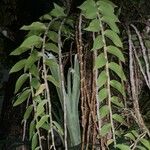
Dendrobium aphyllum
Hooded dendrobium · Hooded Orchid
Description
Source: leafsnapDendrobium aphyllum, commonly known as the hooded orchid or 兜唇石斛 (dou chun shi hu) is a species of orchid native to Bangladesh, southern China, the eastern Himalayas, and Indochina.
Care Guide
💧 Water Once a week
The hooded orchid thrives in humid environments similar to tropical rainforests, striking a balance between drought tolerance and a preference for humidity. To maintain this balance, it needs to be watered weekly. Unlike deciduous plants, the evergreen hooded orchid requires watering even during its dormant period.
What should I do if I give my Hooded orchid too much water or too little water?
The Hooded orchid can experience problems with both overwatering and underwatering. Overwatering can lead to limp and wrinkled leaves, yellowing or decay, and a general failure to thrive. Sometimes when the leaves look limp and shriveled, owners assume it needs more water and continue to add more, which only worsens the issue. To identify overwatering, check the roots - healthy ones should be silvery green, green, or white and feel firm. Overwatered roots will be mushy, limp, and brown or black. To rescue an overwatered orchid, remove any rotted roots and replant in fresh growing medium. It's important to avoid overwatering because root rot may be irreversible. Underwatering symptoms in Hooded orchid are similar to those of overwatering. Check the moisture level in the growing medium and adjust watering frequency accordingly. Again, the roots provide valuable information. Underwatered roots will be crisp, brown, and brittle, while healthy roots are pliable and green. Reviving an underwatered orchid is relatively easy if there are still healthy roots. Trim off any dried up or dead roots, repot the plant, and water thoroughly. Within a week or two, the leaves should start to firm up and look healthy. If any leaves are too damaged, they can be removed to encourage new growth.
How much water does my Hooded orchid need?
Regardless of the medium you use, it is important to water your Hooded orchid when the mix is mostly but not completely dry. The frequency of watering can differ depending on the environmental conditions. In summer, watering should generally be done once or twice a week, while in winter it can be as infrequent as once every 2 weeks.
How should I water a Hooded orchid?
The Hooded orchid is a unique plant that doesn't grow in soil like most plants. To ensure its growth, it is important to carefully choose the growing medium. Regardless of the medium chosen, it is essential for the container to have drainage holes. Specifically designed Hooded orchid pots provide good ventilation with a chunky potting mix. These pots are tall and narrow, allowing air circulation around the roots. One popular medium for growing Hooded orchids is bark, sourced from fir trees. However, using bark requires more frequent watering as it tends to dry out quickly. Another common planting medium is sphagnum moss, which is lightweight and inexpensive. However, moss can hold excessive water next to the roots, leading to root rot. If using moss, watering should be done judiciously. To prevent splashing water on the leaves, stem, and flowers, it is recommended to water the Hooded orchid from below. This can be done by placing the pot in a container of water for 10-15 minutes, ensuring that the surface of the moss is wet. Drain the excess water thoroughly before returning the orchid to its normal location.
☀️ Light Partial sun
Hooded orchid naturally occurs in habitats like forest understories or rocky areas, where it receives natural shade. It prefers partial sun but can adjust to full sun or full shade, showing its versatile, hardy nature.
What are the sunlight requirements for the Hooded orchid?
The Hooded orchid thrives in partial sun, requiring about 3-6 hours of sunlight daily. However, it's crucial to observe the movement of sunlight in your garden to find spots that offer a balance of light and shade, ensuring the plant's happiness. This species can adapt to various lighting conditions, including full shade, thanks to its native environments like forest understories or rocky areas. When natural sunlight is insufficient, especially for indoor plants, artificial lighting can be a vital solution. LED lights are recommended, with full sun plants needing 30-50W/sq ft, partial sun plants 20-30W/sq ft, and full shade plants 10-20W/sq ft of light. The artificial light source should be placed 12-36 inches above the plant, mimicking natural sunlight as closely as possible, with most plants requiring 8-12 hours of light per day.
What are the signs of insufficient light for Hooded orchids?
Hooded orchids may exhibit several symptoms when they do not receive adequate light. These include smaller new leaves, leggy or sparse growth, faster leaf drop, slower or no new growth, lighter-colored new leaves, chlorosis (yellowing leaves due to chlorophyll breakdown), sunscald (damaged leaves/stems from intense light), leaf curling (to reduce sunlight exposure), wilting (from loss of water through transpiration), and leaf scorching (brown, dry edges or patches on leaves due to excessive sunlight). These symptoms indicate the plant's struggle to adapt to insufficient lighting conditions.
How can you help Hooded orchids adapt to light conditions?
To optimize a Hooded orchid's growth and adaptation to light conditions, gradually transition the plant to receive its ideal sunlight, whether it's moving indoor plants to sunnier spots or using artificial light sources for at least 8 hours daily. For outdoor plants, avoid sudden changes in light intensity to prevent sunburn. If natural sunlight is blocked, consider reducing obstructions or transplanting to better locations. Unfortunately, parts of the plant damaged by insufficient light might not recover, but proper light exposure will ensure new growth is healthy.
🌡️ Temperature 20–37.8°C
The hooded orchid does best in warm conditions. It prefers moderately high temperatures without extreme heat and humidity. Sunlight helps warm the plant and encourages it to bloom. Still, extended direct sun in summer can cause sunburn, so the amount of light should be managed during that season. The plant generally handles cold poorly, so it needs sufficient protection and warmer conditions in winter to avoid freezing.
What is the common name of Dendrobium aphyllum?
The common name of Dendrobium aphyllum is Hooded orchid.
What is the botanical name of the Hooded orchid?
The botanical name of the Hooded orchid is Dendrobium aphyllum.
💨 Humidity
🪴 Soil 5-6
🌱 Fertilizer
Appropriate fertilization is essential for the Hooded orchid's health and appearance. Fertilize the Hooded orchid in summer, applying fertilizer once each month throughout the season. Nutrients power growth and preserve the plant's components. Fertilizing improves the Hooded orchid's floral display, ensuring the best blooms.
🪴 Pot & Repot
When repotting a Hooded orchid, select a pot that is only slightly larger and has good drainage, preferably a clear orchid pot. Use an orchid-specific, well-draining mix that contains bark or moss. Gently clean the roots and trim any that are dead or rotting. Repot after flowering, usually in spring or fall, water thoroughly, and place the plant in bright, indirect light. After repotting, avoid disturbing the roots.
✂️ Pruning
The hooded orchid benefits from pruning between early and late spring. During this time, you should remove any dead or diseased stems, but take care to avoid making drastic cuts to the canes. This approach encourages healthy growth, improves air circulation, reduces pests, and ensures better light penetration, all of which support the orchid's natural growth cycle.
🌿 Propagating
🐛 Diseases & pets
☠️ Toxicity
Characteristics
- Plant Type
- Herb
- Life Cycle
- Perennial
- Genus
- Dendrobium
- Family
- Orchidaceae
- Hardiness Zone
- 10-11
- Mature Height
- 61 cm to 91 cm
- Mature Spread
- 10 cm to 15 cm
- Leaf Color
- Green
- Leaf Type
- Evergreen
- Flower Color
- Lavender, Pink, White
- Flower Size
- 4.06 cm to 5.08 cm
- Bloom Time
- Spring, Summer, Early fall, Mid fall
- Planting Time
- Spring, Summer, Autumn
- Harvest Time
- Late spring, Summer, Fall, Early winter
- Native Area
- Nepal, India, Malaysia, Cambodia, Vietnam, Myanmar, Philippines, Bhutan, Bangladesh, Laos, Thailand