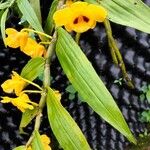
Dendrobium chrysotoxum
Fried-egg Orchid · Orchid · ꯈꯣꯉꯨꯃꯦꯂꯩ
Description
Source: leafsnapDendrobium chrysotoxum is a striking orchid species native to Southeast Asia, specifically Thailand, Laos, Vietnam, and Cambodia. Belonging to the Orchidaceae family, it is popularly known as the Golden Toxique Dendrobium due to its vibrant golden-yellow flowers. The plant typically reaches up to 30 cm in height and features thin stems with small, alternately arranged leaves. The flowers of Dendrobium chrysotoxum are large and showy, with a diameter of up to 8 cm. They have a distinctive shape with broad petals that curve upwards towards their tips, creating an almost circular arrangement around the central column. The bright yellow petals are adorned with red spots at their base, while the lip or labellum boasts an orange-yellow hue. Dendrobium chrysotoxum thrives in warm temperatures ranging from 20-30°C during the daytime, with nighttime temperatures not falling below 15°C. It requires bright but indirect sunlight for optimal growth, although it can also adapt to partial shade. This orchid species can be cultivated as either an epiphyte or lithophyte on rocks or trees. Using well-draining potting mixtures, such as bark chips or sphagnum moss mixed with perlite, ensures better drainage. Regular watering during its growing season is essential, but the plant should be allowed to dry out between watering sessions. Overall, Dendrobium chrysotoxum is a stunning orchid species that is a wonderful addition to any collection, thanks to its beautiful golden-yellow flowers and ease of cultivation under suitable conditions.
Care Guide
💧 Water Every 7 days
The Golden-bow Dendrobium flourishes in environments with high humidity, similar to its natural tropical rainforest habitat. To keep the plant healthy, it should be watered regularly, ideally once a week. As an evergreen plant, the Golden-bow Dendrobium continues to absorb moisture even during dormancy. This makes it important to maintain a consistent watering schedule throughout the year.
☀️ Light Partial sun
The Golden-bow dendrobium originates from habitats like forest understories or rocky areas, where it grows in natural shade. It prefers partial sun but can tolerate full sun or full shade, illustrating its adaptable, hardy nature.
What are the sunlight requirements for Golden-bow dendrobium?
The Golden-bow dendrobium, or Dendrobium chrysotoxum, thrives under specific sunlight conditions. For areas receiving less than 3 hours of sunlight, you'll want to provide 'Full shade' to these plants. If your garden spot gets about 3-6 hours of sunlight, then it's considered 'Partial sun' and is also suitable for these plants. It's crucial to observe the way sunlight moves through your garden throughout the day. Picking the right location that offers an ideal balance between light and shade will significantly contribute to the health and happiness of your Golden-bow dendrobium.
🌡️ Temperature 20–37.8°C
Golden-bow dendrobium does best in warm conditions. It prefers moderately high temperatures but not overly hot, humid ones. Sunlight helps warm the plant and encourages flowering. However, long periods of direct sun in summer can cause sunburn, so its sunlight exposure should be limited during that season. The plant is generally not tolerant of cold, so it needs adequate protection and warmer temperatures in winter to prevent freezing.
What is the Golden-bow dendrobium?
The Golden-bow dendrobium, known botanically as Dendrobium chrysotoxum, is a species of orchid. Unfortunately, the provided information does not include specifics about its essentials or symptoms related to its care or environment. For detailed care instructions or information on how to maintain the health of this orchid species, further research or consultation with a botanist or orchid specialist is recommended.
💨 Humidity
🪴 Soil 5-6
🌱 Fertilizer
Golden-bow dendrobium needs the most fertilizer during its active growth period, which takes place mainly in spring, summer, and early fall. Fertilization provides essential nutrients the soil may lack, encouraging healthy root and stem development and sustaining the attractive foliage, a key characteristic of this plant.
🪴 Pot & Repot
When repotting a Golden-bow dendrobium, pick a slightly larger pot with good drainage, ideally a clear orchid pot. Use an orchid-specific, well-draining mix that includes bark or moss. Carefully clean the roots and remove any that are dead or rotting. Repot after flowering, typically in spring or fall. Water thoroughly and place the plant in bright, indirect light. Avoid disturbing the roots once repotted.
✂️ Pruning
The golden-bow dendrobium, known for its beautiful golden-yellow flowers, requires pruning from early to late spring. During this time, remove any dead or weak stems and trim back old flower spikes after they have bloomed. This approach encourages new growth, promotes vigor, improves the plant's structure, and enhances airflow and sunlight exposure.
🌿 Propagating
🐛 Diseases & pets
☠️ Toxicity
Characteristics
- Plant Type
- Herb
- Life Cycle
- Perennial
- Genus
- Dendrobium
- Family
- Orchidaceae
- Hardiness Zone
- 10-12
- Mature Height
- 30 cm to 61 cm
- Mature Spread
- 30 cm to 49 cm
- Leaf Color
- Light Green
- Leaf Type
- Evergreen
- Flower Color
- Yellow, Gold
- Flower Size
- 4.06 cm to 5.08 cm
- Bloom Time
- Mid spring, Late spring, Early summer
- Planting Time
- Spring, Summer
- Harvest Time
- Summer
- Native Area
- India, Cambodia, Vietnam, Myanmar, Bangladesh, Laos, Thailand, China