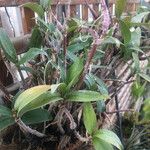
Dendrobium kingianum
Pink rock orchid
Description
Source: leafsnapDendrobium kingianum, commonly known as the Pink Rock Orchid, is a species of orchid native to Australia. This small to medium-sized epiphytic plant typically grows on rocks or trees in dry forests and woodlands. It features slender, elongated leaves that can reach up to 30 cm in length and 1 cm in width. The plant produces small pink or purple flowers with white centers, which appear in clusters of up to 20 blooms per stem. The Pink Rock Orchid is easy to grow and thrives in bright but indirect light. It requires moderate watering during the growing season and prefers well-draining soil with good air circulation around its roots. This species can be propagated by division or stem cuttings. Dendrobium kingianum is widely cultivated for its attractive flowers, which bloom from late winter to spring in Australia (June-August). Additionally, it is used for hybridization with other Dendrobium species due to its hardiness and adaptability. In summary, Dendrobium kingianum is an appealing orchid species suitable for both novice and experienced gardeners because of its low maintenance requirements.
💡 Dendrobium kingianum is a native Australian orchid that naturally grows on exposed cliffs along the shores between Queensland and New South Wales. Its striking beauty and remarkable hardiness, developed through adaptation to harsh conditions such as direct sunlight, extreme heat, and limited water, have made it a popular species among orchid enthusiasts worldwide.
Care Guide
💧 Water Every 7 days
The Pink Rock Orchid, native to Australia's rocky regions, thrives in environments with good air circulation and requires minimal watering, about once a week. As a drought-tolerant, epiphytic orchid, it absorbs moisture from the air. It prefers bright light and intermediate temperatures, making it ideal for indoor growth to prevent root rot.
What do I do if I give my Pink rock orchid too much or too little water?
When owners of Pink rock orchids see limp and shriveled leaves, they may assume the plant needs more water and keep adding more. However, this actually worsens the problem. To determine what's happening with the roots, it's important to look beyond the leaves. Healthy roots are silvery green, green, or white and feel firm to the touch. Overwatered roots will appear mushy, limp, and brown or black. If a Pink rock orchid has been overwatered, rescue it by cutting off any rotted roots and repotting them into fresh growing medium. It's best to avoid overwatering altogether because root rot may be irreversible. Be conservative with watering to prevent this issue. The initial symptoms of underwatering and overwatering in Pink rock orchids are similar. Check the growing medium's moisture level with your finger or a moisture meter. You may need to increase the frequency of watering. Again, examining the roots is key. Underwatered roots will be crisp, brown, and brittle, while healthy roots are pliable and green. If the plant still has some healthy roots, you can easily revive a thirsty Pink rock orchid. Trim off any dried up or dead root pieces and repot the plant, then water thoroughly. Within a week or two, the leaves should regain their firmness and health. If some leaves are too damaged to revive, remove them to make space for new growth.
How often do I need to water my Pink rock orchid?
To keep your Pink rock orchid healthy, water it when the potting mix is mostly dry, but not completely. The frequency may change depending on the environment, but typically it should be watered once or twice a week during summer and as little as once every 2 weeks during winter.
How do I give water to a Pink rock orchid?
Pink rock orchids are epithet plants, meaning they don't grow in soil like most plants. To ensure a happy and healthy Pink rock orchid, it's important to choose the right growing medium. Regardless of the medium used, the container should have adequate drainage holes. Pink rock orchid pots are ideal because they hold a chunky potting mix with good ventilation and have a tall and narrow shape that allows air circulation around the roots. Bark is a popular potting medium for Pink rock orchids, as it drains well and mimics their natural growing conditions. However, it does require more frequent watering as it dries out quickly. Sphagnum moss is another commonly used medium, especially for commercially grown specimens, as it is lightweight and reduces the need for frequent watering. However, it's important to be cautious with watering when using moss, as it can hold too much water and lead to root rot. If your Pink rock orchid is in sphagnum moss, it's best to water judiciously to avoid root rot. Watering from below is recommended to prevent splashing water on the leaves, stem, and flowers. Simply place the pot in a container of water and let the roots soak up moisture for 10-15 minutes, making sure the surface of the moss is wet. Afterward, ensure thorough drainage before returning the orchid to its normal location, as these plants dislike sitting in water.
☀️ Light Partial sun
The pink rock orchid grows best with a proper balance of shade and sunlight. It can tolerate full sun but does better with gentler light. Native to naturally shaded habitats, this plant's health can suffer if it receives too much or too little sun.
What are the sunlight requirements for Pink Rock Orchid?
Pink Rock Orchid, scientifically known as Dendrobium kingianum, thrives under an optimal balance of shade and sun exposure, favoring about 3-6 hours of sunlight daily (partial sun) but can tolerate full sun (above 6 hours of sunlight) especially in cooler weather. It's crucial to observe how sunlight moves through your garden to ensure the spots you choose offer a balanced environment of light and shade, conducive to the plant's health. In its natural habitat, which has natural shade, Pink Rock Orchid's well-being can suffer from either excessive or insufficient sun exposure.
Can Pink Rock Orchid be grown indoors, and how can artificial lighting be used?
Yes, Pink Rock Orchid can be cultivated indoors, especially in conditions where natural sunlight is inadequate, like during winter or in less sunlit spaces. Artificial lighting can significantly promote optimal growth. Indoor plants thrive under LED lights tailored to specific wavelength needs, with full sun plants requiring 30-50W/sq ft, partial sun plants needing 20-30W/sq ft, and full shade plants necessitating 10-20W/sq ft of light. The light source should be placed 12-36 inches above the plant, simulating natural sunlight, and kept on for about 8-12 hours daily to mimic natural daylight hours, promoting healthier plant development.
What symptoms indicate a Pink Rock Orchid is receiving inappropriate light?
Symptoms of inappropriate lighting for a Pink Rock Orchid include smaller new leaves, leggy or sparse growth, faster leaf drop, slower or halted growth, paler or irregularly colored new leaves, chlorosis (yellowing leaves due to excessive sunlight), sunscald on leaves or stems from intense light exposure, leaf curling as a defense against extreme sunlight, wilting from overexposure leading to hydration issues, and leaf scorching characterized by brown, crispy edges on leaves due to excessive light. These signs indicate a plant's struggle with either too much or too little sunlight.
What solutions can help improve light conditions for Pink Rock Orchid indoors and outdoors?
To optimize light conditions for Pink Rock Orchid, a gradual increase in sunlight exposure is recommended. Indoors, shift the plant to sunnier spots weekly until it gets 3-6 hours of sunlight, or use artificial lights such as desk or ceiling lamps for at least 8 hours daily, or invest in grow lights for sufficient light. Outdoors, gradually acclimate the plant to sunlight by relocating it to a sunnier spot each week, avoiding drastic changes to prevent sunburn. For ground plants, minimize obstructions by pruning trees that block sunlight or transplant smaller plants during their dormant period to a sunnier location with good drainage. Remember, parts of the plant affected by prior insufficient light may not recover, but new growth after improving light conditions should be healthy.
🌡️ Temperature 20–41.1°C
The pink rock orchid is native to regions with temperatures ranging from 68 to 106 °F (20 to 41 ℃). It prefers warmer conditions. In colder climates, seasonal adjustments may be necessary to maintain optimal temperature.
What is the native climate for Pink rock orchid?
Pink rock orchid, botanically known as Dendrobium kingianum, thrives in native climates where temperatures range from 68 to 106 °F (20 to 41 °C). This tropical plant prefers warmer environments and requires seasonal adjustments in colder climates to maintain an optimal temperature range.
How should Pink rock orchid be cared for in winter?
During the winter months, if the temperature drops below 5°C, it is recommended to bring the Pink rock orchid indoors to ensure its survival. Inside, it's beneficial to maintain temperatures above 20°C and position the plant near a south-facing window for ample sunlight. Regular misting or the use of a humidifier helps in maintaining the necessary humidity levels. For orchids needing to overwinter outdoors, make sure they are sheltered and receive sunlight, using protective measures like a temporary greenhouse or wrapping with plastic film or fabric during colder temperatures.
What are the symptoms and solutions for Pink rock orchid exposed to low temperatures?
Pink rock orchid is not tolerant of low temperatures and exhibits its best growth above 20°C. When winter temperatures fall below 5°C, and especially below 1°C, the plant's leaves may show signs of extensive water-soaked necrosis, wilting, and drooping. The solution involves trimming the frostbitten areas and bringing the plant indoors to a warmer environment. It should be placed near a south-facing window to ensure it receives ample sunlight. It's also important to avoid placing the plant near heaters or air conditioning vents to prevent excessive dryness.
How can high temperatures affect Pink rock orchid and what are the remedies?
Pink rock orchid should ideally be kept below 41°C during the summer. Temperatures above 45°C may halt the plant's growth and cause the leaves to gradually wilt. Additionally, it becomes more susceptible to root rot and can suffer from sunburn if exposed to direct sunlight for too long. To mitigate these issues, trim away sunburned and dried parts of the plant and relocate it to a shaded area, particularly away from the harsh midday and afternoon sun. Water the plant during the cooler hours of the morning and evening to maintain moisture.
💨 Humidity
🪴 Soil 5-6
🌱 Fertilizer
Proper fertilization is essential for the Pink rock orchid's health and appearance. Feed the Pink rock orchid during summer, applying fertilizer monthly throughout the season. Nutrients provide the energy for growth and upkeep of the plant's parts. Fertilizing improves the Pink rock orchid's flower display, ensuring the best blooms.
Why should I put fertilizer on my Pink rock orchid?
Fertilizer and soil nutrients are like fuel for your Pink rock orchid, helping it grow healthily. Plants rely on nutrients in the soil to develop new plant material and maintain their existing components. Fertilization is especially crucial for the Pink rock orchid as it enhances the display of its flowers. Since the flowers are the main attraction of this plant, gardeners aim to ensure they appear in their best form. Fertilization is a reliable method to help your Pink rock orchid produce the most beautiful blooms.
When should I feed my Pink rock orchid?
The Pink rock orchid goes through two main phases each year: dormant and active growth. The dormant phase occurs during winter, when minimal new growth happens. The active growth phase happens in spring and fall, and this is when your Pink rock orchid needs fertilization the most. It is recommended to start fertilizing in spring, repeating the feeding once a month throughout the rest of spring and most of summer. As fall approaches, you can start reducing the fertilization rate.
When is it not a good idea to fertilize my Pink rock orchid?
To support Pink rock orchid growth without causing root burn, it is important to adjust the fertilization schedule according to the plant's growth cycle. During the spring and summer, when the plant is actively growing, extra nutrients are needed. However, during the fall and winter when the plant is in its dormancy stage, fertilization should be stopped.
What kind of fertilizer does my Pink rock orchid require?
The best fertilizer for a Pink rock orchid is one that contains a balanced mix of the three main plant nutrients, with slightly more phosphorus. Another option is to add organic materials such as compost, worm castings, and manure to improve the soil for your Pink rock orchid. Fertilizers can come in various forms, and most of them will work well for your orchid. However, the most effective fertilizers for Pink rock orchids are typically in liquid or powdered form. Regardless of the form you choose, it's important to dilute the fertilizer and apply it while watering your orchid.
How can I give my Pink rock orchid nutrients?
Before learning how to apply fertilizer to your Pink rock orchid, it is important to find a suitable fertilizer and determine the ideal fertilization schedule. To feed your orchid, the most reliable method is to mix liquid fertilizer with water. Different fertilizers may have specific instructions on how to feed your plants, so it is best to follow the manufacturer's guidance. These instructions should also include information on diluting the fertilizer to prevent overfertilization. Mixing the fertilizer with water is a simple process, and once done, you can pour the mixture into the soil where your orchid thrives.
🪴 Pot & Repot Every 12 months
✂️ Pruning
The Pink Rock Orchid is a small epiphytic orchid that thrives with proper care, including pruning after each flowering period. The best time to prune is between late winter and early spring. Be sure to remove dead pseudobulbs and spent inflorescences, as this encourages new growth. Always use sterilized tools to reduce the risk of disease, ensuring both optimal flowering and a pleasing appearance.
🌿 Propagating
🐛 Diseases & pets
☠️ Toxicity
Characteristics
- Plant Type
- Herb
- Life Cycle
- Perennial
- Genus
- Dendrobium
- Family
- Orchidaceae
- Hardiness Zone
- 10-13
- Mature Height
- 8 cm to 30 cm
- Mature Spread
- 25 cm
- Leaf Color
- Green
- Leaf Type
- Evergreen
- Flower Color
- Pink, Lavender, White
- Flower Size
- 2.03 cm
- Bloom Time
- Spring
- Planting Time
- Autumn
- Harvest Time
- Early summer, Mid summer
- Native Area
- Australia