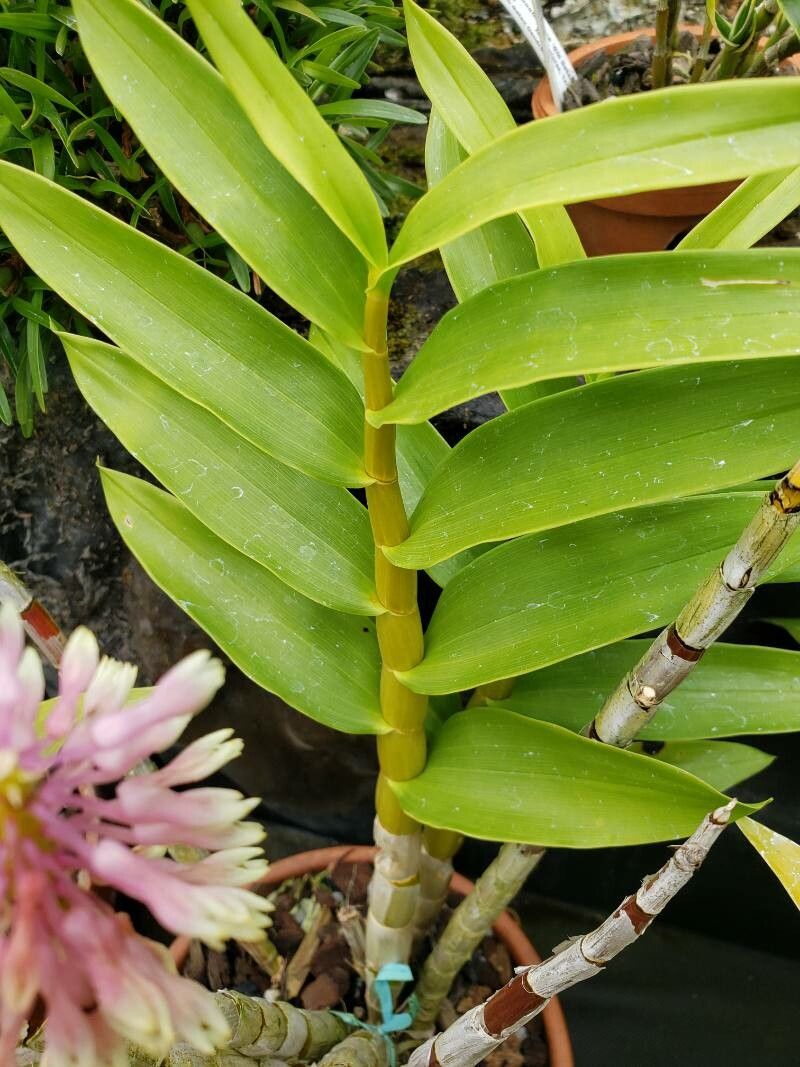
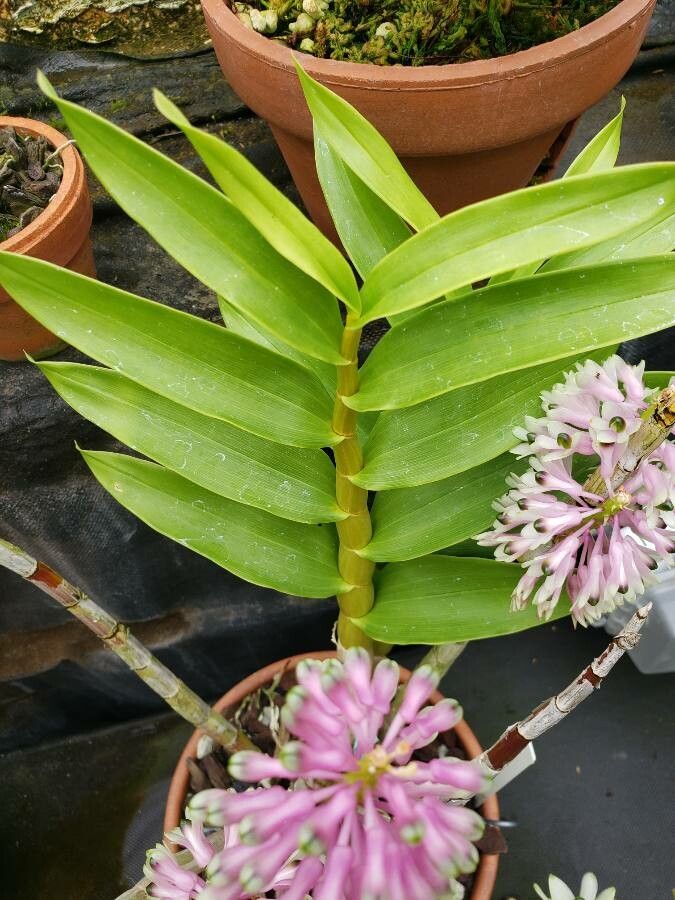
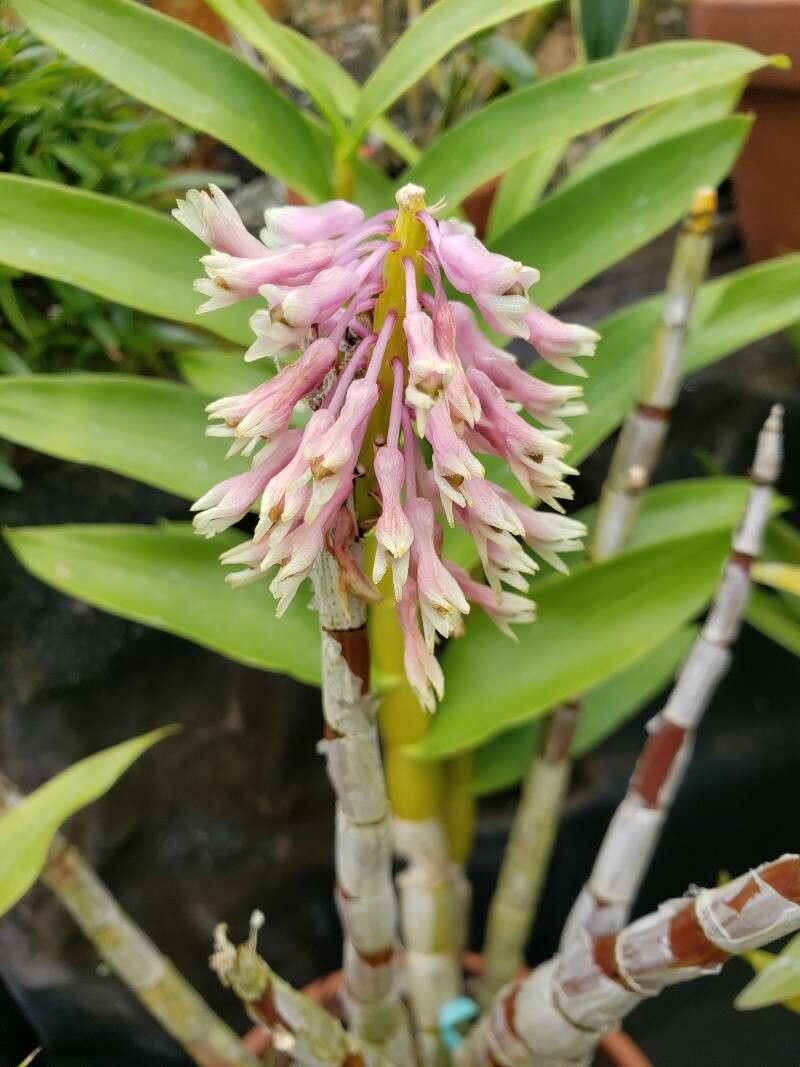
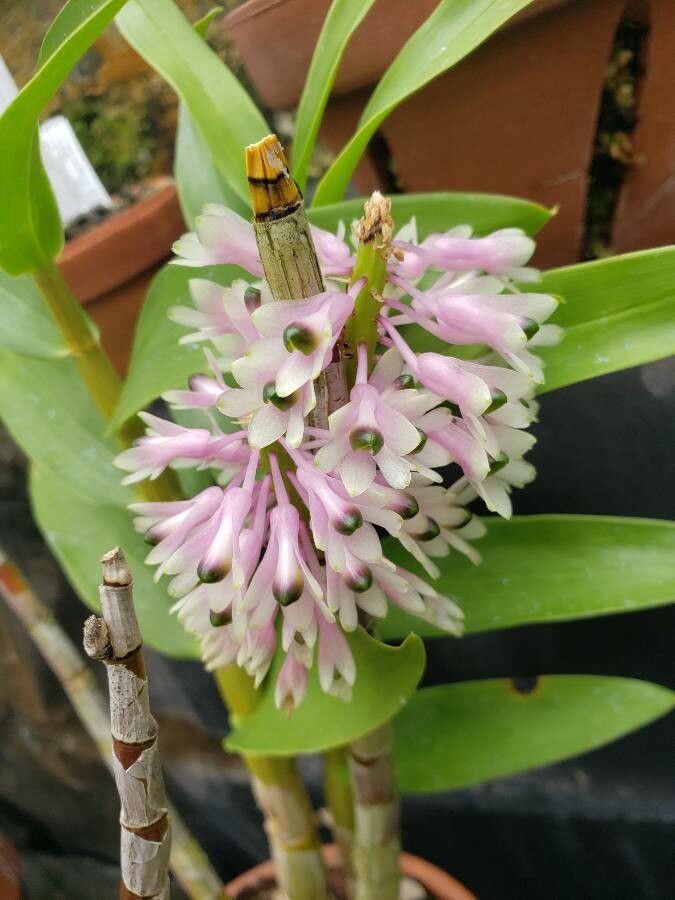
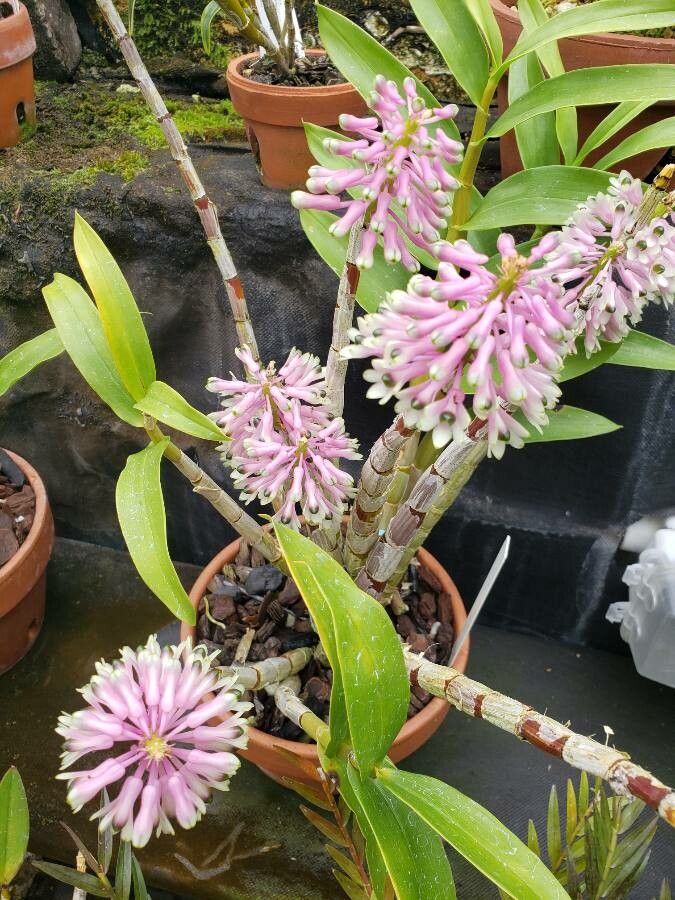
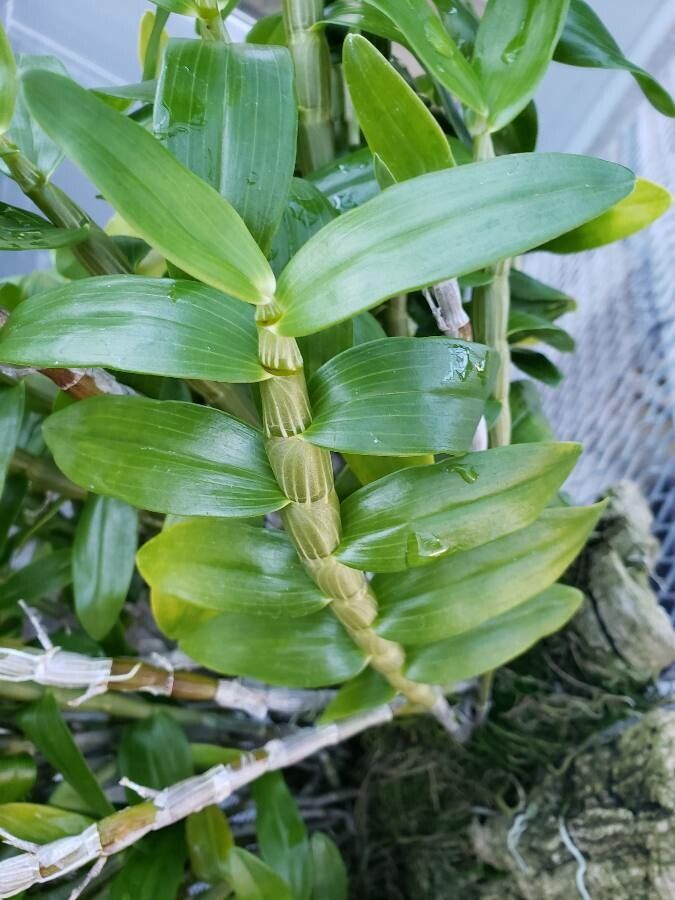
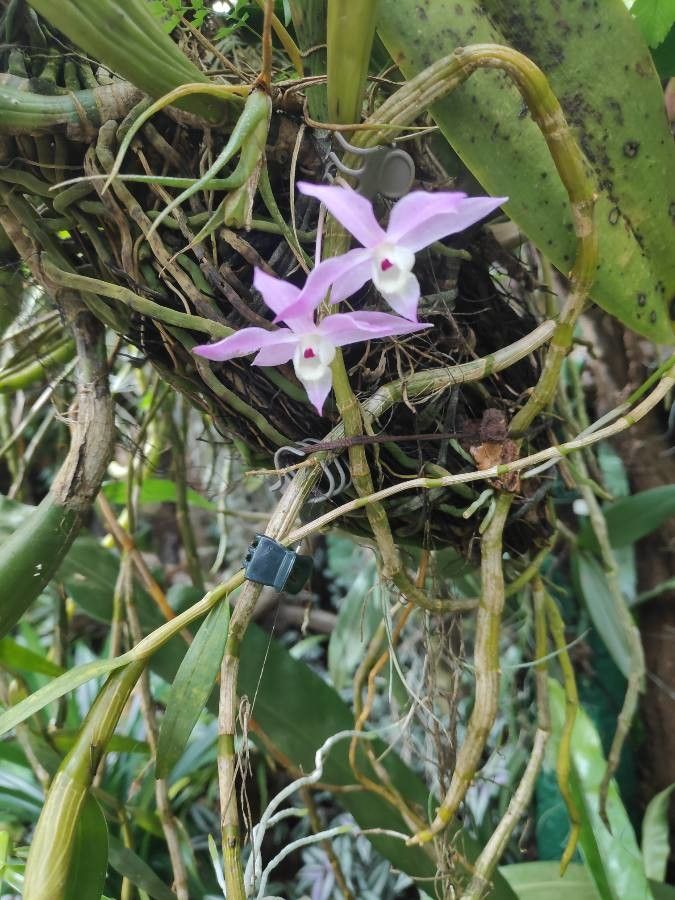
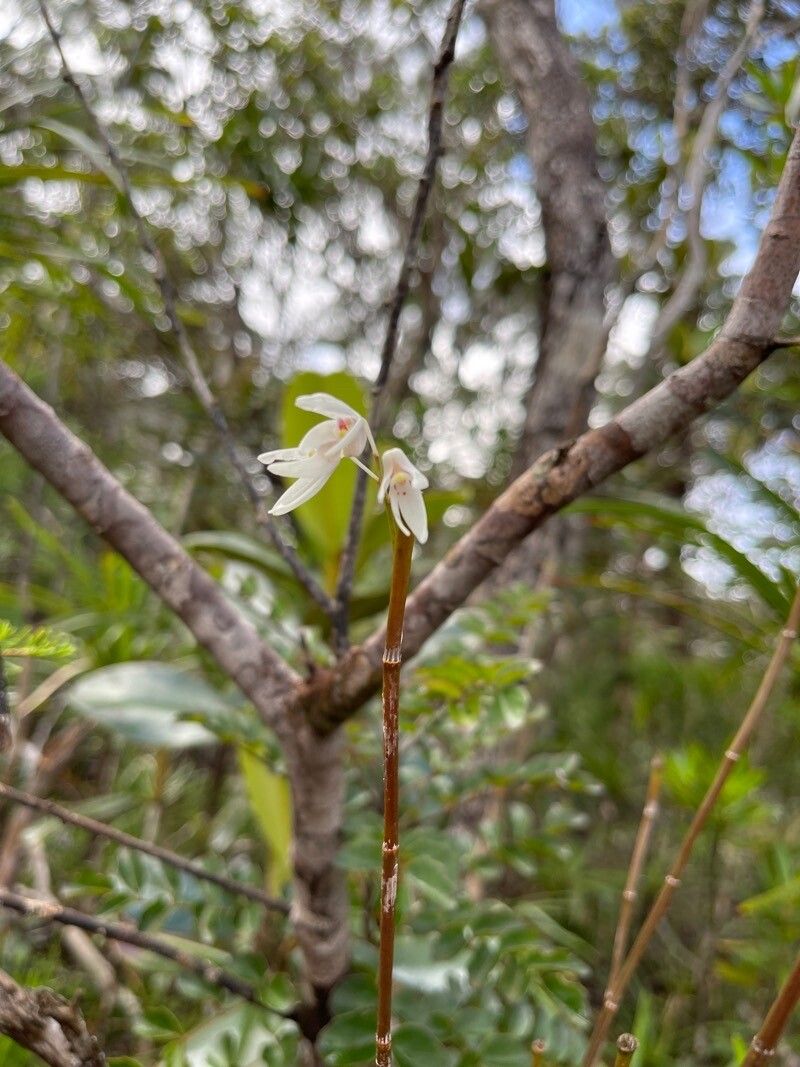
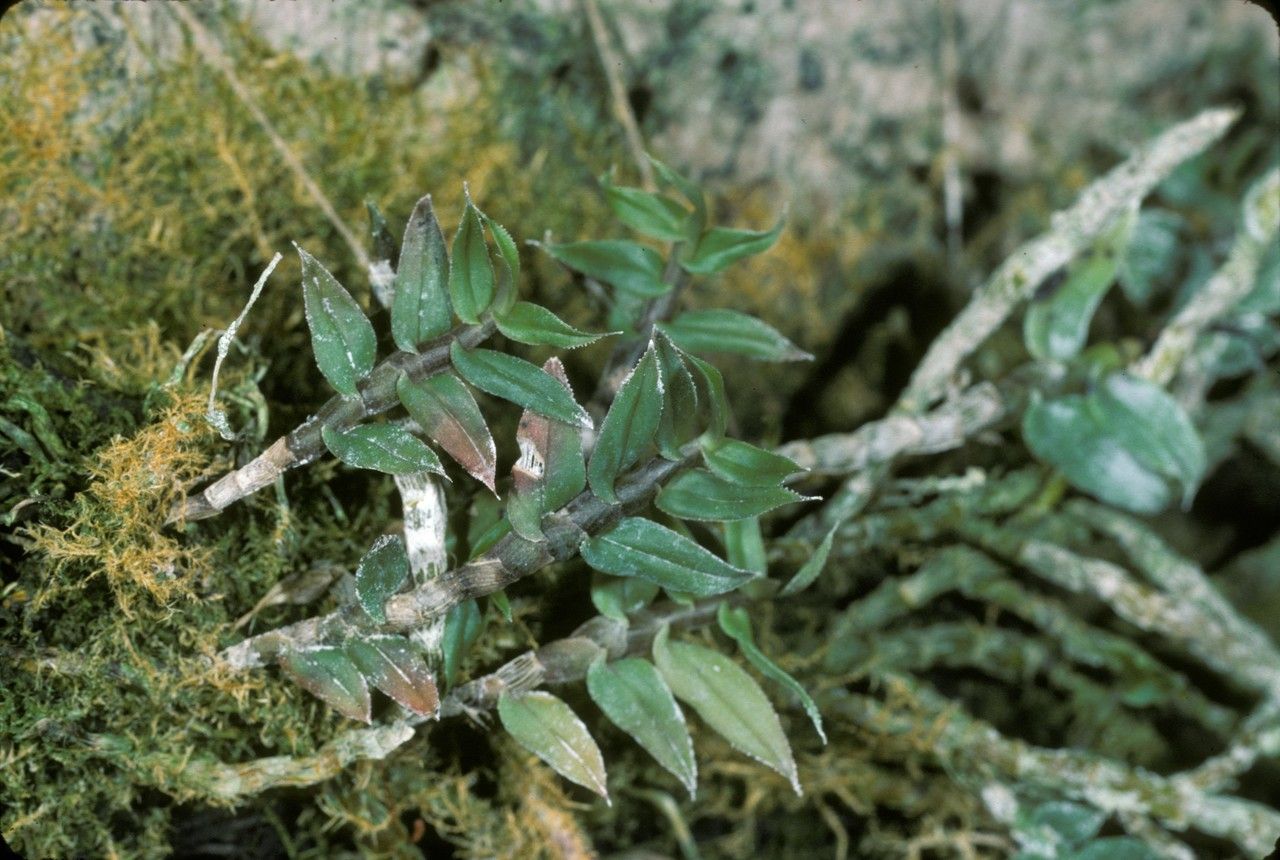
Dendrobium smillieae, commonly known as the bottlebrush orchid, is an epiphytic or lithophytic orchid with large, spongy pseudobulbs, thin, bright green leaves which are shed after their first year and crowded flowers in a bottlebrush-like arrangement. The flowers are white, to cream-coloured or pink and the labellum has a shiny, dark green tip. This orchid species is found in some of the Torres Strait Islands, and through Cape York Peninsula to Townsville, Queensland. It is also found in New Guinea and eastern Indonesia (Sulawesi and Maluku).
The Bottlebrush orchid is generally resistant to disease and has relatively few insect pests. Its care is considered difficult because it needs a high-humidity yet well-ventilated environment with few harmful pathogens. Excessive watering can cause root rot. Although anyone can grow the Bottlebrush orchid, maintaining its health and getting it to bloom again requires more growing experience.
How to keep Dendrobium Smillieae.
Light
Bottlebrush orchid is native to habitats like forest understories and rocky areas, where it grows in natural shade. It prefers partial sun but can adjust to full sun or full shade, reflecting its versatility and hardiness.
Temperature
Bottlebrush orchid does well in warm settings. It prefers moderately high temperatures rather than extreme heat and humidity. Sunlight warms the plant and encourages it to bloom. However, extended exposure to direct sun in summer can cause sunburn, so the amount of light it receives then should be regulated. The plant usually fares poorly in cold, so it needs adequate protection and warmer conditions in winter to avoid freezing.
Fertilizer
Proper fertilization is essential for the health and appearance of the Bottlebrush orchid. Fertilize the Bottlebrush orchid in summer, repeating the treatment monthly throughout the season. Nutrients provide energy for growth and preserve the plant's structures. Fertilizing improves the Bottlebrush orchid's flower display, ensuring the best blooms.
Pruning
To maintain the health and appearance of dendrobium smillieae, prune it in early spring to remove any dead stems and improve air circulation. Thinning out overcrowded areas encourages new growth and more blooms, but be careful not to prune too heavily, as this can stress the plant. Regular maintenance helps preserve the shape and health of the dendrobium smillieae. Always use sterilized tools to prevent infection.
Botanical profile.
- Plant Type
- Herb
- Life Cycle
- Perennial
- Genus
- Dendrobium
- Family
- Orchidaceae
- Hardiness Zone
- 10-12
- Mature Height
- 30 cm to 61 cm
- Mature Spread
- 20 cm to 30 cm
- Leaf Color
- Light Green, Dark Green
- Leaf Type
- Evergreen
- Flower Size
- 3.05 cm to 5.08 cm
- Bloom Time
- Summer, Early fall, Mid fall
- Planting Time
- Spring, Summer
- Harvest Time
- Fall, Early winter, Mid winter
Other names.
Reader questions.
What are the sunlight requirements for Dendrobium smillieae?
Dendrobium smillieae thrives under specific sunlight conditions. For full shade, it requires less than 3 hours of direct sunlight daily. If the plant is placed in partial sun, it should receive about 3-6 hours of sunlight. It's important to observe the sunlight's movement through your garden to identify spots that offer the ideal balance of light and shade, ensuring the plant's well-being.
What is the warning about sunlight for Dendrobium smillieae?
When positioning your Dendrobium smillieae, it's crucial to monitor how sunlight moves throughout your garden throughout the day. The warning advises gardeners to meticulously choose locations that provide a harmonious balance of light and shade. This careful selection process is essential for the happiness and health of your plants, ensuring they thrive in their environment.