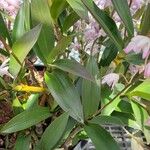
Dendrobium speciosum
Rock-lily · Wood-lily · Cane orchid · King orchid · Outstanding dendrobium
Description
Source: leafsnapDendrobium speciosum, commonly known as the rock orchid or king orchid, is a striking species of orchid native to Australia. Its large size and impressive appearance make it a standout among orchids. Typically found growing on rocks or in crevices in rocky areas, this plant can reach heights of up to 1.5 meters. The leaves of Dendrobium speciosum are long, narrow, and dark green. Its flowers are large and showy, with petals that range in color from white to pinkish-purple. These flowers typically bloom from late winter through early spring. To thrive, Dendrobium speciosum requires bright but indirect light, high humidity levels, and well-draining soil that ensures good air circulation around its roots. While it can be grown indoors as a houseplant, it also thrives outdoors in warm climates with mild winters. Indigenous Australians have used this plant's antibacterial properties for medicinal purposes for centuries. Additionally, its striking appearance makes it a popular ornamental plant. Overall, Dendrobium speciosum is a beautiful and impressive orchid species. Though it requires specific growing conditions, those who meet these requirements will find it a rewarding plant to cultivate.
🎭 Devotion, genuine affection, elegance, contentment, esteem, moral integrity, blamelessness and flawlessness
Care Guide
💧 Water Every 7 days
The rock orchid flourishes in humid environments, demonstrating a preference for high humidity and a moderate tolerance for drought. It should be watered weekly, making sure the growing medium is nearly dry before giving it a thorough watering. This orchid performs best outdoors in dappled light, where it benefits from seasonal rainfalls that mimic the fluctuating water availability of its native habitat.
What do I do if I give my Rock orchid too much water or too little water?
When a Rock orchid is overwatered, it shows symptoms such as limp and wrinkled leaves, yellowing or decay, and general failure to thrive. Some owners mistakenly believe that limp and shriveled leaves mean the plant needs more water, so they continue to add water, worsening the problem. To accurately diagnose overwatering, it is important to examine the roots. Healthy Rock orchid roots are silvery green, green, or white and feel firm. Overwatered roots, however, will be mushy, limp, and brown or black. To rescue an overwatered Rock orchid, remove any rotted roots and replant in a new growing medium. It is best to avoid overwatering altogether, as root rot may be irreversible. For underwatered Rock orchids, the symptoms may be similar to overwatering. To determine if underwatering is the issue, check the moisture of the growing medium. Increasing the frequency of watering may be necessary. Examining the roots can also provide clues. Underwatered roots will appear crisp, brown, and brittle. Healthy roots are pliable and green. Reviving a thirsty Rock orchid is possible if it still has some healthy roots. Trim off any dried or dead root pieces and replant, ensuring thorough watering. Within a week or two, the leaves should become firm and healthy. If the leaves are too damaged, they can be removed to make room for new growth.
How frequently should I water my Rock orchid?
To properly care for your Rock orchid, water it when the growing medium is mostly dry, but not completely. The frequency of watering may vary based on the surrounding conditions. Typically, in summer it will be needed once or twice a week, while in winter it can be as infrequent as once every 2 weeks.
How do I water a Rock orchid?
Rock orchids are unique plants that don't grow in soil like most plants. To ensure their growth and health, it's important to choose the right growing medium. Regardless of the medium used, it's crucial for the pot to have proper drainage. Rock orchid pots are designed specifically for this purpose, with a chunky potting mix that allows for good ventilation. These pots are usually tall and narrow, allowing air to circulate around the roots. Bark is a popular medium for growing Rock orchids, as it closely resembles their natural habitat. However, it dries out quickly and requires more frequent watering. Another commonly used medium is sphagnum moss, which is lightweight and cost-effective. However, it can be challenging for inexperienced orchid growers because it can hold too much water, leading to root rot. If you choose to use sphagnum moss, be cautious with watering and avoid overwatering to prevent root rot. When watering your Rock orchid, it's advisable to water from below to avoid splashing water on the leaves, stem, and flowers. This can be done by placing the pot in a container of water and allowing the roots to soak up moisture for 10-15 minutes. Once the surface of the sphagnum moss is wet, you can stop the watering process. It's important to ensure thorough drainage before returning your Rock orchid to its normal location, as excess water can be harmful to the plant.
☀️ Light Full sun
The rock orchid prefers ample sunlight for vigorous growth, though it can tolerate reduced light. Native to sunny habitats, inadequate light can impede its development and result in poor flowering. Conversely, excessive sun may stress the plant and cause damaged or scorched foliage.
What type of sunlight does a Rock orchid need?
The Rock orchid is a stunning plant known for its long-lasting and beautiful blooms. However, to maintain their beauty, these plants require adequate humidity and sunlight. When provided with the right amount of sun, their blooms will stay vibrant for extended periods while their leaves grow tall and stretch outwards. Healthy orchids will have a healthy greenish-yellow leaf color, and their owners will be amazed by the abundance of flowers they produce in proper sunlight.
What kind of sunlight does the Rock orchid need?
The rock orchid is a sun-loving plant that requires at least six hours of sunlight each day. There are different types of Epiphytic Orchids that can tolerate different levels of sunlight. While some orchids can handle the intense heat of the afternoon sun, others prefer to have shade all day.
Does sunlight harm Rock orchids? How can I protect Rock orchids from sun and heat damage?
Rock orchids are able to withstand sun damage if they are provided with high humidity. On the other hand, certain Epiphytic Orchids need shade and good airflow to avoid overheating their leaves and flowers. To protect orchids from heat damage, gardeners should aim for humidity levels between 40% and 70%. Additionally, in hot weather, owners can mist the leaves to help keep them cool.
Should I keep Rock orchid away from the sun?
If Rock orchid gets exposed to excessive sunlight, it can encounter growth problems, including sunburn on its leaves. Insufficient humidity and water in hot conditions can also cause the orchid to dry out. To protect the plants, gardeners can place potted orchids behind windows with curtain shades. Indirect sunlight is suitable for orchids, so they can be positioned next to a window with a sheer curtain or a few inches away to avoid direct sun. If you live in a tropical area, Epiphytic Orchids can be planted in shaded areas, such as under a tree or in parts of your garden that receive indirect sunlight in the afternoon.
What will happen if the Rock orchid doesn't get enough sunlight?
Epiphytic Orchids thrive in warm, sunny tropical regions. When they don't receive enough sunlight, they can develop issues. One common response is the growth of lackluster leaves that remain a dark green color. On the other hand, a Rock orchid that lacks sufficient light may produce fewer buds, with larger gaps between each flower. Additionally, if a plant continues to be deprived of adequate sunlight over time, its leaves will become very yellow and eventually fall off.
🌡️ Temperature 20–37.8°C
The rock orchid comes from habitats where temperatures run from 68 to 100 °F (20 to 38 ℃). It favors warmer conditions to do well. Adjust its environment seasonally, making sure temperatures do not drop below that range.
What is the best temperature for growing Rock orchids?
Rock orchids and warm-weather plants both thrive in the same temperature range of 75-90℉ (25-32℃). While Rock orchids can tolerate some temperatures outside of this range, it is best to keep them within a few degrees of these limits for optimal growth. The lowest temperature Rock orchids can handle is 50℉ (15℃), and the highest is 95℉(35℃). Since Rock orchids prefer warmer weather and are traditionally grown in summer, it is important to avoid temperatures below 70℉ (25℃) to prevent slowed growth. Temperatures below 50℉ (15℃) can cause damage or even kill the plants.
Does the Rock orchid need different temperatures depending on the stage of growth?
To ensure Rock orchids bloom to their full potential, it's important to provide a consistent temperature range and avoid fluctuations. Extreme temperatures, such as going below 70℉ (25℃) or above 90℉ (32℃), can impede the growing phase of Rock orchids, while prolonged periods below 50℉ (15℃) can prevent them from flowering altogether. Since Rock orchids are not hardy, an well-controlled environment is necessary for proper growth. Additionally, Rock orchids require a cool period, which will be further explained below.
Here are three tips to help you control the temperature for your Rock orchid.
Here are some tips for taking care of your Rock orchid: 1. After blooming, your Rock orchid needs a cool period. This applies whether you are growing it outside or indoors. If done correctly, your Rock orchid can bloom multiple times a year. Keep the temperature between 75-90℉ (25-32℃) during this cooling period for the best results. 2. Rock orchids prefer colder temperatures at night when grown outdoors. The ideal range is usually between 50-75℉ (15-25℃). However, it can be challenging to control the temperature when growing them outside. 3. Watch out for signs of cold damage. Rock orchids are more sensitive to low temperatures compared to winter plants. Anything below 50℉ (15℃) can harm your plants, and too much cold exposure can be fatal. Look for discoloration on the foliage and stems, which indicates the orchid is too cold. If large sections of the orchid are drying and turning brown, it means the tissue is dying. In such cases, move the orchid to a warmer environment immediately, as they may recover.
Does the Rock orchid require varying temperatures during different seasons?
If you don't plan on growing Rock orchids outside, you don't need to worry about temperature variations throughout the year. However, if you have no space in your home or a greenhouse and must use an outdoor area, it's best to grow them in the summer. Make sure the temperature in your area stays between 75-90℉ (25-32℃). Controlling outdoor weather conditions is difficult, so it's usually better to use an indoor space or greenhouse. Rock orchids thrive in sunlight, so choose an area with ample natural light. A greenhouse is the ideal option since it provides direct sunlight and maintains the necessary high temperatures.
How can I keep the Rock orchid at the right temperature?
To maintain the ideal temperature for Rock orchids, it's best to keep them in a climate-controlled environment. If you have air conditioning or fans in a room in your home, that can work well. Just make sure the area stays within the optimal temperature range. In colder regions, it's important to have a good heating system. Rock orchids thrive in warmer conditions, so it's ideal to be able to heat a room up to temperatures around 75℉ (25℃). If achieving those temperatures in your home is not feasible, consider placing your Rock orchids in a greenhouse. Greenhouses naturally heat up when sunlight passes through their clear or opaque glass panels. This ensures that the greenhouse maintains the right temperature for your Rock orchids, creating the best possible environment for their growth.
💨 Humidity
🪴 Soil 5-6
🌱 Fertilizer
Proper fertilization is essential for the Rock orchid's health and appearance. Fertilize the Rock orchid in summer, repeating the application monthly throughout the season. Nutrients power growth and help maintain the plant's parts. Fertilization improves the Rock orchid's floral display, ensuring the best blooms.
Why should I put fertilizer on my Rock orchid?
Fertilizer and soil nutrients are important for the healthy growth of your Rock orchid. Plants rely on these nutrients to develop new plant material and maintain their existing components. Specifically for the Rock orchid, fertilization is necessary for optimal flower display. As the flowers are the main attractant of this plant, most gardeners strive to enhance their appearance. Fertilization is a reliable method to help your Rock orchid produce its best blooms.
When should I put fertilizer on my Rock orchid?
The Rock orchid undergoes two main phases each year: dormant and active growth. During the dormant phase in winter, the plant experiences minimal new growth. On the other hand, the active growth phase occurs in spring and fall, which is when the Rock orchid requires the most fertilization. A good practice is to start fertilizing your Rock orchid in the spring and continue doing so once a month throughout the rest of spring and most of summer. As fall approaches, you can decrease the frequency of fertilization.
When is it not a good idea to fertilize my Rock orchid?
To support the growth of Rock orchids, it is important to avoid causing root burn. During the spring and summer, when the plant is actively growing, providing extra nutrients is essential. However, during the fall and winter, when the plant goes into its dormant stage, it is advisable to stop fertilizing.
What kind of fertilizer does my Rock orchid require?
To ensure the health of your Rock orchid, finding the right fertilizer is key. It's best to use a balanced fertilizer that contains the three main plant nutrients, with slightly more phosphorus. Alternatively, you can improve the soil by adding organic materials like compost, worm castings, and manure. There are various types of fertilizers available, and most of them are suitable for Rock orchids. However, liquid and powdered fertilizers are considered some of the top options. Whichever type you choose, remember to dilute it and apply it while watering your Rock orchid.
How do I give nutrients to my Rock orchid?
To apply fertilizer to your Rock orchid, start by finding a suitable fertilizer and learning the ideal fertilization schedule. Once you have that figured out, mixing your liquid fertilizer with water is the most reliable method. Each fertilizer may have different feeding directions, so it's best to follow the manufacturer's guidance. These instructions will tell you how to dilute the fertilizer properly to avoid overfertilization. After mixing the fertilizer with water, simply pour the mixture into the soil where your Rock orchid lives.
🪴 Pot & Repot
✂️ Pruning
The rock orchid is known for its beautiful clusters of flowers and strong growth, requiring very little pruning. During its dormant period, from early spring to late winter, you should remove any dead stems and thin out dense areas to improve air circulation and reduce the risk of fungal infections. Proper pruning helps maintain the plant's health and encourages robust flowering in the next season.
🌿 Propagating
🐛 Diseases & pets
☠️ Toxicity
Characteristics
- Plant Type
- Herb
- Life Cycle
- Perennial
- Genus
- Dendrobium
- Family
- Orchidaceae
- Hardiness Zone
- 11
- Mature Height
- 0.05 m to 1.83 m
- Mature Spread
- 49 cm
- Leaf Color
- Dark Green
- Leaf Type
- Evergreen
- Flower Color
- White, Cream
- Flower Size
- 2.03 cm to 7.62 cm
- Bloom Time
- Mid summer, Late summer, Early fall
- Planting Time
- Spring
- Harvest Time
- Early spring, Mid fall, Late fall, Winter
- Native Area
- Australia