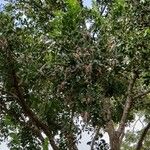
Dermatophyllum secundiflorum
Texas-mountain-laurel · Mescal-bean
Description
Source: leafsnapDermatophyllum secundiflorum, commonly known as Texas mountain laurel, is a small evergreen tree or shrub native to the southwestern United States and northern Mexico. It typically reaches up to 10 meters in height and features a dense, rounded crown with dark green, glossy, leathery leaves. In spring, the plant produces clusters of fragrant purple-blue flowers that resemble grape hyacinths, followed by long seed pods containing bright red seeds. While these seeds are highly toxic if ingested, they have historically been used by Native Americans for medicinal purposes. Texas mountain laurel is a popular ornamental plant, admired for its attractive foliage, showy flowers, and drought tolerance. It thrives in well-drained soil and can grow in full sun or partial shade. The plant can be propagated from either seeds or cuttings.
Care Guide
💧 Water Every 7 days
The Texas mountain laurel is quite drought tolerant and good for those who want low-water plants in their gardens. Overwatering can cause too-rapid growth which may cause branch formation to be weak.
☀️ Light
🌡️ Temperature
This plant can withstand hot summers and plenty of bright sunlight. It's drought-tolerant but also appreciates adequate rainfall. You shouldn't need to worry about the plant becoming too dry as it does well in an arid or even desert climate. Too much humidity, such as trying to grow in a maritime climate, will decrease the plant's vigor.
💨 Humidity
🪴 Soil
🌱 Fertilizer
🪴 Pot & Repot
✂️ Pruning
Texas mountain laurel benefits from careful pruning in its youth, to assure it grows strong branches and forms a pleasing shape. Once it reaches maturity, pruning only needs to be done to remove damaged branches and maintain the desired shape and height. You can prune into a shrub shape or a small tree, but if you want to train it into a tree shape you should prune carefully in its early years, keeping side growth trimmed and branches well shaped. Because of its slow rate of growth, be careful when pruning to avoid damage to the plant's structure or main branches, which may recover slowly.
🌿 Propagating
🐛 Diseases & pets
☠️ Toxicity
Toxic to people, toxic to pets.
Characteristics
- Plant Type
- Evergreen flowering shrub
- Genus
- Dermatophyllum
- Family
- Fabaceae
- Hardiness Zone
- 7-11
- Bloom Time
- March and April
- Native Area
- Mexico, Southwest US