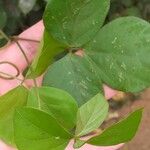
Desmodium incanum
Zarzabacoa-Comun · Tickclover · Kaimi-clover · Wild Peas · Stick-tight
Description
Source: leafsnapDesmodium incanum, commonly known as tick clover or tick trefoil, is a perennial herbaceous plant in the Fabaceae family. It is native to tropical and subtropical regions of Africa and Asia. This plant can grow up to 1 meter tall and features a woody stem with numerous branches. Its trifoliate leaves have oval-shaped leaflets that are hairy on both sides. The flowers of Desmodium incanum are small and pinkish-purple, arranged in clusters on long stalks. They bloom from July to September in the northern hemisphere. The fruit is a small pod containing several seeds. Desmodium incanum possesses various medicinal properties, including anti-inflammatory, analgesic, antipyretic, antidiabetic, and antioxidant activities, due to its high content of flavonoids such as quercetin and kaempferol. Traditionally, the plant has been used to treat snake bites by applying crushed leaves to the wound and to address respiratory problems by boiling the leaves for inhalation. In addition to its medicinal benefits, Desmodium incanum plays an important ecological role by fixing nitrogen into the soil, thus enhancing soil fertility. This characteristic makes it a valuable component of agroforestry systems, especially in areas where soils have been degraded due to overuse or poor management practices. Overall, Desmodium incanum is a significant plant species with a wide range of uses—from traditional medicine to modern scientific research on its potential health benefits—making it a valuable resource for human health and ecological restoration efforts worldwide.
Care Guide
💧 Water Every 7 days
Zarzabacoa comun flourishes in tropical environments, where it thrives with consistent moisture and high humidity. It needs to be watered weekly but can tolerate brief dry spells. Using mulch can help retain soil moisture and reduce the need for frequent watering, particularly during the active growing season in warm climates.
How should I water my Zarzabacoa comun plant?
To properly water the Zarzabacoa comun plant, it is advised to use filtered water at room temperature or slightly warmer. Using filtered water is important because tap water might contain harmful particles. The reason for using room temperature water is that the plant is accustomed to a warm environment, and cold water could be problematic. It is also recommended to avoid overhead watering, as it can cause issues with the foliage. Instead, simply water the soil with your filtered room temperature water until it is completely soaked. This method of watering is beneficial as it helps moisten the roots and allows them to spread through the soil to collect essential nutrients.
What should I do if I give too much or too little water to my Zarzabacoa commun?
Overwatering is a more common problem for your Zarzabacoa comun and can cause wilting, yellowing of leaves, and potentially deadly diseases like root rot, mold, and mildew. Underwatering is less common but can cause brittle, brown leaves. It is important to quickly recognize and address signs of overwatering, as some diseases may be irreversible if not caught early. Reduce watering immediately if you notice early signs and consider replacing poorly draining soil. Conversely, if signs of underwatering appear, simply increase watering until the symptoms improve.
How often do I need to water my Zarzabacoa comun?
If your Zarzabacoa comun plant is in a pot, the best way to determine if it needs water is by checking the soil with your finger. If the top two to three inches of soil are dry, it's time to water it. If you have your Zarzabacoa comun plant growing outdoors in the ground, you can use the same method. Again, if the top few inches of soil are dry, it's time to water. Usually, during spring and early fall, you'll need to water this plant about once a week. However, in extremely hot weather, you may need to water it two or more times per week. It's worth mentioning that mature, well-established Zarzabacoa comun plants have an impressive ability to withstand drought.
How much water does my Zarzabacoa plant need?
To water your Zarzabacoa comun effectively, don't be hesitant in giving it a generous amount of water. Make sure the top two to three inches of soil are dry before watering, and when you do, water the plant thoroughly until the soil is completely soaked. You should add enough water for excess to flow out of the pot's drainage holes. If you don't see any excess water draining, it means you haven't watered enough, but be careful not to let water accumulate in the soil, as that can harm the plant. On the other hand, if water doesn't drain properly, it could indicate poor soil drainage, which isn't favorable for the plant's health. If the plant is outside, about 1 inch of rain per week should be enough.
How do I water my Zarzabacoa comun when it is growing at different stages?
The water needs of the Zarzabacoa comun can change depending on growth stages. In the first few years or after transplanting, more water is needed. During these stages, the plant focuses on growing new roots, which requires extra moisture. After a few seasons, less water is needed. Another stage that requires more water is the bloom period, as flower development uses a significant amount of moisture.
☀️ Light Full sun
Zarzabacoa comun prospers in intense sunlight and also tolerates moderately lit environments very well. Light is essential for its strong growth, and adequate illumination at every stage is vital. Native to sun-rich habitats, it performs poorly under low light, which causes slowed growth and diminished health.
What are the sunlight requirements for Zarzabacoa comun?
Zarzabacoa comun, also known as Desmodium incanum, thrives under conditions of strong sunlight and can also withstand moderately lit environments. It requires full sun, which translates to more than 6 hours of sunlight a day, for robust growth. However, it can manage in partial sun, approximately 3-6 hours of sunlight a day. Insufficient sunlight exposure leads to slower growth and weakened health, emphasizing the plant's need for adequate light at all stages of its growth.
How can artificial lighting benefit indoor plants like Zarzabacoa comun?
Artificial lighting serves as a crucial solution for growing Zarzabacoa comun indoors, especially when natural sunlight is insufficient. It promotes faster and healthier plant growth by compensating for the lack of sunlight. LED lights are recommended for their ability to provide specific wavelengths needed by plants. For optimal growth, full sun plants require 30-50W/sq ft, partial sun plants 20-30W/sq ft, and full shade plants 10-20W/sq ft of artificial light. The appropriate distance for artificial lights is 12-36 inches above the plant, and the duration should mimic natural daylight hours, generally 8-12 hours per day.
What are the symptoms of inadequate sunlight in Zarzabacoa comun?
When Zarzabacoa comun receives inadequate sunlight, several symptoms may appear. These include smaller leaves compared to previous growth, leggy or sparse growth due to elongated spaces between leaves or stems, faster leaf drop as the plant conserves resources, slower or stagnant growth as the plant enters survival mode, lighter-colored or irregularly patterned new leaves indicating insufficient chlorophyll, and various damage symptoms such as chlorosis, sunscald, leaf curling, wilting, and leaf scorching. These symptoms reflect the plant's struggle with light deficiency and its effects on health and development.
How can I address sunlight-related issues for indoor, outdoor, and ground-planted Zarzabacoa comun?
For indoor Zarzabacoa comun, gradually increase sunlight exposure by moving the plant closer to a south-facing window, ensuring at least 6 hours of direct sunlight daily, or use artificial light for at least 8 hours daily. For outdoor plants, also gradually increase sunlight exposure to prevent sunburn, moving them weekly to sunnier spots. If obstructed by trees or buildings, consider pruning or relocating smaller plants to sunnier areas. Note that while some parts of the plant that suffered might not recover, new growth will be healthy with better light conditions.
🌡️ Temperature 5–35°C
Zarzabacoa comun es una planta originaria de un hábitat templado y se desarrolla mejor en temperaturas de 41 a 95 °F (5 a 35 ℃). En climas severos pueden ser necesarios ajustes estacionales para evitar que quede expuesta a frío o calor extremos.
What is the ideal temperature range for Zarzabacoa comun?
Zarzabacoa comun, also known as Desmodium incanum, thrives best in a temperate habitat with temperatures ranging from 41 to 95 °F (5 to 35 °C). It has strong cold resistance, meaning it generally doesn't require special frost protection measures during winter. However, when temperatures are expected to plummet below -25°C, it is crucial to protect the plant from extreme cold by covering it with materials such as soil or straw. Additionally, thoroughly watering the plant before the first freeze in autumn helps to ensure the soil remains moist, preventing drought and water scarcity during winter and early spring.
What should I do if the temperature falls below Zarzabacoa comun's ideal range?
Zarzabacoa comun is known for its cold tolerance, optimally thriving above 5°C and should remain above -20°C during winter. When temperatures fall below -25°C, the plant may not show immediate damage but can exhibit decreased sprouting or fail to sprout in spring. In such cases, it's advisable to remove any parts of the plant that failed to sprout once spring arrives. On the other hand, during summer, if temperatures exceed 35°C and especially if they go beyond 38°C, the plant may exhibit signs of stress such as lighter colored leaves, curling, susceptibility to sunburn, and wilting. To mitigate these symptoms, trim away sunburned and dried parts of the plant, move it to a shaded area or use a shade cloth to protect it from intense midday and afternoon sun, and ensure the soil is kept moist by watering in the morning and evening.
💨 Humidity
🪴 Soil 5-7
🌱 Fertilizer
The best time to fertilize a Zarzabacoa comun is in early spring, when it comes out of dormancy and begins active growth. Adding fertilizer supplies essential nutrients needed for healthy growth. Although Zarzabacoa comun has relatively low fertilizer requirements, applying fertilizer once a year can improve its survival and encourage better, longer-lasting flowers.
🪴 Pot & Repot
✂️ Pruning
Zarzabacoa comun is a tough perennial plant known for its resilience. Lightly prune it in early spring to encourage bushier growth. Later in the season, prune more extensively to manage its shape and remove any dead stems. Using the right timing and techniques will improve the plant’s vigor, enhance air circulation, and boost overall health.
🌿 Propagating
🐛 Diseases & pets
☠️ Toxicity
Characteristics
- Plant Type
- Herb, Shrub
- Life Cycle
- Perennial
- Genus
- Desmodium
- Family
- Fabaceae
- Hardiness Zone
- 5-9
- Mature Height
- 30 cm to 46 cm
- Mature Spread
- 30 cm to 49 cm
- Leaf Color
- Green, Blue
- Leaf Type
- Deciduous
- Flower Color
- Lavender
- Flower Size
- 2.54 cm
- Bloom Time
- Summer, Fall
- Planting Time
- Spring, Summer, Autumn
- Harvest Time
- Late summer, Fall, Early winter
- Native Area
- Belize, Honduras, Mexico, Guatemala, Peru, Trinidad and Tobago, Panama, Jamaica, Colombia, Bahamas, Cuba, Paraguay, Bolivia, Venezuela, Guyana, El Salvador, Nicaragua, Ecuador, Suriname, Costa Rica