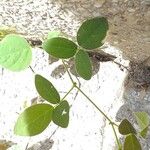
Desmodium tortuosum
Florida beggarweed · Beggarweed · Dixie Tick-Trefoil · Florida beggar weed · Dixie ticktrefoil
Description
Source: leafsnapDesmodium tortuosum, commonly known as twisted tick clover or tick trefoil, is a perennial herbaceous plant in the Fabaceae family. Native to tropical and subtropical regions of Africa and Asia, it has also been introduced to other parts of the world as an ornamental plant. The plant can grow up to 1 meter tall and features a woody stem with twisted branches, which inspire its common name. Its leaves are trifoliate, with oval-shaped leaflets measuring about 2-4 cm in length. The small, pink or purple flowers bloom in clusters on long stalks from July to September. Desmodium tortuosum is renowned for its medicinal properties, containing various bioactive compounds such as alkaloids, flavonoids, saponins, and tannins. These compounds have traditionally been used to treat a range of ailments, including fever, coughs, asthma, bronchitis, and diarrhea. Ecologically, the plant is important due to its ability to fix nitrogen from the atmosphere into the soil, thereby improving soil fertility. This characteristic makes it highly beneficial for crop rotation practices. In conclusion, Desmodium tortuosum is an important medicinal herb with significant ecological value. Its nitrogen-fixing ability enhances soil fertility, making it useful for crop rotation and contributing positively to sustainable agriculture practices.
Care Guide
💧 Water Every 7 days
Florida beggarweed thrives in humid environments, requiring consistent moisture while avoiding waterlogged conditions. It can tolerate moderate drought but prefers stable humidity. To ensure optimal health, especially when grown outdoors, it benefits from weekly watering. During its active growing season, natural rainfall contributes to its vigorous growth.
How should I water my Florida beggar weed?
To ensure optimal health for your Florida beggar weed, follow these watering guidelines. It is recommended to use filtered water at room temperature, as tap water may contain harmful particles. Since this plant is accustomed to warm environments, avoid using cold water to prevent shock. Additionally, overhead watering should be avoided to prevent foliage issues. Instead, apply filtered room temperature water directly to the soil until it is completely soaked. This allows the roots to absorb necessary nutrients and promotes healthy root spread.
What should I do if I give my Florida beggar weed too much or too little water?
Overwatering is a more common issue that can harm your Florida beggar weed. It causes wilting, yellowing leaves, and can lead to diseases like root rot, mold, and mildew. Underwatering is less likely, but can still happen and results in brittle, brown leaves. It is important to recognize the signs of overwatering early to prevent irreversible damage. Reduce watering immediately if you see these signs and consider improving the soil drainage. If your plant is not getting enough water, simply increase the frequency of watering until the signs improve.
How often do I need to water my Florida beggar weed?
If your Florida beggar weed is in a pot, the most precise way to determine if it needs water is to check the soil. Stick your finger in the soil and if the top two to three inches are dry, it's time to water. If you have your Florida beggar weed planted outdoors in the ground, you can use a similar method to test the soil. Once again, if the first few inches of soil are dry, it's time to water. Typically, during the spring and early fall, you'll need to water this plant about once a week using this method. However, during extremely hot weather, you may need to increase watering to about twice a week or even more. It's worth noting that mature and well-established Florida beggar weed plants have an impressive ability to withstand drought.
How much water does my Florida beggar weed plant need?
To properly water your Florida beggar weed, don't hold back on the amount of water you give. Wait until the top few inches of soil are dry, then give the plant a thorough watering that soaks the entire soil. Make sure to add enough water so that it drains out through the holes at the bottom of the pot. If you don't see any excess water draining, it means you haven't watered enough. However, be careful not to let the water accumulate inside the soil, as it can harm the plant. If there is no water draining through the pot, it could indicate poor soil drainage, which is not good for the plant's health. If the plant is outside, it generally needs about 1 inch of rain per week.
How should I water my Florida beggar weed at different times it is growing?
The water needs of the Florida beggar weed can vary depending on its growth stages. In the early years or after transplanting, it requires more water because it focuses on developing new roots. These roots need extra moisture to support future growth. As the plant matures, it will require less water. Additionally, during the bloom period, when flowers are developing, the Florida beggar weed may need increased watering to ensure adequate moisture for optimal growth.
☀️ Light Full sun
Florida beggarweed does best with abundant sunlight, but it can also tolerate lower light levels and even shaded areas. Native to sunny habitats, this plant can grow successfully under a range of light conditions. Very intense light may somewhat stress its growth, while too little sunlight can impede its development.
What are the sunlight requirements for Florida beggar weed?
Florida beggar weed requires full sun, meaning it should receive above 6 hours of sunlight daily. It can also grow in partial sun or full shade, which is about 3-6 hours of sunlight. It's important to observe how sunlight moves through your garden to find spots that provide the right balance of light and shade for your plants, ensuring they thrive in their environment.
Can Florida beggar weed grow with artificial lighting and what are some tips for using it?
Yes, Florida beggar weed can grow with artificial lighting, which is especially useful when natural sunlight is insufficient, like in winter or in less sunny spaces. For optimal growth, indoor plants may require adequate artificial lighting. LED lights are popular for providing specific wavelengths of light needed by plants. Full sun plants need 30-50W/sq ft, partial sun plants need 20-30W/sq ft, and full shade plants need 10-20W/sq ft of artificial light. The light source should be positioned 12-36 inches above the plant, and most plants benefit from 8-12 hours of light per day.
What are the symptoms of inadequate light for Florida beggar weed?
Symptoms of inadequate lighting for Florida beggar weed include small leaves, leggy or sparse growth, faster leaf drop, slower or no new growth, lighter-colored new leaves, chlorosis, sunscald, leaf curling, wilting, and leaf scorching. These symptoms highlight the plant's struggle with either too much or too little sunlight, affecting its ability to photosynthesize and maintain overall health.
How can I adjust indoor and outdoor lighting conditions for my Florida beggar weed for better growth?
For optimal indoor growth, gradually move your plants to sunnier locations until they receive at least 6 hours of direct sunlight daily, using a south-facing window for maximum exposure. If the plant is large or not easily movable, consider using artificial light, keeping a lamp on for at least 8 hours daily or investing in professional plant grow lights. For outdoor plants, also move them gradually to sunnier spots to avoid sunburn and adapt to stronger light. Pruning nearby trees or vegetation can help reduce obstructions to sunlight. If necessary, transplant smaller plants during their dormant period to a location with ample sunlight and good drainage.
🌡️ Temperature 15–37.8°C
Florida beggar weed originates from temperate areas and favors moderate climates. It grows best when temperatures are between 68 and 100.4 °F (20 and 38 ℃). In colder months, it is advisable to raise the ambient temperature when cultivating Florida beggar weed.
What is Florida beggar weed and where is it native to?
Florida beggar weed, scientifically known as Desmodium tortuosum, is native to temperate regions, thriving in moderate climates. It is well-suited to temperatures ranging from 68 to 100.4 °F (20 to 38 °C), indicating its preference for warmer conditions.
How does Florida beggar weed respond to cold temperatures?
Florida beggar weed demonstrates strong cold resistance, making special frost protection measures generally unnecessary. However, in extremely cold conditions where temperatures are expected to drop below -15°C, it is important to provide protection by covering the plant with soil or straw. Additionally, watering the plant abundantly before the first freeze in autumn helps keep the soil moist, aiding the plant through winter and early spring.
What are the important symptoms to watch for in Florida beggar weed due to temperature changes?
For cold temperatures, despite its cold tolerance, Florida beggar weed should be kept above 0°C to prevent decreased sprouting in spring. If temperatures fall below -15°C, there might not be visible damage in winter, but sprouting could be significantly reduced. In instances of high temperatures, particularly above 38°C, symptoms include lighter leaf color, curling, susceptibility to sunburn, and in severe cases, wilting and drying up of the entire plant.
What are the recommended solutions for managing temperature effects on Florida beggar weed?
In response to cold damage where sprouting is reduced, removing parts that have failed to sprout in spring is advised. For heat stress, which may cause sunburn and drying, the recommended solutions include trimming away the affected parts, relocating the plant to a shaded area or using a shade cloth to protect it from midday and afternoon sun, and ensuring the plant is well-watered in the morning and evening to maintain soil moisture.
💨 Humidity
🪴 Soil 5-7
🌱 Fertilizer
One fertilizer application in spring is generally adequate for Florida beggarweed, although repeated feedings will boost growth. Apply fertilizer every month to six weeks. Feeding improves the leaves' appearance and function, yielding even color and a healthy texture. It also promotes root development and nutrient uptake, supporting the plant's long-term health.
🪴 Pot & Repot
✂️ Pruning
Florida beggarweed is a vigorous perennial plant with a sprawling growth habit. To encourage new growth, manage its size, and improve air circulation, it is best to prune the plant from early to late spring. Use clean, sharp tools for the best results, which will help ensure healthy cuts and reduce the risk of disease.
🌿 Propagating
🐛 Diseases & pets
☠️ Toxicity
Characteristics
- Plant Type
- Herb
- Life Cycle
- Perennial, Annual
- Genus
- Desmodium
- Family
- Fabaceae
- Hardiness Zone
- 7-11
- Mature Height
- 0.3 m to 1.22 m
- Mature Spread
- 30 cm to 61 cm
- Leaf Color
- Green
- Leaf Type
- Evergreen
- Flower Color
- Pink, Purple
- Flower Size
- 30.48 cm
- Bloom Time
- Summer, Early fall, Mid fall
- Planting Time
- Spring, Summer
- Harvest Time
- Late summer, Fall, Early winter
- Native Area
- Colombia, Bahamas, Belize, Honduras, Mexico, Guatemala, Bolivia, Venezuela, Peru, Brazil, Nicaragua, Ecuador, Panama, Jamaica