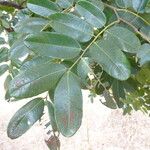
Detarium microcarpum
Sweet Dattock · Tallow Tree
Description
Source: leafsnapDetarium microcarpum (Bambara: Ntamajalan), commonly known as sweet detar, sweet dattock or tallow tree, is an underutilized species of tree legume that grows naturally in the drier regions of West and Central Africa. It has a wide range of uses due to its medicinal properties, edible fruit (eaten raw, cooked, or made into flour with many uses of its own) and hardwood, which is used as fuel. This makes it valuable and appreciated by local communities, but further research and effort are needed for its domestication.
Care Guide
💧 Water
☀️ Light Full sun
Sweet dattock is native to open habitats, like sunny meadows and forest margins, which supply plenty of light. It flourishes in Full Sun but can also tolerate Partial Sun, adapting well to different light levels.
🌡️ Temperature 20–37.8°C
Sweet dattock comes from tropical areas, where the climate is generally warm and humid. As a result, it is adapted to high temperatures and humidity. It does not tolerate sudden shifts in temperature and prefers a stable thermal environment, so avoiding temperature fluctuations indoors is important. It usually cannot withstand cold and needs higher temperatures to grow. If the ambient temperature falls too low, the plant may stop growing or even die.
💨 Humidity
🪴 Soil 6-7
🌱 Fertilizer
Prefer organic fertilizers (e.g., fish emulsion, compost) instead of chemical ones for Sweet dattock. Supply young plants with higher nitrogen and phosphorus in spring. Incorporate compost or fertilizer into the soil before or after planting. For mature plants, add a balanced fertilizer or one aimed at specific deficiencies in spring. Nutrient deficiency results in small leaves, short branches, yellow or bronze foliage, acidic fruits, premature fruit drop, and splitting.
🪴 Pot & Repot
✂️ Pruning
Pruning sweet dattock properly in early spring is essential for its health and productivity. Focus on removing dead branches and thinning the plant to improve air circulation. This selective cutting not only enhances the structure of the dattock but also boosts its fruit yield. Using clean tools for regular and careful pruning helps maintain a healthy, thriving plant.
🌿 Propagating
🐛 Diseases & pets
☠️ Toxicity
Characteristics
- Plant Type
- Tree
- Life Cycle
- Perennial
- Genus
- Detarium
- Family
- Fabaceae
- Hardiness Zone
- 10-12
- Mature Height
- 10.06 m to 14.94 m
- Mature Spread
- 4.88 m to 7.92 m
- Leaf Color
- Dark Green
- Leaf Type
- Deciduous
- Flower Color
- White
- Flower Size
- 0.51 cm to 0.76 cm
- Bloom Time
- Summer
- Planting Time
- Summer, Autumn
- Harvest Time
- Late summer, Fall
- Native Area
- Burkina Faso, Sudan, Nigeria, Guinea, Guinea-Bissau, Niger, Chad, Benin, Mali, Equatorial Guinea, Cameroon, Togo, Senegal, Ghana, Côte d'Ivoire, Gambia, Central African Republic