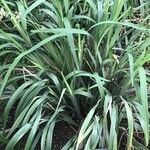
Dianella ensifolia
Harebell · Cerulean flaxlily · New Zealand lilyplant · Umbrella-dracaena · Flax lily
Description
Source: leafsnapDianella ensifolia, commonly known as the sword lily or blue flax lily, is a perennial plant species that belongs to the family Asphodelaceae. Native to Australia, it thrives in diverse habitats such as woodlands, heathlands, and grasslands. This plant features long, narrow, sword-shaped leaves with a distinctive bluish-green color. During the spring and summer months, it produces small blue or purple flowers arranged in clusters on tall stems. These flowers are subsequently followed by small berries that ripen from green to dark blue. Dianella ensifolia is a hardy species capable of tolerating various soil types, although it prefers well-drained soils with moderate moisture levels. It performs well in full sun or partial shade but may require protection from strong winds. The plant is valued for its attractive foliage and flowers, making it popular for ornamental purposes. Additionally, its deep root system helps stabilize soil on slopes, making it useful for erosion control. In traditional medicine, Dianella ensifolia has been used to treat various ailments, such as skin infections, fever, and coughs. However, scientific evidence supporting these medicinal claims is limited. Overall, Dianella ensifolia is an appealing ornamental plant with multiple uses in horticulture and traditional medicine.
Care Guide
💧 Water Every 7 days
Flax lily thrives with moderate watering, as it is adapted to the wet and dry balance of its native environment. Watering every 1 to 2 weeks helps prevent waterlogging. As an evergreen plant, flax lily retains its leaves throughout the year, allowing it to efficiently manage moisture even during drier seasons.
How should I water my Flax lily?
To properly water the Flax lily, it is best to use filtered water at room temperature or slightly warmer. This is because tap water may contain harmful particles. Since the Flax lily is native to warm environments, it is sensitive to cold water. Therefore, it is important to avoid using cold water to prevent any shock to its system. Additionally, it is recommended to avoid overhead watering as it can lead to issues with the foliage. Instead, it is better to directly water the soil with filtered room temperature water until it is completely soaked. This method helps to moisturize the roots and support their spread through the soil, allowing them to collect the necessary nutrients for the plant's health.
What should I do if I give my Flax lily too much or too little water?
Overwatering is a more common problem than underwatering for Flax lilies. When the plant is overwatered, it may wilt and turn yellow, and it can also develop diseases like root rot, mold, and mildew. Underwatering is less likely to occur, but if it does, the leaves may become brown and brittle. It's important to recognize and address the signs of overwatering early on, as some of the resulting diseases may be irreversible if not caught in time. Reduce watering immediately if you notice early signs of overwatering, and consider replacing poorly draining soil with a loose, well-draining potting mix. If your Flax lily is showing signs of receiving too little water, simply increase your watering frequency until the signs improve.
How frequently do I need to water my Flax lily?
If your Flax lily is in a pot, the most accurate way to determine whether it needs water is by sticking your finger into the soil. If the top two to three inches of soil are dry, it's time to water it. For Flax lilies grown in the ground outdoors, you can use the same method. Once the first few inches of soil have dried out, it's time to water. You usually need to water this plant about once a week during spring and early fall. However, during extremely hot weather, you may need to increase watering to twice a week or more. That being said, mature and well-established Flax lilies have an impressive ability to endure drought.
How much water does my Flax lily require?
To properly water your Flax lily, be generous with the amount of water you provide. Make sure the top few inches of soil are dry before watering, and then give the plant a thorough soaking. Water enough so that the soil is completely saturated and excess water flows out of the drainage holes in the pot. If you notice that no excess water is coming out, it means you haven't provided enough water. However, be careful not to let water accumulate inside the soil, as this can harm the plant. On the other hand, if water doesn't drain properly from the pot, it could indicate poorly draining soil, which can be harmful to the plant's health. If the Flax lily is planted outside, it will typically only need about 1 inch of rain per week.
How do I water my Flax lily as it grows?
Flax lilies have varying water requirements depending on their growth stages. In the first few years of its life or after being transplanted, the plant needs more water. This is because it focuses on developing new roots which will support future growth, and these roots need extra moisture. As the plant matures, it needs less water overall. Another stage that requires more water is the bloom period, as the flower development utilizes a significant amount of moisture. So, during this time, you may also need to provide additional water to the Flax lily.
☀️ Light Partial sun
The flax lily prefers exposure to moderate sunlight. Tolerant of a range of light conditions, it comes from habitats with ambient, filtered light. Too much or too little sun can impair the plant's health and growth, so balanced sun exposure is best.
What kind of sunlight does Flax lily require?
To help your flax lily thrive indoors, it's important to provide it with full, indirect sunlight. This means placing it in an area where it will receive bright sunlight, but not direct rays from a window or grow light. You can shield it from direct sunlight by using a sheer curtain or placing it behind a darker screen on the window.
How can I keep the new Flax lily safe from the sun so it doesn't get damaged?
If you're bringing a Flax lily home for the first time, it's a good idea to gradually introduce it to sunlight instead of placing it in bright, indirect light immediately. This can help prevent shock or leaf burning from sudden intense light. By slowly acclimating it to the light over about two weeks, your Flax lily is more likely to thrive in its new home.
How do I know if Flax lily is getting too much light?
Flax lily is sensitive to excess sunlight and can easily get sunburned. In their natural habitat, these plants only receive gentle, filtered light that comes through the trees above. Although they require more light to thrive indoors, too much can still be problematic. If your Flax lily is exposed to excessive light, you will observe that the leaves lose color and appear bleached or washed out, the ends of the leaves may become yellow or brown and dry, and the plant may grow too quickly, potentially becoming unstable.
What should I do if my Flax lily gets sunlight damage?
Plants generally suffer less severe sunburn compared to humans. If the leaves are excessively damaged or over half of the leaf is affected, it is best to remove the crispy, burnt leaves. However, you can also trim the leaves to get rid of any sunburn damage, as long as there isn't significant discoloration. To prevent future light damage, make sure to move your Flax lily away from its light source.
Does Flax lily require different light for each stage of its growth?
While certain plants can withstand direct sunlight right after being planted, Flax lily requires some time to acclimate before it can tolerate bright light. If you propagate cuttings, they should only be exposed to moderate indirect light. Additionally, during the growing season, it is recommended to provide some protection for the new leaves, as they are more susceptible to sunburn compared to other parts of the plant.
🌡️ Temperature 20–37.8°C
Flax lily is suited to tropical conditions and thrives in ambient temperatures of 68 to 100 °F (20 to 38 ℃). Seasonal changes can affect its growth, so moderate temperature adjustments are needed to replicate its native environment.
What temperature does Flax lily like best?
To help your tropical plants thrive, it's best to maintain a temperature range of 75℉ to 90℉ (25-32℃). While different species can tolerate temperatures outside this range, sticking within a few degrees of these limits will ensure optimal growth. However, there are extreme temperature limits to be aware of. Anything below 50℉ (10℃) or above 95℉ (35℃) can hinder growth and cause issues with the leaves and stems. Low temperatures are particularly damaging, as even a light frost can lead to the death of your tropical plants. In fact, cellular death can occur rapidly, with some species dying within 12 to 24 hours.
Does Flax lily need different temperatures at different times of growth?
Flax lily grows best when the temperature remains consistent, so it is important to avoid wild temperature fluctuations. It is recommended to keep Flax lily in a controlled environment, with temperatures ideally ranging from 75℉ to 90℉ (25-32℃). It is especially important to stay above the lower limit of 75℉ (25℃). While temperatures above 90℉ (32℃) are not ideal, Flax lily can tolerate them to some extent since it is a tropical plant. However, temperatures below 50℉ (10℃), and especially below 40℉ (5℃), can cause direct damage to this plant species, which thrives in warmer climates.
Does the Flax lily require varying temperatures depending on the season?
Flax lily is a plant that doesn't require different temperatures for different seasons. To take care of this plant during different seasons, the most important step is to maintain the environment at an optimal temperature. Therefore, it is recommended to keep this plant indoors so that you have control over the temperature, regardless of the outside climate. Additionally, light is important for tropical species like flax lily. These plants prefer a partial, indirect sunlight exposure. This means they should receive filtered or dappled light, as too much direct sunlight can harm the plant's leaves and hinder its growth.
What temperatures should you keep your Flax lily at in order to keep it healthy?
Here are three tips to help you take care of your plants: 1. Keep your plants away from windows during colder months: Cold air can leak into your home through cracks in the windows, and any plants placed near them will be affected. Move tropical plants to an area with bright but indirect light, while avoiding potential drafts. 2. Watch out for dry patches, which may indicate too much sunlight or heat: If you notice white or scorched leaves, your plant may be getting too much heat or sunlight. This can lead to dehydration and hinder growth. Dry spots can spread and eventually cause your plants to die if left unaddressed. 3. Be cautious of frost: Colder temperatures and frost can damage plants by disrupting their water circulation. This can lead to a lack of moisture in the stems and leaves. Look out for signs of hydrosis (a water-soaked appearance) and if the issue persists, the plant may shrivel and turn dark brown or black, eventually leading to death.
How can I make sure my Flax lily stays at the perfect temperature?
To maintain the right temperature range for Flax lily, it's important to consider the climate and humidity. It's recommended to keep the plant in a room where you have control over the temperature, ideally mimicking its natural habitat. Monitoring humidity levels is also crucial, as it affects the plant's temperature needs. You can increase humidity by using a humidifier or misting the leaves with water. If growing outside, it may be challenging to balance temperature and humidity. If conditions become unfavorable, bringing the plant indoors where you can better control the environment is the best solution for optimal growth.
💨 Humidity
🪴 Soil 5-6
🌱 Fertilizer
Proper fertilization is essential for Flax lily's health and appearance. Apply fertilizer to Flax lily during summer, repeating the application monthly throughout summer. Nutrients fuel growth and maintain plant components. Fertilization enhances Flax lily's flower display, ensuring the best blooms.
Why should I put fertilizer on my Flax lily?
Plants, including the Flax lily, need soil nutrients for growth. However, there is no guarantee that the soil will have all the necessary nutrients. Fertilization and soil amendments are important to provide both basic and specific nutrients for your garden plants. For the Flax lily, fertilizer is crucial to promote healthy root and stem development during the growing season. Additionally, fertilization will enhance its ornamental appeal by producing fantastic-looking leaves, which are the main attraction of this plant.
When should I fertilize my Flax lily for the best results?
During the active growth phase, which occurs in spring, summer, and early fall, the Flax lily requires the most fertilizer. After winter, you should feed it every two to four weeks until fall. In the fall, you can gradually decrease the amount of fertilizer given until you stop feeding entirely for the winter, as the Flax lily has less active growth during this time.
When is the best time to not fertilize my Flax lily?
For most of the year, including spring, summer, and most of the fall, it's important to regularly feed your Flax lily. However, there are a couple of exceptions. If you notice that your Flax lily has been over-fertilized or if you made a mistake when fertilizing it, leading to fertilizer burn or another issue, you'll need to fix that before going back to a regular feeding schedule. The only time you should not fertilize a Flax lily is during winter. If you have this plant indoors in a cold winter area, it will go into a dormant phase during that time. Feeding the plant during dormancy is not necessary or beneficial, and it can actually cause fertilizer burn.
What kind of fertilizer does my Flax lily need?
The fertilizer for a Flax lily needs a specific blend of nutrients, but in relatively low amounts. Ideally, the N-P-K ratio should be 3-1-2, but a balanced fertilizer with equal amounts of nutrients can also work. However, even with a balanced fertilizer, each nutrient should have a ratio number of 10 or lower. You can use granular or liquid fertilizer for your Flax lily. If you choose liquid fertilizer, it's best to dilute the strength by half. Granular fertilizer doesn't have many downsides, but using liquid fertilizer while watering your Flax lily is often the most sensible option.
How should I add fertilizer to my Flax lily?
When purchasing fertilizer for your Flax lily, it will usually come with application instructions that you should follow. However, for a Flax lily, there are specific guidelines you should keep in mind. It's best to fertilize just before or while you are watering the soil to avoid damaging the plant's roots. If you are using a slow-release granular fertilizer, sprinkle it on the soil and then immediately water it. On the other hand, if you are using a liquid-based fertilizer, dilute it with water, apply it to the soil, and then provide additional water. It's especially important to dilute your fertilizer by at least half during the spring and fall, as this is when the plant's growth is increasing and decreasing respectively.
🪴 Pot & Repot
✂️ Pruning
Flax lily features attractive grass-like leaves and delicate blooms. To encourage growth and maintain its appearance, prune it in early spring by removing dead leaves and old flower stalks. Regular pruning improves air circulation, prevents overcrowding, and keeps the plant looking tidy, thus enhancing its vitality in the garden.
🌿 Propagating
🐛 Diseases & pets
☠️ Toxicity
Characteristics
- Plant Type
- Herb
- Life Cycle
- Perennial
- Genus
- Dianella
- Family
- Asphodelaceae
- Hardiness Zone
- 9-11
- Mature Height
- 0.91 m to 2.13 m
- Mature Spread
- 0.61 m to 1.22 m
- Leaf Color
- Green
- Leaf Type
- Evergreen
- Flower Color
- White
- Flower Size
- 0.51 cm
- Bloom Time
- Late spring, Early summer, Mid summer
- Planting Time
- Spring
- Harvest Time
- Mid summer
- Native Area
- Nepal, Sri Lanka, India, Malaysia, Philippines, Madagascar, Bangladesh, Laos, New Zealand, Zimbabwe, China, Indonesia, Cambodia, Vietnam, Mozambique, Myanmar, Japan, Bhutan, Singapore, Thailand