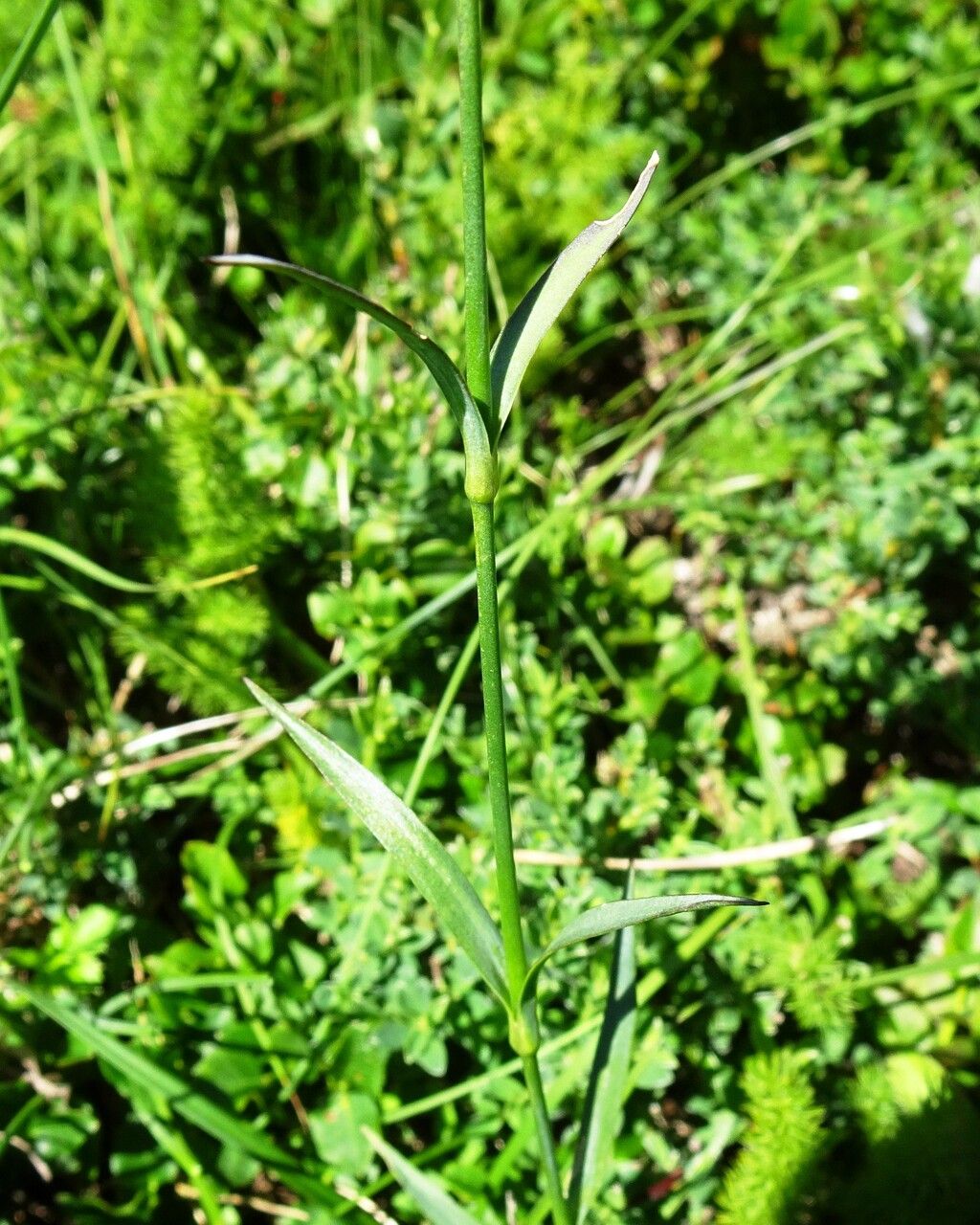
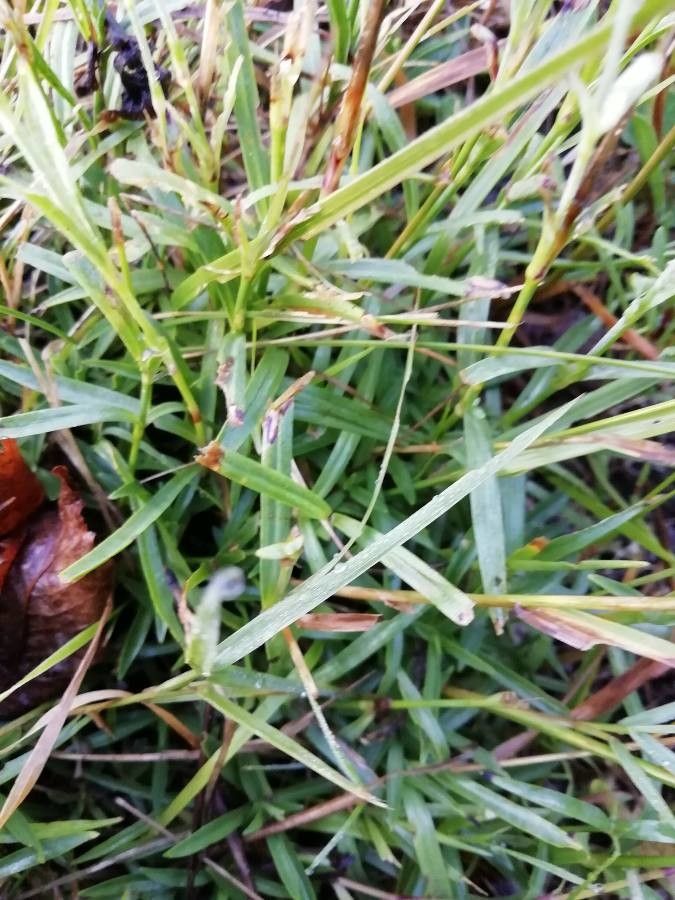
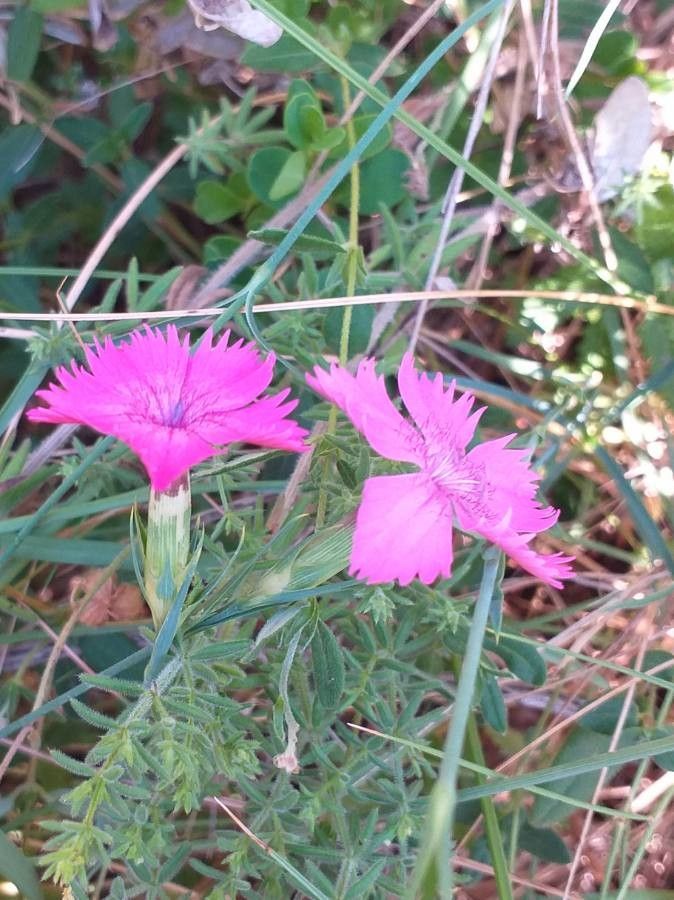
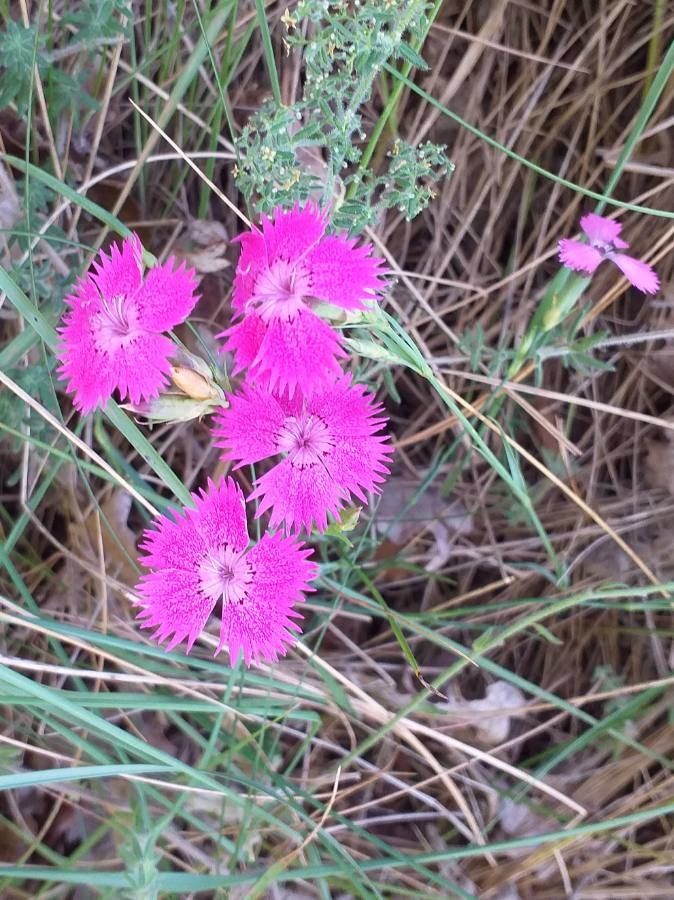
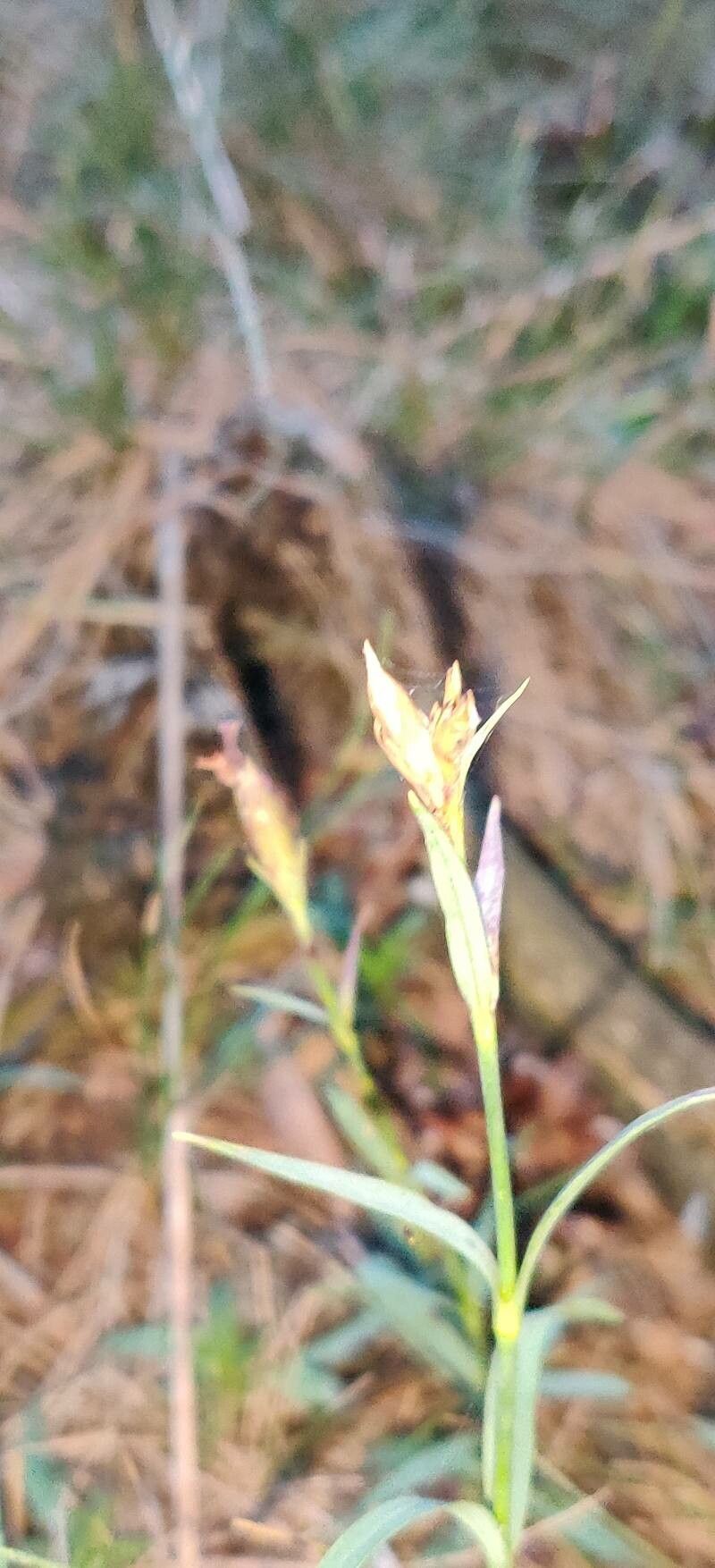
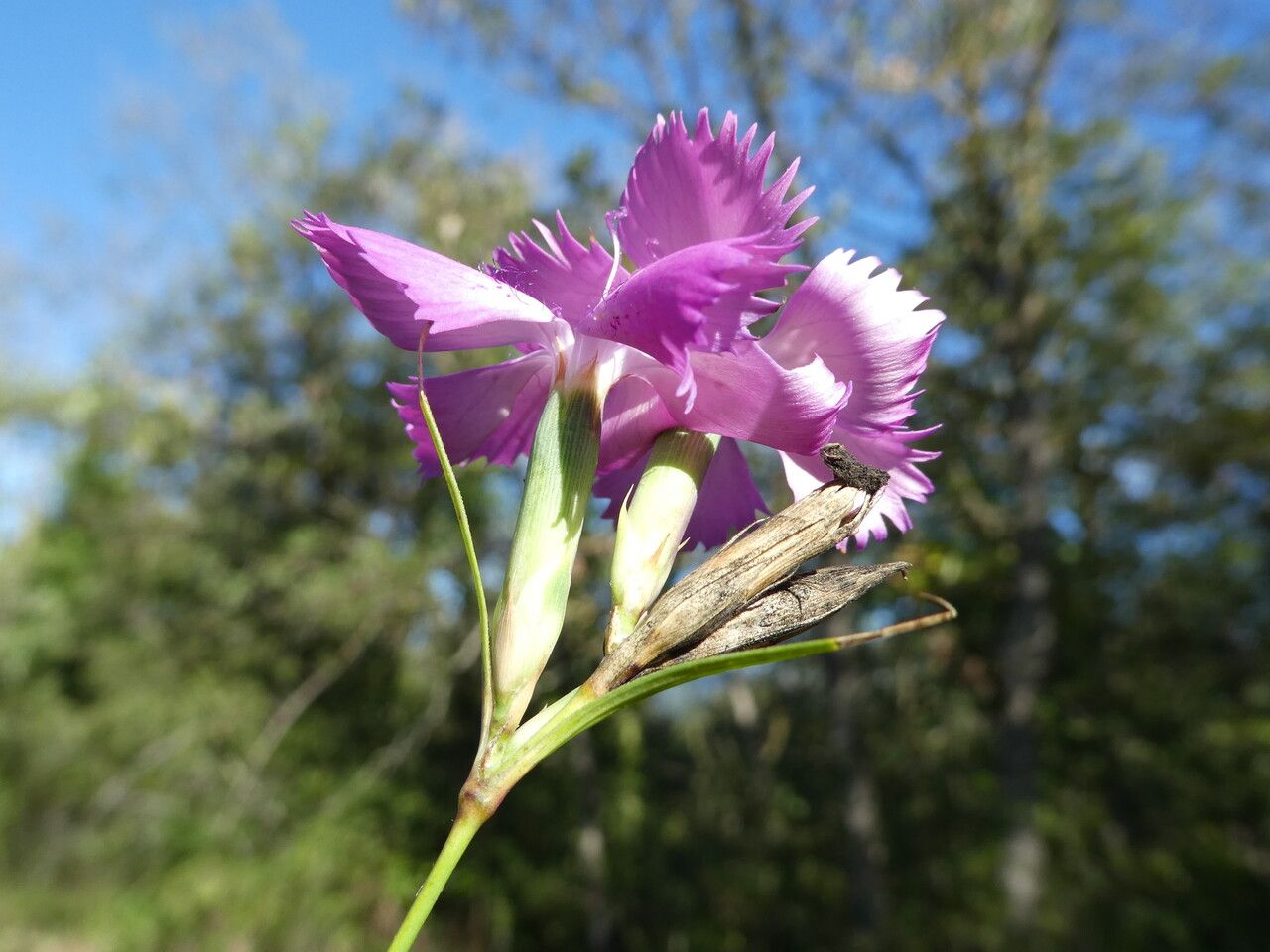
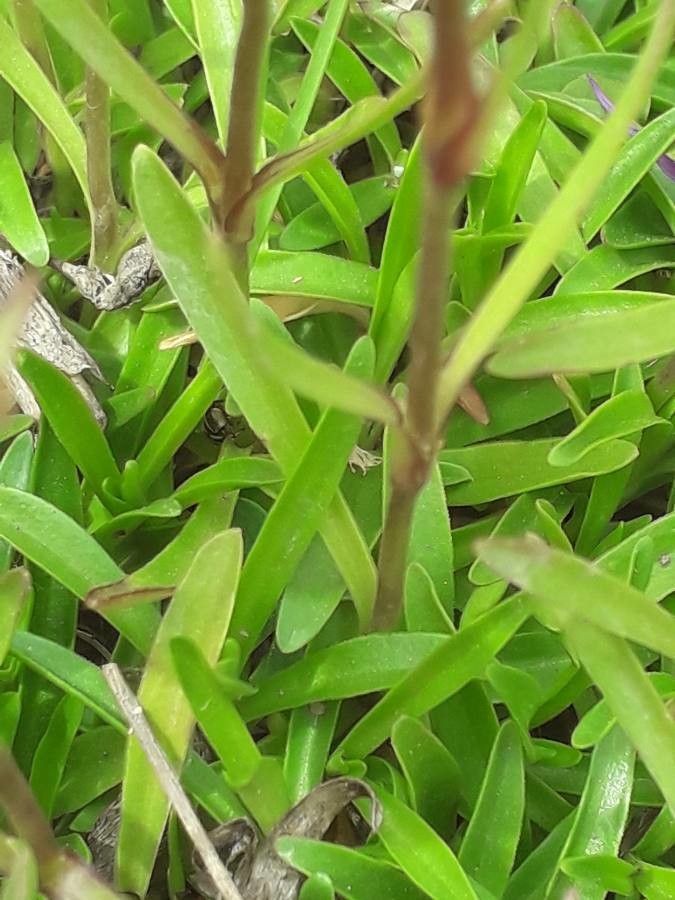
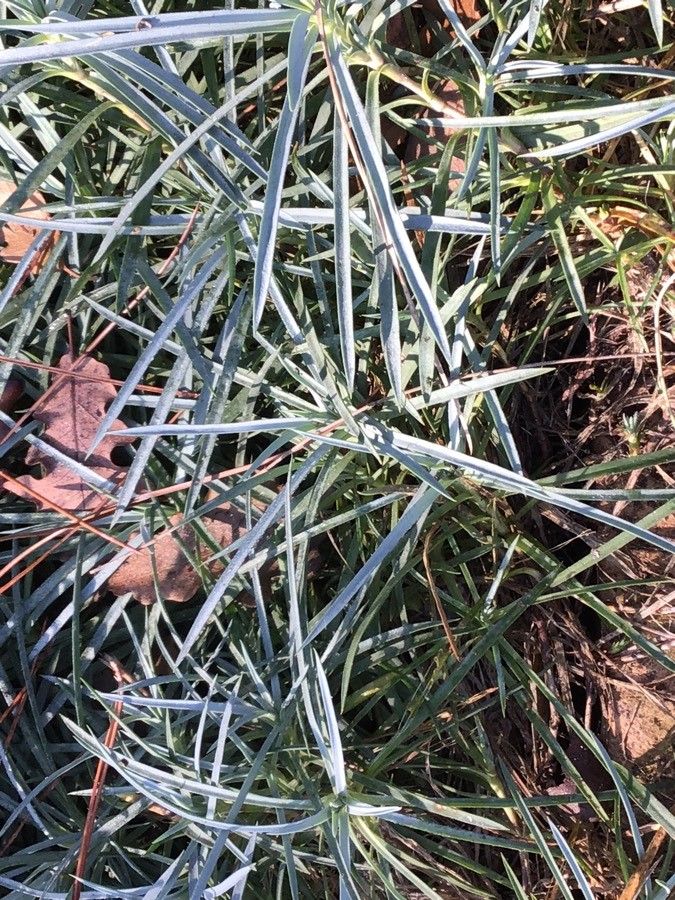
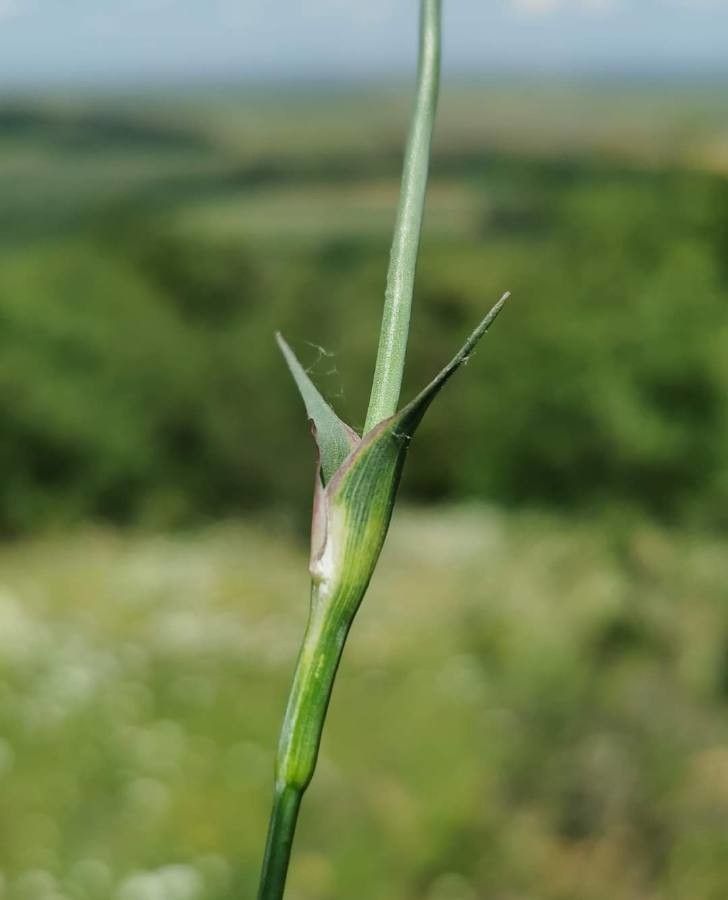
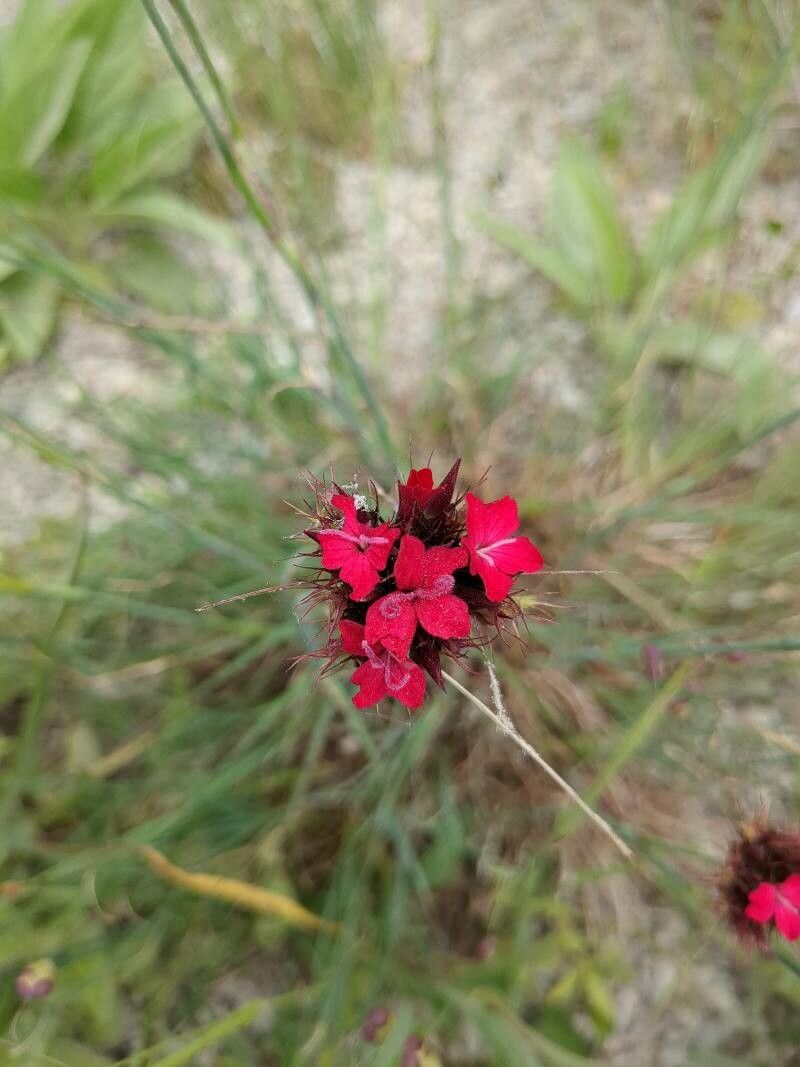
Dianthus seguieri, commonly known as Sequier's Pink, is a perennial flowering plant in the Caryophyllaceae family. Native to the Pyrenees Mountains in Europe, it can reach a height of up to 30 cm. The plant features narrow, grass-like leaves that are blue-green in color and form a basal rosette. Its flowers, which are pink or white with fringed petals, bloom from late spring through summer.
This species prefers well-drained soil and full sun exposure but can also tolerate partial shade. While it is drought-tolerant once established, regular watering during the growing season is essential for optimal growth.
Often used as an ornamental garden plant, Dianthus seguieri is valued for its attractive flowers and foliage. It also serves as a magnet for pollinators such as bees, butterflies, and hummingbirds.
Overall, Dianthus seguieri is an easy-to-grow perennial that adds color and beauty to any garden or landscape with minimal maintenance.
Sequier's pink shows good resistance to disease and is generally not prone to illnesses. Still, it can be vulnerable to pests and diseases present in its environment. Such infections are typically not severe. Regarding care, this plant needs moderate maintenance. It should be pruned regularly to maintain a neat appearance and support healthy growth. Fertilizing can also help encourage flowering. Sequier's pink is suitable for anyone with an outdoor area, like a garden or patio, and does not demand extensive care experience. It may need more attention when grown indoors.
How to keep Dianthus Seguieri.
Light
Sequier's pink is a sun-loving perennial herbaceous plant native to open habitats, commonly flourishing in meadows and grasslands. It prefers full sun but can also tolerate partial sun.
Water
Sequier's pink is a drought-tolerant plant that thrives in arid climates and needs to be watered weekly. Although it is resilient, it prefers occasional moisture and struggles in overly wet conditions. As an evergreen, Sequier's pink retains its foliage year-round and requires consistent hydration, even during the colder months.
Temperature
Sequier's pink can adjust to a wide array of temperature conditions, but its distribution may still be limited by different combinations of water and heat. It does best in warm summer climates with adequate rainfall or watering. Extended periods of cloudy, rainy weather or prolonged high temperatures can raise the likelihood of Sequier's pink dying. In winter, protecting it from cold can improve the plant's survival rate.
Fertilizer
Early spring, as Sequier's pink comes out of dormancy and begins active growth, is the best time to fertilize it. Fertilizing supplies essential nutrients needed for healthy growth. Although Sequier's pink has relatively modest fertilizer requirements, applying fertilizer annually can improve its survival and encourage better, longer-lasting flowers.
Pruning
Sequier's pink is a small perennial plant known for its vibrant pink flowers. To maintain its health and appearance, prune the plant in early spring or late winter. This helps remove dead stems and shapes the plant for healthy growth, improving air circulation and promoting more blooms. Always use clean and sharp tools when pruning to minimize the risk of disease.
Botanical profile.
- Plant Type
- Herb
- Life Cycle
- Perennial
- Genus
- Dianthus
- Family
- Caryophyllaceae
- Hardiness Zone
- 3-10
- Mature Height
- 25 cm to 61 cm
- Mature Spread
- 15 cm to 30 cm
- Leaf Color
- Green, Dark Green
- Leaf Type
- Evergreen
- Flower Color
- Pink
- Flower Size
- 1.78 cm to 2.29 cm
- Bloom Time
- Summer
- Planting Time
- Spring, Summer
- Harvest Time
- Late summer, Early fall, Mid fall
Other names.
Reader questions.
How should I water my Sequier's pink plant?
When watering the Sequier's pink plant, it is recommended to use filtered water at room temperature. Tap water may contain harmful particles, so it is best to avoid using it. The plant prefers warm environments, so it is important to use water that is at room temperature or slightly warmer to avoid shocking the plant. Additionally, it is suggested to refrain from overhead watering as it can cause issues with the foliage. Instead, it is recommended to water the plant by applying filtered room temperature water directly to the soil until it is completely soaked. This helps the roots absorb moisture and nutrients from the soil, allowing them to continue spreading and collect the necessary nutrients.
Why should I put fertilizer on my Sequier's pink plant?
Fertilization is important for the Sequier's pink for several reasons. It provides key nutrients for the plant's growth above and below the ground. The fertilization needs for a Sequier's pink are relatively low, and sometimes the plant can survive without it. However, annual fertilization can be very beneficial, keeping the plant alive and encouraging better and longer-lasting flowers. Therefore, those who want their Sequier's pink to look its best should make sure to fertilize it annually.
What are the sunlight requirements for Sequier's pink?
Sequier's pink is a sun-loving perennial herbaceous plant that thrives best in full sun conditions, which means it requires above 6 hours of sunlight daily. However, it can also tolerate partial sun conditions, needing about 3-6 hours of sunlight. It's important to observe how sunlight moves through your garden to select spots that offer an ideal balance of light and shade, ensuring optimal growth and health of your plants.
What is Sequier's Pink?
Sequier's Pink, known botanically as Dianthus seguieri, is a plant species. Unfortunately, the provided information does not include details about its characteristics, essential features, or any symptoms associated with it or its environment.
What should I do if I give too much water or too little water to my Sequier's pink?
Overwatering and underwatering can harm your Sequier's pink plant, but overwatering is more common. When this plant gets too much water, its stems and leaves may wilt and turn yellow. Overwatering for a long time can also cause diseases like root rot, mold, and mildew, which can kill your plant. Underwatering is less common because Sequier's pink plants can tolerate drought. However, it can still happen, and when it does, the leaves will become brittle and brown. It's important to recognize signs of overwatering early when taking care of your Sequier's pink plant. Some diseases caused by overwatering, such as root rot, are not fixable if you wait too long. If you notice early signs of overwatering, reduce your watering immediately. Also, check the soil quality. If it drains poorly, replace it with a loose, well-draining potting mix. On the other hand, if you see signs of underwatering, simply water the plant regularly until the signs disappear.
When should I fertilize my Sequier's pink plant for optimal growth?
The best time to fertilize a Sequier's pink is from late winter to early spring, as this is when the plant begins to leave its dormant phase and enter a period of active growth. Fertilizing during this time promotes healthy growth and sets the plant up for a successful season. Although early spring is generally the most favorable, fertilizing in the fall is also acceptable. However, it is not recommended to fertilize during summer or winter.
How can artificial lighting benefit indoor plants and what are the guidelines for its use?
For indoor plants, especially when natural sunlight is insufficient, artificial lighting can be crucial for ensuring optimal growth. Using the right type of artificial light, such as LED lights, helps provide the specific wavelengths your plants need. For full sun plants, 30-50W/sq ft of artificial light is recommended, while partial sun plants require 20-30W/sq ft, and full shade plants need 10-20W/sq ft. The light source should be placed 12-36 inches above the plant to mimic natural sunlight, and most plants will benefit from 8-12 hours of artificial light per day.
How frequently should I water my Sequier's pink plant?
To determine if your Sequier's pink plant needs water, check the moisture level of the soil. If your plant is in a pot, stick your finger into the soil and if the top two to three inches feel dry, it's time to water. If the plant is grown outdoors, use the same method of checking the soil and water if the top few inches are dried out. Typically, watering once a week during spring and early fall is sufficient, but during hot weather, watering twice a week may be necessary. However, mature and well-established Sequier's pink plants can tolerate drought conditions.
When is it not a good idea to use fertilizer on my Sequier's pink plant?
To properly care for your Sequier's pink, it is best to fertilize only in late winter and early spring. This plant has low fertilization needs, so one feeding per year is enough. Avoid fertilizing during spring, summer, and fall to prevent overfertilization. The only exception is if you forgot to fertilize in spring, then it is acceptable to feed it in fall. Additionally, there is no need to fertilize during winter as the plant is in a dormant growth phase and does not produce new growth.
What are the common symptoms of light deficiency in Sequier's pink?
When Sequier's pink is grown in rooms with inadequate lighting, it may exhibit symptoms such as smaller new leaves, leggy or sparse growth, faster leaf drop, slower or no new growth, lighter-colored new leaves, and signs of chlorosis. These symptoms indicate the plant is not receiving enough light to maintain healthy growth and chlorophyll production.
How much water does my pink Sequier's need?
When watering your Sequier's pink plant, don't hold back on the amount of water you give. It's best to water thoroughly when the top few inches of soil are dry. Make sure to soak the soil completely, and allow excess water to flow out through the drainage holes in the pot. If you don't see water draining out, you may have not added enough water. However, be careful not to let water accumulate in the soil, as this can harm the plant. On the other hand, if water doesn't drain properly, it may be a sign of poorly draining soil, which is not good for the plant's health. If the plant is outdoors, 1 inch of rainfall per week will be enough.
What kind of fertilizer does my Sequier's pink plant require?
Any general-purpose fertilizer with a balanced amount of the three main plant nutrients will work well for a Sequier's pink. However, there are a few specific nutrient blends that can be even more beneficial. Many gardeners believe that higher volumes of phosphorus make for stronger roots and better flowers. Since Sequier's pink is a flowering plant, applying a phosphorus-rich fertilizer may be the best approach. You can use granular or liquid fertilizer as long as there are plenty of nutrients present. Apart from manufactured fertilizers, using compost, manure, and similar organic materials can also help improve the soil for your Sequier's pink.