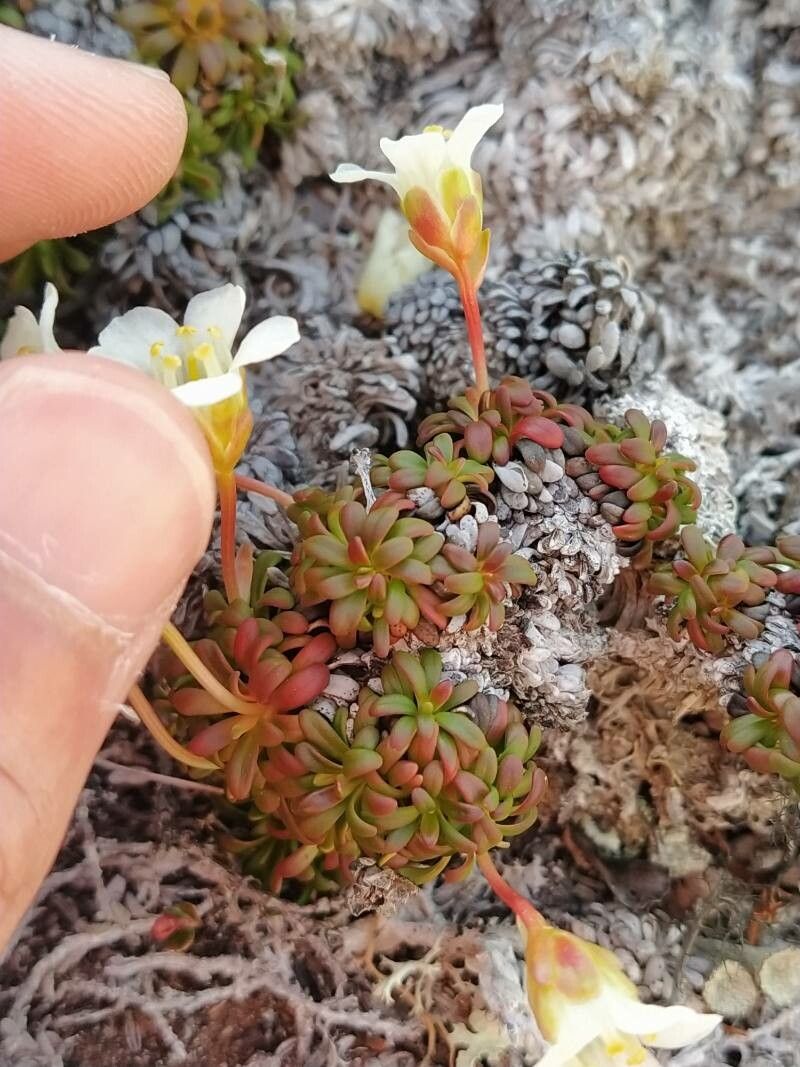
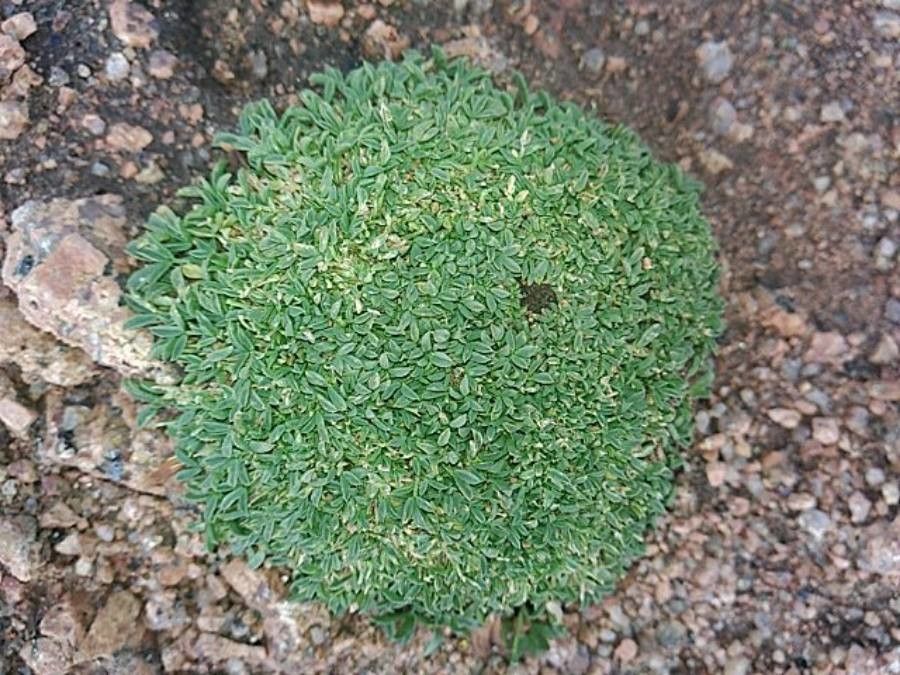
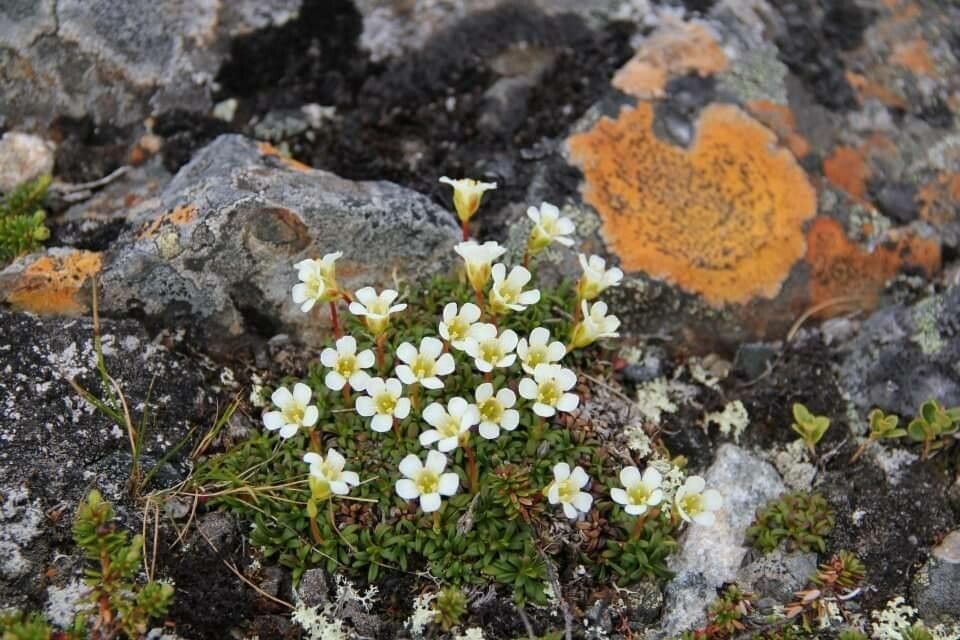
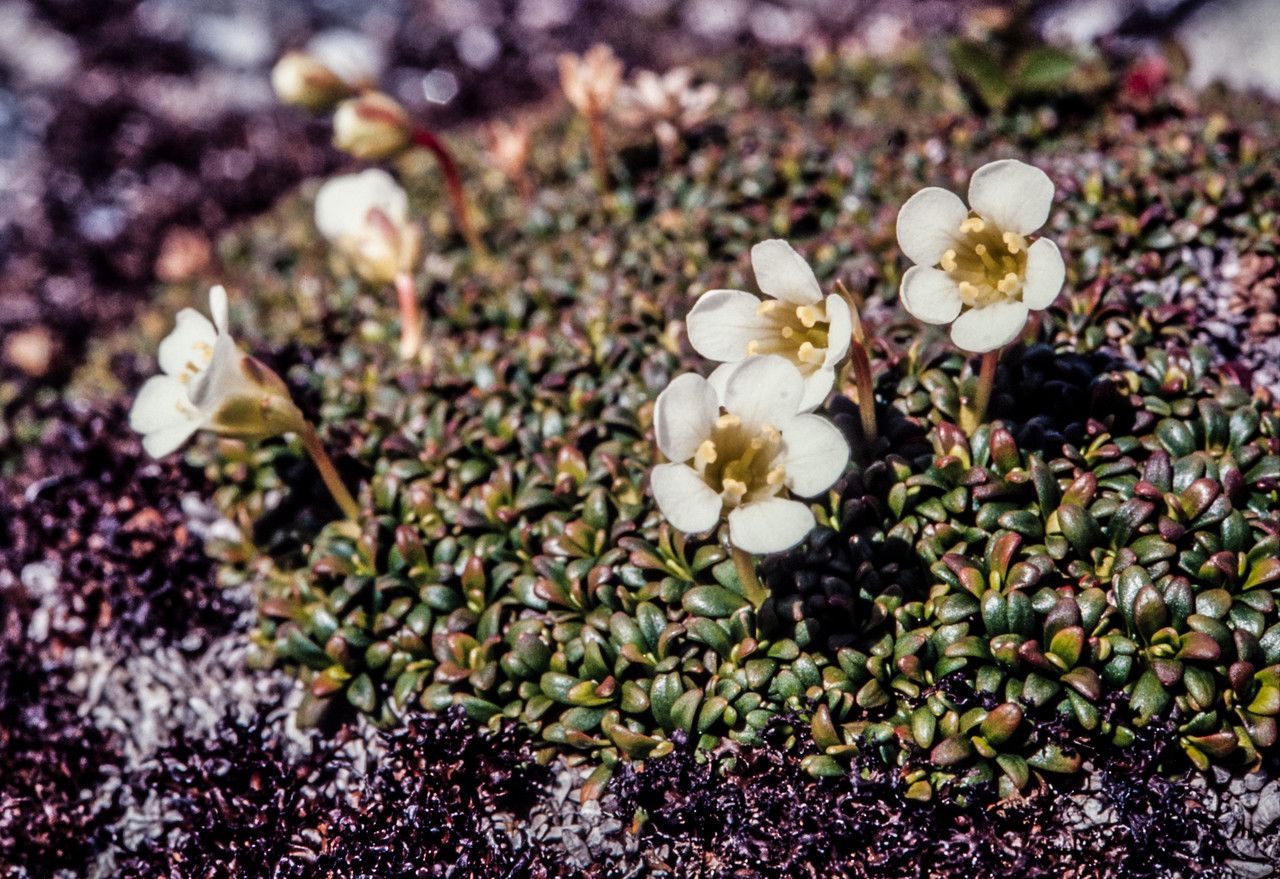
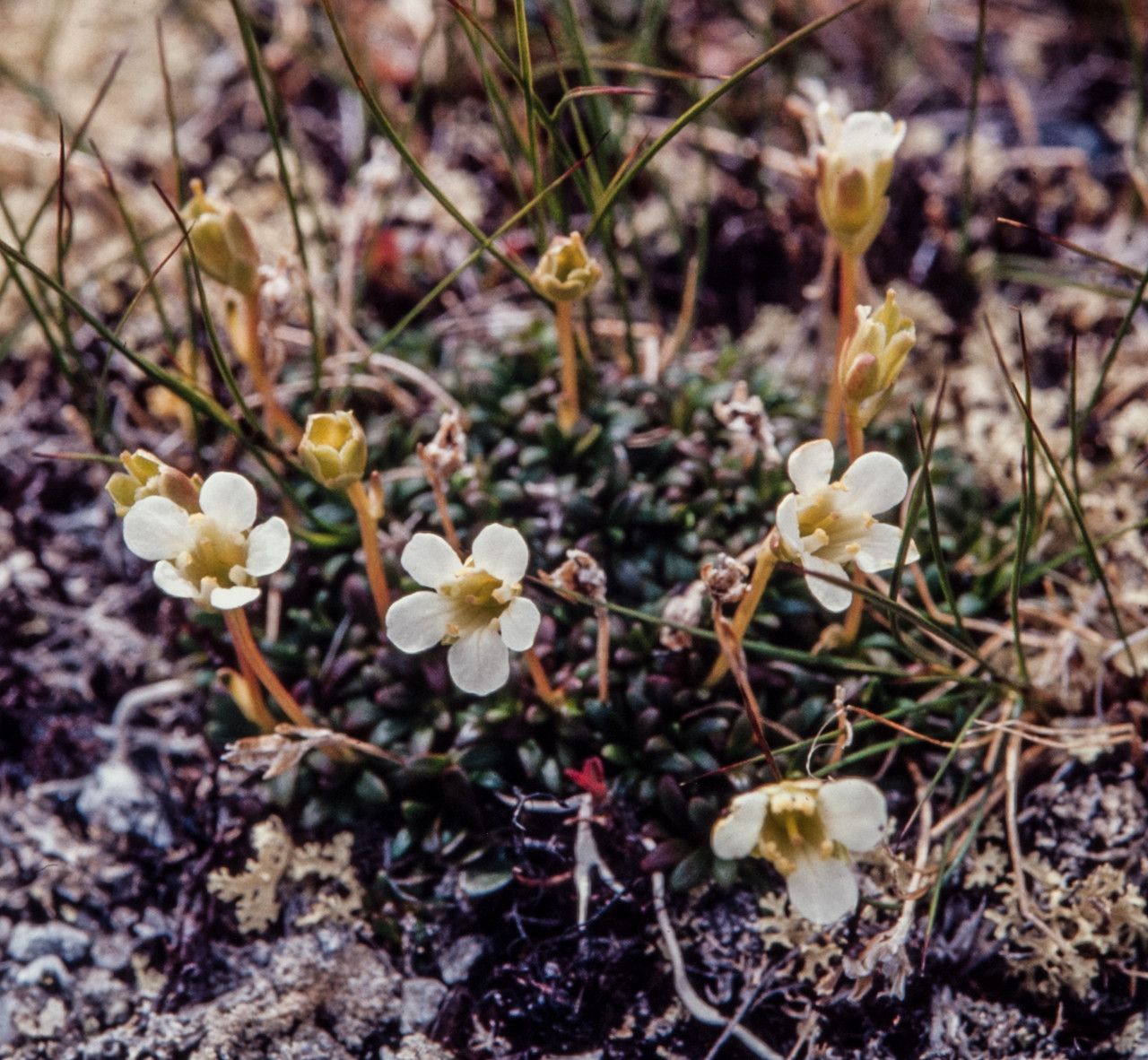
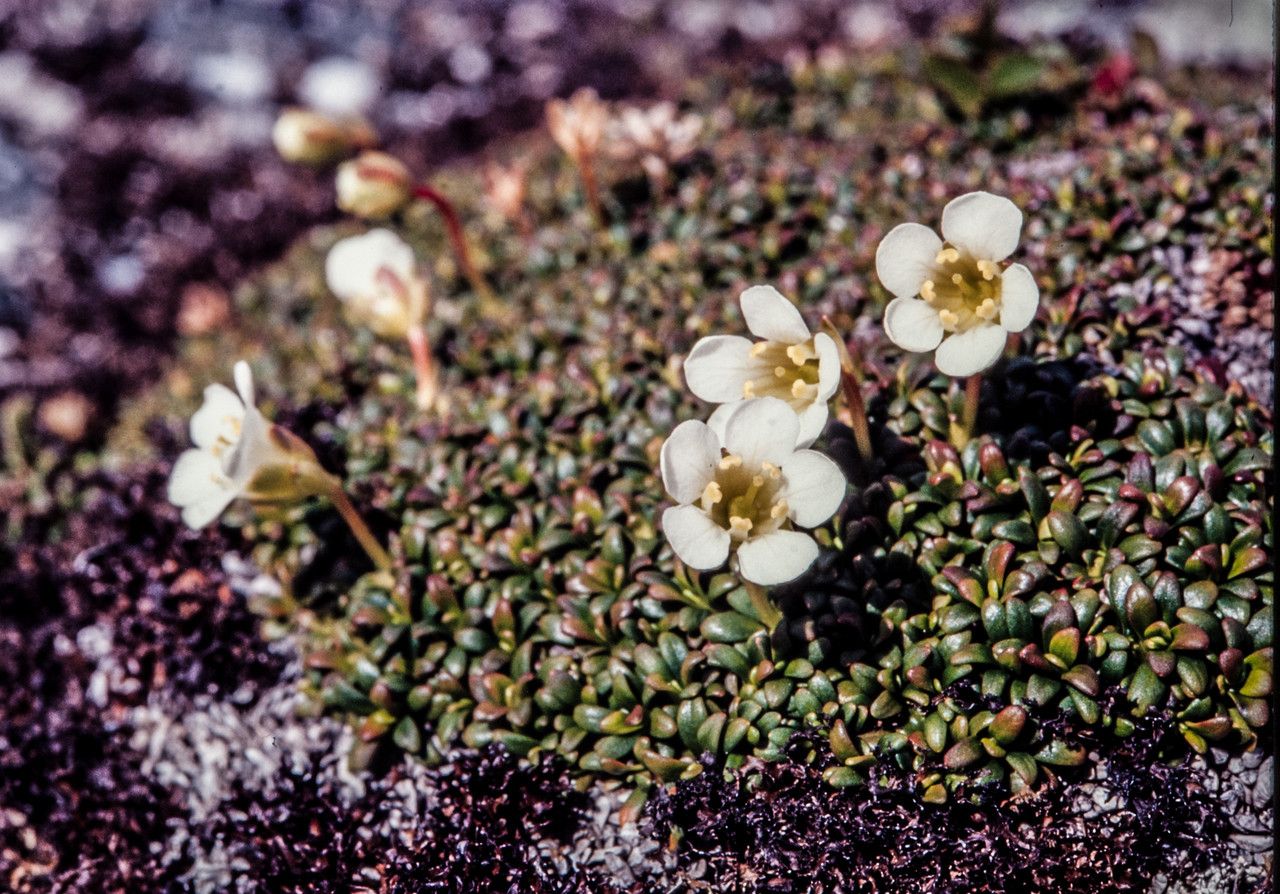
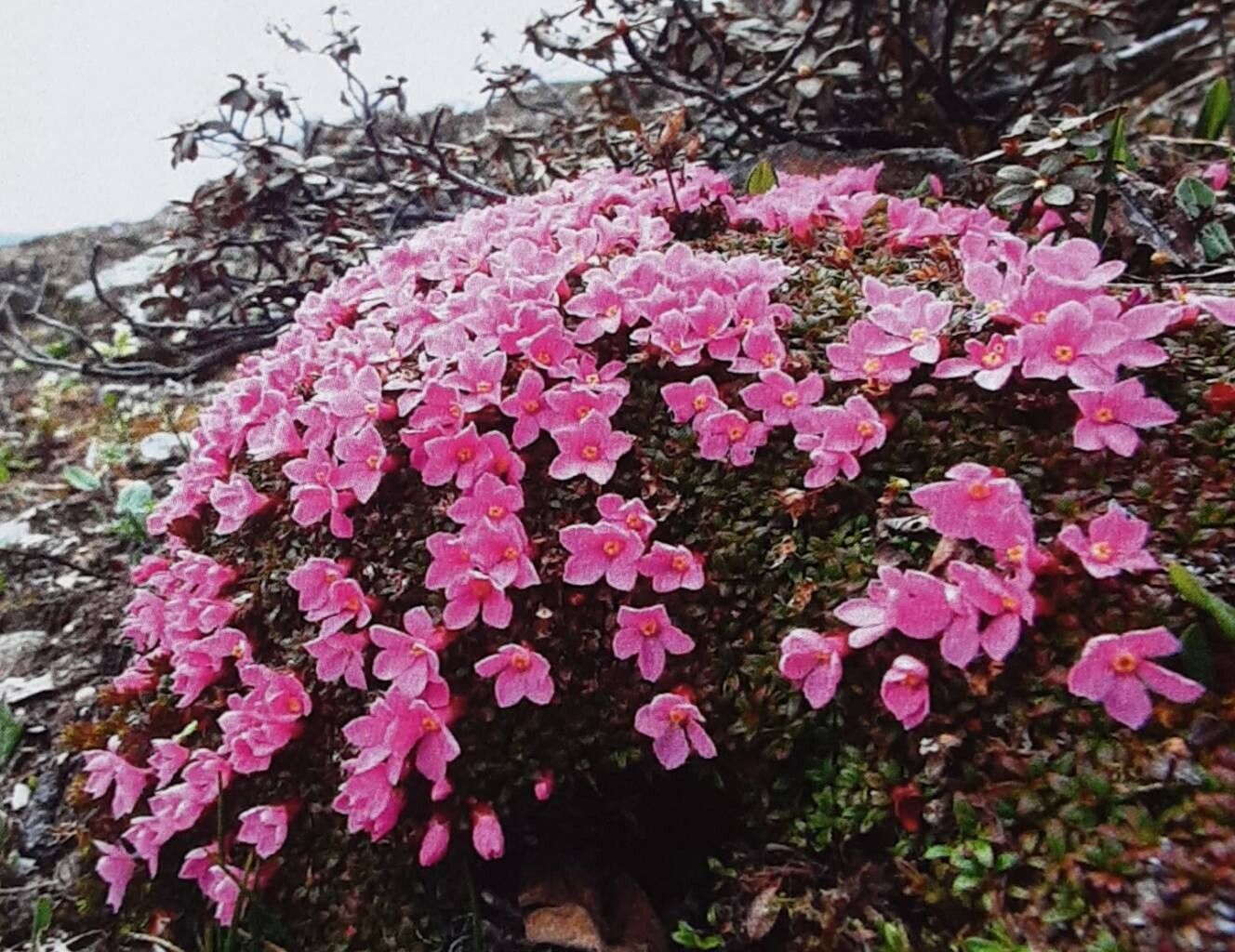
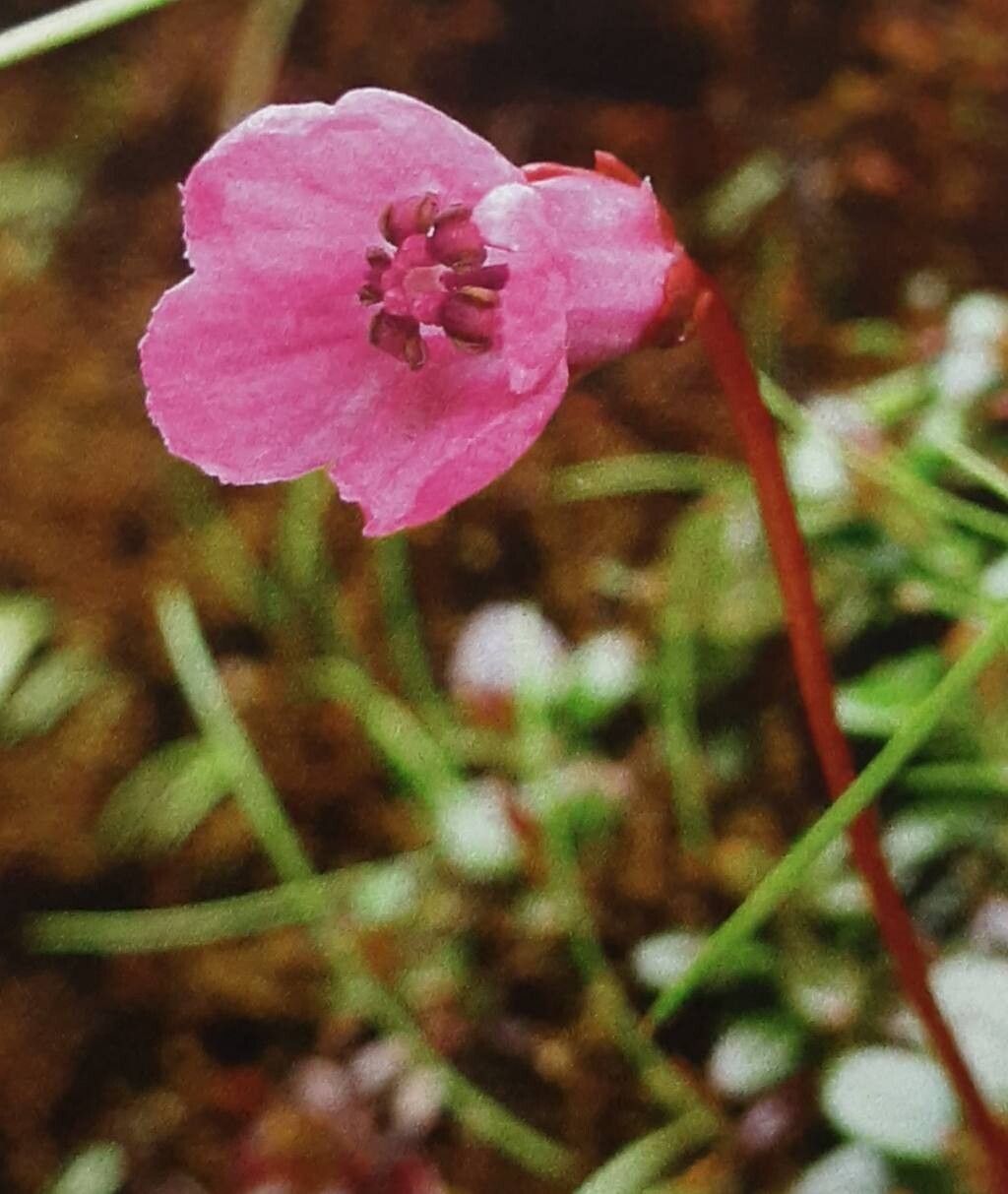
Diapensia lapponica, the pincushion plant, is a plant in the family Diapensiaceae, the only circumboreal species in the genus Diapensia, the others being mainly in the Himalaya and on mountains in southwestern China. This species likely became circumboreal-circumpolar [Arctic–alpine] after it jumped to arctic habitat from North China and Russia. The most likely candidate for ancestor is a white-flowered D. purpurea The plants grow on exposed rocky ridges that are kept free from snow by high winds.Diapensia lapponica is extremely slow and low-growing and cannot compete with plants that overtop it. The plant is very sensitive to higher temperatures (global warming a lethal problem in Sweden) and so is often in misty foggy habitat. It usually dies when transplanted to lowland gardens and so this is not recommended. Cold-treated or wild and winter-collected seed will germinate indoors. The seed and leaves are high in lipids. It is a small cushion-forming evergreen perennial shrub, up to 15 centimetres (6 in) in height, and can trap heat in the dome. It has oval blunt leathery toothless leaves, up to 1 cm (0.4 in) long, which are arranged in dense rosettes. It bears solitary white flowers (rarely pink), on stems up to 3 cm (1.2 in) tall. It could be aged by counting growth-rings or clump diameter, and on this basis, many Canadian plants are thought to live to over a century or two.In places such as Newfoundland an early June and later, (often) August blooming period occurs on different plants. It is not known if this is a genetic or environmental affect. Two blooming periods are known for other plants. It often involves flower buds being formed in the present or previous year (overwintering buds).
The pincushion plant is quite resistant to disease and generally does not get sick easily. As for care, this plant is fairly low-maintenance. When grown outdoors it needs only minimal watering, and larger plants usually do not require pruning. Smaller plants, however, should be pruned after they finish blooming. The pincushion plant is suitable for anyone with outdoor space, like a garden or a deck, and does not demand a lot of gardening experience.
How to keep Diapensia Lapponica.
Light
Pincushion plant favors spots with moderate sun exposure but can endure lower light levels. For healthy roots and vigorous growth, it thrives where the primary light is diffused or filtered. Excessive sunlight can stress the plant, while very low light may limit its growth and vibrancy.
Water
The pincushion plant is well-suited for subarctic conditions and is highly drought-tolerant, requiring water only every 2 to 3 weeks. It thrives in cooler climates and well-draining soil, which mimic its natural tundra habitat. Being an evergreen, the pincushion plant effectively retains water to maintain its foliage throughout the seasons.
Temperature
Pincushion plant prospers in temperatures ranging from 41 to 89.6 °F (5 to 32 ℃), mirroring the temperature span of its native habitat. It can tolerate seasonal fluctuations, but ideal temperatures should be maintained when possible.
Fertilizer
Timing is essential for fertilizing the Pincushion plant. Apply fertilizer in early spring and continue once a month until early summer. Fertilizer promotes attractive blooms and supplies energy during both dormant and active growth stages.
Pruning
The pincushion plant is a resilient, mat-forming evergreen that produces small white flowers. To promote growth and maintain its shape, prune the plant from early to late winter. Remove any dead stems and leggy growth during this time. Regular pruning enhances air circulation, reduces the risk of disease, and aligns with the plant's dormant period, allowing for better recovery.
Botanical profile.
- Plant Type
- Shrub
- Life Cycle
- Perennial
- Genus
- Diapensia
- Family
- Diapensiaceae
- Hardiness Zone
- 4-7
- Mature Height
- 2 cm to 6 cm
- Mature Spread
- 10 cm to 20 cm
- Leaf Color
- Green
- Leaf Type
- Evergreen
- Flower Color
- White
- Flower Size
- 2.54 cm
- Bloom Time
- Mid spring, Late spring
- Planting Time
- Spring, Summer, Autumn
- Harvest Time
- Early summer, Mid summer
- Native Area
- Russia, Norway, Sweden, Denmark, Japan, Iceland, Finland, Koppen, United Kingdom, South Korea
Other names.
Reader questions.
How should I water my Pincushion plant?
Your Pincushion plant is not fussy about how you water it, so you can use any common watering tool such as a watering can, hose, or even a cup. Regardless of which tool you choose, make sure to water the soil directly and evenly to ensure all parts of the root system receive the water they need. Using filtered water is helpful as tap water may contain harmful particles. It's also best to use water at or slightly above room temperature to avoid shocking the plant with hot or cold water. However, the Pincushion plant generally responds well to any water you give it.
How much sunlight does the Pincushion plant need to grow?
To help the Pincushion plant flourish, it needs about 3-6 hours of direct sunlight daily. However, it's important to shield it from excessive sunlight during the hottest hours, as it can cause damage. The best time for the plant to receive sunlight is in the morning, although it can handle some afternoon sun if it's not too hot. To create the optimal sunlight conditions, consider planting the Pincushion plant in a spot that receives partial sun, like under a tree or on the east side of a building.
What temperature is best for Pincushion plant?
Pincushion plant thrives in a specific temperature range of 65-75℉(18-25℃). While it can tolerate temperatures outside of this range, it is recommended to keep it within a few degrees of these limits for optimal growth. The upper and lower limits that Pincushion plant can withstand are 75-85℉(25-30℃) and 5℉(-15℃) respectively. However, it is more important to avoid higher temperatures as they can restrict growth and cause damage or death if above 85℉(30℃) for extended periods of time.
What do I do if I give my Pincushion plant too much or too little water?
When caring for outdoor plants, particularly newly planted ones or plant seedlings, it is important to ensure they are adequately watered to avoid dehydration. Remember to consistently water them for a few months when the plant is small or recently planted. This is necessary because once the roots are established, the Pincushion plant can rely mostly on rainfall. On the other hand, potted Pincushion plants are more prone to overwatering. If you accidentally overwater your plant, it is crucial to take immediate action to correct the situation. Firstly, stop watering the plant right away to minimize the effects of overwatering. Then, carefully inspect the plant's roots by removing it from the pot. If there are no signs of root rot, you can safely return the plant to its container. However, if root rot is present, trim away the affected roots and consider applying a fungicide to prevent further damage. Lastly, repot the Pincushion plant in well-draining soil. For underwatered Pincushion plants, the solution is relatively simple. Water them more frequently to ensure they receive sufficient hydration. If the leaves appear droopy, dry, or begin to fall off, provide adequate watering and the leaves will soon regain their fullness. Correct any issues with watering frequency as soon as you notice underwatering occurring.
What happens if the Pincushion plant doesn't receive enough sunlight?
To avoid sun damage, it is important to protect Pincushion plant from excessive direct sunlight. Too much sunlight can cause the leaves to turn yellow, dry out, or burn, causing the plant to wilt or become stunted. Providing shade during the hottest parts of the day can prevent these issues. This can be done by using a shade cloth or planting Pincushion plant near taller plants that can naturally provide shade.
Does Pincushion plant need varying temperatures during different stages of growth?
To ensure optimal growth of Pincushion plants, it is important to maintain temperatures between 65-75℉ (18-25℃) during each phase of their growth. While these plants can handle colder temperatures better than higher ones, growth may be affected if the temperature drops below 5℉ (-15℃). Therefore, if you plan to continue growing Pincushion plants during winter, it is necessary to keep the room temperature above this threshold.
How frequently should I water my Pincushion plant?
Most plants naturally grown outdoors can thrive with rainfall. However, if your area has limited rainfall, it's important to provide sufficient watering for your plants every two weeks during spring and fall. In the summer, more frequent watering is necessary, while in winter, when plants grow slower and require less water, watering should be done sparingly or not at all. Young or newly planted Pincushion plants need more frequent watering to help them establish and eventually become more adaptable and drought tolerant. For potted Pincushion plants, there are two main approaches to determine watering frequency. The first is to follow a set schedule, typically once a week or every other week. However, this method may not account for the specific conditions of your plant's growing environment. Watering frequency can also change with the season, particularly in summer when water needs are highest. An alternative approach is to check the moisture of the soil and water when the top two to four inches have completely dried out, usually about one-third or half the depth of the pots.
What will happen if the Pincushion plant gets too much sunlight?
If the Pincushion plant doesn't receive sufficient sunlight, it might become tall and thin, with very few leaves. The leaves could also change to yellow or pale green, which shows that the plant is not producing enough chlorophyll due to insufficient sunlight. To fix this issue, you can try relocating the Pincushion plant to a sunnier area or trim nearby foliage to enable more light to reach the plant.
Here are three ways to manage the temperature of Pincushion plants.
Here are three tips for taking care of your Pincushion plant: 1. Watch for signs of heat damage: If your Pincushion plant gets too hot, there are warning signs before it starts to die off. The leaves may turn brown and branches may fall off. This happens because the branches themselves are dying as the plant pulls moisture towards its center. To prevent this, keep the temperatures lower and water the plant more often if it's exposed to heat. 2. Don't let it get too cold: Although the Pincushion plant prefers cooler environments, sudden drops in temperature can cause freeze damage. If the temperature dips below 5℉ (-15℃), the water in the plant can freeze and cause the cell walls to burst and the bark to crack. This can significantly slow growth and even lead to parts of the plant dying. Be mindful of keeping the temperature at an optimal level. 3. Use shade and ventilation to control temperature: If you notice that your Pincushion plant is getting too hot, you can use shade and ventilation to bring the temperature down. If you don't have an air conditioning unit or fans, shade and ventilation are cost-effective ways to regulate the temperature. However, once the temperature is corrected, make sure to give the plant sunlight. Pincushion plants need a lot of sunlight to grow properly, so while shade is useful for temporary temperature correction, don't leave the plant in the shade for too long.
How much water should I give to my Pincushion plant?
When watering your Pincushion plant, remember that it doesn't always require a large amount of water. If only a few inches of soil have dried since the last watering, giving the plant about five to ten ounces of water each time will support healthy growth. You can also gauge the water volume based on soil moisture. If more than half of the soil has dried out, consider giving more water and continue watering until excess water drains from the pot's drainage holes. If your Pincushion plant is exposed to regular rain outdoors, it may not need additional watering. For young or newly established plants, ensure they receive 1-2 inches of rain per week. As they mature, they can rely solely on rainwater unless there is a prolonged period with no rainfall during hot weather, in which case a full watering is recommended to prevent stress.
Does Pincushion plant require different temperatures during different seasons?
If you plan on growing Pincushion plants outdoors, you should be mindful of temperature differences between seasons. Specifically, during the prime growing seasons of spring and early summer, it's important to monitor your outdoor thermometer. It's crucial to prevent temperatures from exceeding 85℉ (30℃), as this can harm and eventually kill the plants. If you decide to grow them indoors instead, ensure that the space receives ample sunlight. Pincushion plants require a significant amount of sun exposure, ideally in the form of full sunlight or partial shade. However, be cautious not to let excessive sunlight increase the temperature, as this can also damage the plants.
How can I know if I am giving my Pincushion plant enough water?
Overwatering is a common issue for the Pincushion plant, and there are clear signs to watch out for. When a Pincushion plant is overwatered, you'll notice yellowing leaves and possible leaf drop. Excessive water can also cause the plant to shrink and contribute to root rot. On the other hand, an underwatered Pincushion plant will wilt and may develop brown, brittle leaves. Regardless of whether you see signs of overwatering or underwatering, it's important to take action to restore the health of your Pincushion plant.